Print Story
X




Brigitte Bardot came to symbolise a new, unsettling idea of womanhood on screen
| B |
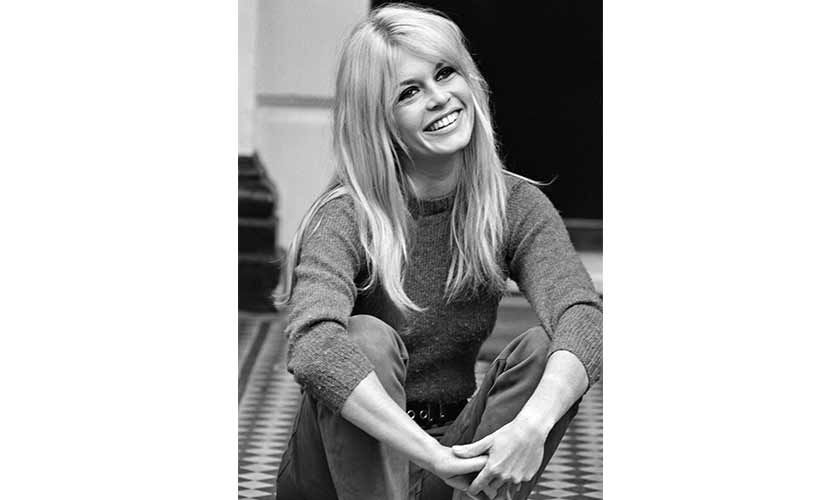
rigitte Bardot, who died last week, was more than a screen idol. She was a cultural rupture. To viewer encountering her films in Pakistan decades ago, often belatedly and imperfectly, Bardot represented a kind of womanhood that had rarely, if ever, appeared on screen: self-possessed, assertive and unapologetic about desire.
For much of Pakistan’s early post-Partition history, exposure to European cinema was minimal. Educated viewers were largely oriented towards Hollywood, while the wider public embraced a cinematic language inherited from the studios of Bombay, Calcutta and Lahore, rich in song, dance and melodrama. Indian films were frequently banned, leaving audiences to rely on re-runs of Hollywood blockbusters, conventional in form, driven by strong narratives and clear resolutions. These films were easy to follow and allowed viewers to project their dreams and aspirations onto the screen.
European cinema, by contrast, arrived slowly and unevenly. Music from across the border could be heard on the radio, gossip magazines circulated freely and Indian film stars were household names, yet their films remained largely unseen. The commissioning of Amritsar Television offered some access to contemporary Indian cinema, but it was the VCR revolution of the late 1970s and 1980s that truly altered viewing habits. Suddenly, cinemas from around the world entered Pakistani homes. Films were released abroad and soon appeared locally as pirated videotapes, many sourced from Dubai, fuelling a booming underground economy.
European cinema, however, was different. Even within Europe, there were sharp distinctions: French, Italian, Spanish, Czech, Polish and Russian cinemas each carried their own traditions and visual languages. British cinema was closer to Hollywood in its formal discipline and narrative clarity. French cinema, by contrast, appeared abstract, disruptive - and to many viewers - unsettling.
In its heyday, NAFDEC played a crucial role in introducing these works to local audiences through its film club. Screenings were initially held at the Wapda Auditorium and later at Town Hall. Here, viewers encountered subtitled classics by directors whose names soon circulated with excitement: Godard, Truffaut and, significantly, Roger Vadim. These screenings were not merely entertainment; they were educational experiences that altered how cinema was understood and discussed.
Vadim’s And God Created Woman proved pivotal. Its release brought Brigitte Bardot into sharp focus and, with her, a radically different cinematic presence. Bardot was not simply a sex symbol, though she was relentlessly framed as one, but a woman who refused to apologise for her desires, anger or independence. Her performances unsettled deeply ingrained ideas about femininity, both on screen and off.
For the first time, a woman was seen not as an ideal to be explained or forgiven, but as someone who existed entirely on her own terms.
This was the beginning of a broader shift in cinematic representation. Until then, women on screen were often defined by sacrifice, moral purity or quiet endurance, archetypes aligned with collective ideals of labour and progress. Bardot disrupted this image. She asserted herself through defiance, temper and desire, without seeking redemption or forgiveness. For the first time, a woman appeared not as an extension of male ambition or social order, but as an autonomous individual.
This assertion was not always welcomed. Bardot’s characters were frequently criticised for their emotional volatility and refusal to conform. Yet it was precisely this resistance that made her so compelling. She did not seek to embody strength as stoicism or self-denial. Instead, she insisted on existing as she was, within societies that were uncomfortable with such independence.
French cinema amplified this disruption. Its loosened narratives, emphasis on mood over plot and willingness to linger in ambiguity challenged audiences accustomed to tidy conclusions. Where Hollywood offered reassurance, French cinema offered confrontation. Bardot’s presence intensified this challenge, forcing viewers to question why a woman’s autonomy should be seen as a transgression.
Over time, these films began to circulate more widely through private collections, film clubs and informal screenings. They did not replace dominant cinematic forms, but they widened the frame. For a generation of viewers, Bardot and her contemporaries offered a glimpse of alternative ways of seeing, not only cinema, but also gender.
Bardot’s legacy is complex. Later in life, her politics alienated many who had once admired her. Yet her cultural impact, particularly in the context of mid-century cinema, remains undeniable. She marked a moment when the screen allowed a woman to exist without apology; without symbolic restraint; and without the need to be explained away.
In societies where women continue to negotiate visibility and autonomy, that image still resonates. Bardot may have arrived late to Pakistani screens, filtered through pirated tapes and subtitled prints, but the disruption she carried was immediate. She remains a reminder that cinema, at its most powerful, does not merely reflect society; it also unsettles it.
The writer is a Lahore-based critic.