Print Story
X




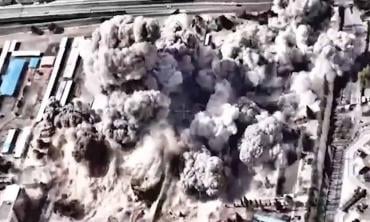
In 2025, security forces launched decisive operations against the terrorist infrastructure

| T |
he year 2025 has been a defining chapter in Pakistan’s long and difficult struggle against terrorism. After decades of sacrifice, Pakistan demonstrated renewed resolve in confronting violent extremism, reinforcing state authority and strengthening its role as a frontline nation against global terrorism. Through sustained military vigilance, intelligence-led policing and institutional coordination, the country continued to deny space to terrorist organisations and protect citizens from large-scale destabilisation.
Terrorism remains a complex and evolving challenge worldwide. Pakistan’s experience in 2025 reflected a state that has learnt hard lessons and applied them with determination. Unlike some earlier phases marked by reactive responses, counter-terrorism in 2025 was characterised by anticipation, disruption and targeted enforcement, signalling maturity in Pakistan’s security doctrine.
Throughout the year, intelligence-based operations remained the backbone of Pakistan’s counter-terrorism approach. Counter Terrorism Departments, working closely with federal intelligence agencies, conducted hundreds of operations aimed at dismantling sleeper cells, intercepting suicide bombers and recovering weapons before they could be used. These operations, often conducted quietly and without public spectacle, prevented numerous planned attacks in urban centres and sensitive installations. Hundreds of security personnel lost their lives in these operations. The increased number of arrests and recoveries demonstrated not only operational effectiveness but also improved intelligence penetration of militant networks.
The role of the armed forces remained critical, particularly in border and active conflict regions where terrain and transnational dynamics complicate law enforcement. In 2025, joint operations involving the Pakistan Army, Rangers, Frontier Corps and provincial police ensured that no region was allowed to revert into a militant sanctuary. The persistence of security forces in difficult environments sent a clear message that the state would not relinquish control or tolerate parallel armed presence.
A major strength of Pakistan’s counter-terrorism posture in 2025 was enhanced civil-military coordination. Unlike the fragmented responses of earlier years, security institutions increasingly operated under unified frameworks, sharing intelligence and aligning operational objectives. Police capacity-building initiatives, improved forensic capabilities and the integration of modern surveillance technologies further strengthened the civilian law-enforcement role, reducing reliance on kinetic force alone.
Border security remained a strategic priority. Pakistan continued to reinforce regulated crossings, fencing and monitoring mechanisms along sensitive frontiers to curb militant infiltration and illegal movement. These measures significantly constrained the terrorist groups’ ability to operate freely, disrupt logistics and move their fighters undetected. Pakistani officials repeatedly stated that border management is not only a national necessity but also a contribution to regional security, as unchecked militancy threatens multiple countries.
One of the most notable aspects of Pakistan’s counter-terrorism efforts in 2025 was the sustained action against terrorist financing. Authorities strengthened financial oversight mechanisms, enforced regulations against misuse of charities and monitored informal transfer systems. These actions targeted the economic lifelines of militant organisations, making recruitment, training and operations increasingly difficult. Pakistan’s continued engagement with international compliance frameworks reflected its commitment to global counter-terrorism norms.
Despite facing attacks aimed at undermining morale, Pakistan’s security forces demonstrated resilience and professionalism. Every assault was met with swift response, follow-up operations and accountability. Rather than allowing terrorist violence to dictate national discourse, the state maintained strategic clarity and operational continuity. This ability to absorb shocks while sustaining pressure on militant networks marked a significant evolution from earlier cycles of violence.
Pakistan’s counter-terrorism success in 2025 was reflected in the relative stability of major urban centres. Unlike the past, when cities frequently experienced mass-casualty attacks, metropolitan areas remained largely secure due to improved intelligence coordination, surveillance and rapid response mechanisms. Public life, economic activity and civic engagement continued without disruption, reinforcing confidence in the state’s protective capacity.
Beyond security operations, Pakistan recognised that long-term counter-terrorism requires addressing root causes. In 2025, development initiatives in previously affected areas continued, focusing on infrastructure, education and employment. By reintegrating these regions into the national mainstream, the state aimed to eliminate the social and economic conditions that extremist groups exploit. Youth engagement and educational reforms were increasingly viewed as strategic investments in national security.
At the diplomatic level, Pakistan consistently highlighted its sacrifices and contributions in the global fight against terrorism. Senior international military and diplomatic figures publicly acknowledged Pakistan’s cooperation against transnational threats, including groups targeting regional and global interests. This recognition underscored Pakistan’s role not merely as a victim of terrorism but also as a key partner in countering it.
Importantly, Pakistan’s narrative in 2025 was no longer defensive but assertive. It leaders emphasised that no country has paid a higher price in blood and economic loss, and that Pakistan’s counter-terrorism experience offers valuable lessons in resilience, adaptation and institutional reform. The country continued to advocate for shared responsibility, stressing that terrorism cannot be defeated by any nation acting alone.
Challenges remained. Several terrorist groups attempted to regroup, exploit regional instability and adapt their tactics. However, the difference in 2025 lay in Pakistan’s preparedness. The state no longer responded from a position of vulnerability but from one of accumulated experience and strategic depth.
As the year concluded, Pakistan stood more secure than in many previous years, not because terrorism had vanished, but because its capacity to confront it had significantly strengthened. The country entered the future with institutions better equipped, forces more coordinated and a society more resilient against extremist narratives.
Pakistan’s counter-terrorism journey in 2025 reaffirmed a fundamental truth: defeating terrorism is not an event but a sustained process. Through perseverance, sacrifice and reform, Pakistan continued to move forward, strengthening not only its own security but also contributing meaningfully to regional and global stability.
The author works for The News. He can be contacted at [email protected].