Print Story
X




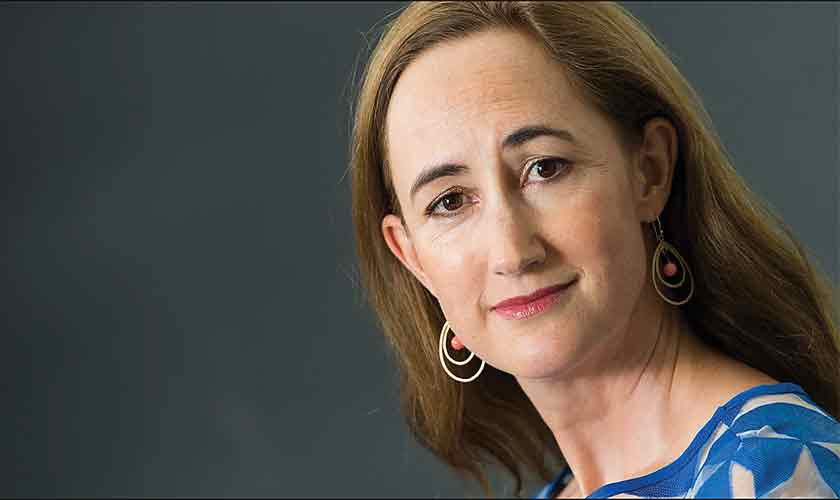
Sophie Kinsella dies at 56, but humour in her fiction lives on
| A |
s I slipped into an endless cycle of doom-scrolling last Wednesday, the voice of the inimitable Becky Brandon (née Bloomwood) reverberated through my mind – familiar, emphatic and conciliatory.
“Okay, don’t panic,” the disembodied voice delivered her signature line with an unmistakable optimism.
Becky is the emotional centrepiece of the nine Shopaholic novels, penned by British author Sophie Kinsella. Touted as “fiction’s most famous fashionista,” she is the perennial alter ego many of us, regardless of gender, evoke to justify an extravagant purchase.
That day, my mind wasn’t invoking the supposed wisdom of a shopaholic to rationalise a guilty splurge. Becky’s voice had been summoned for a weightier purpose: to act as a balm, an antidote of sorts.
Earlier, I’d stumbled upon an Instagram post announcing Sophie Kinsella’s passing. Despite Becky’s entreaties, panic surged through my heart as I scrolled through hastily written news articles about the demise of the author who had created such a memorable character.
The beloved best-selling author of the Shopaholic books died on December 10 at her home in Dorset, England. In April 2024, Kinsella had revealed on Instagram that she was suffering from glioblastoma, an aggressive form of brain cancer.
“I did not share this before because I wanted to make sure that my children were able to hear and process the news in privacy and adapt to our new normal,” she wrote. “I have been under the care of the excellent team at [the] University College Hospital in London and have had successful surgery and subsequent radiotherapy and chemotherapy, which is still ongoing.”
Kinsella assured her fans that she was “stable,” even though she suffered from fatigue and intermittent memory lapses.
Last year, she published a novel titled What Does It Feel Like? wherein she uses a thin fictional disguise to explore her personal battle with this chilling diagnosis. A courageous, soul-stirring text, What Does It Feel Like? is a veritable celebration of life instead of an epitaph. Be that as it may, it is admittedly Kinsella’s “most autobiographical work to date.” For some readers, the novel may seem like a far cry from the escapism that has characterised Kinsella’s body of work. Even so, the author’s creative choices reveal how storytelling holds a distinct restorative power and can open a doorway for catharsis.
“I have always processed my life through writing,” she is quoted as saying in a press release. “Hiding behind my fictional characters, I have always turned my own life into a narrative. It is my version of therapy, maybe.”
Intriguingly, ‘Sophie Kinsella’ is a nom de plume – an artful fusion of the author’s middle name (Sophie) and her mother’s maiden name (Kinsella). The author’s real name was Madeleine Wickham (née Townley).
Becky’s struggles – though depicted in a humorous vein – come to embody the modern-day consumer’s uneasy relationship with money.
Born in 1969, she read philosophy, politics and economics at New College, Oxford. Wickham went on to become a financial journalist before shifting her attention exclusively to writing fiction. She went on to publish six novels, including The Tennis Party (1995), The Gatecrasher (1998) and The Wedding Girl (1999), under her real name. Published successively between 1995 and 2000, these books cemented Wickham’s reputation as a prolific author praised by critics and readers.
Despite her numerous literary triumphs, Wickham chose to adopt a pseudonym – a decision at once bewildering and transformative. ‘Sophie Kinsella’ was a pen name forged from a burning desire to explore new literary horizons.
It all began one day when Wickham received a credit card bill. Her consternation over the shockingly high statement from VISA sparked the idea of a fictional narrative about the puzzling allure of shopping. That moment sealed her fate and sowed the seeds for what would become the famed Shopaholic series.
However, Wickham didn’t think she’d opened the portal to an extraordinary idea. Creative minds don’t readily embrace risks. Wickham’s training as a financial journalist led her to avoid staking everything on a single venture. Her new idea marked a radical departure from the themes explored in the Madeleine Wickham novels, which mined a darker vein of truth and largely comprised an ensemble cast. She couldn’t possibly sabotage an enviable writing career for a surge of raw inspiration.
Guided by caution, she cultivated a new creative persona as a safety net. Her plan was foolproof: if the idea of the Shopaholic novel failed to garner the attention she hoped for, her literary reputation as Madeleine Wickham would remain unscathed. From that moment, Sophie Kinsella was born. Just like that, Becky also came into existence, armed with shopping bags and a wallet packed with credit cards.
With each successive book in the Shopaholic series, Becky grew into a full-blooded protagonist who seemed to leap right off the page and inhabit a life of her own. Her unhealthy obsession with shopping may be a tragic flaw, but it never alienates readers. In fact, Becky’s struggles – though depicted in a humorous vein – come to embody the modern-day consumer’s uneasy relationship with money. Fuelled by impulse rather than rationality, Becky justifies every absurd purchase with an almost disarming realism. She views shopping sprees as gateways into confidence, however fleeting or illusory. Laced with wit and a sparkling levity, the Shopaholic novels are a subtle yet sizzling critique of contemporary consumerism.
Conventional wisdom would have us believe that the Shopaholic novels fall neatly within the category of ‘chic lit’ or women-centric fiction. These are often viewed as pejorative labels used to weaken the merits of a literary text. An ill-informed literary intelligentsia will happily relegate these novels to the status of non-serious texts, but such criticism has no bearing in the court of public opinion. In either case, snobbery has done little to raise the intellectual calibre of a shrinking readership. Meanwhile, Kinsella’s novels have sold over 50 million copies – a testament to her abiding relevance and popularity.
Kinsella billed her novels as “romantic comedies.” However, love invariably takes a back seat to other considerations in the novels. Becky isn’t the sum of her romantic escapades and is rarely seen swooning over her beloved Luke Brandon. Instead, her addiction to shopping finds itself at the emotional core of the story and fuels its humour and dramatic moments.
When I wrote Typically Tanya (2018), I sought to downplay romantic love and valorise friendship, creative ambition and notions of selfhood. Writing that novel would have been difficult for me if Kinsella hadn’t blazed a trail and shown me the way.
The writer is a freelance journalist and the author of No Funeral for Nazia.