Print Story
X




Kiran Desai’s long-awaited third novel explores the intersections of migration and creativity
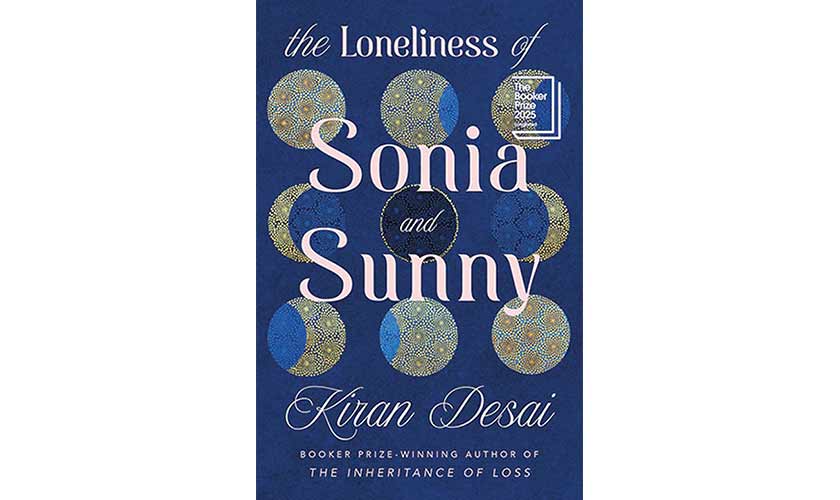
| I |
ntimidated by heavy tomes, some readers might be tempted to forgo Kiran Desai’s The Loneliness of Sonia and Sunny. A voluminous text spanning nearly 700 pages, the much-awaited third novel by the award-winning Indian author will elicit trepidation among those who view reading as a pleasurable activity instead of an intellectual challenge. However, sceptical readers will ultimately be doing a disservice to themselves by judging a book by the width of its spine instead of its substance. Unlike most lengthy works of literature, Desai’s latest offering is accessible, immersive and riveting.
The initial appeal of the novel is rooted in the title itself. Beyond unveiling the names of the two central protagonists, Desai’s catchy title calls attention to the crippling terrors of isolation—a pressing concern that now stands the danger of becoming a global epidemic. If a report released in June 2025 by the World Health Organisation’s Commission on Social Connection is anything to go by, one in six people across the globe are dealing with loneliness. Titled From Loneliness to Social Connection: Charting a Path to Healthier Societies, the report reveals that loneliness is linked to 100 deaths every hour, over 871,000 deaths annually.
Desai’s novel focuses less on such extreme cases of loneliness and more on the subtle manifestations of the phenomenon. Through its varied cast of characters, The Loneliness of Sonia and Sunny presents a captivating study on the assorted burdens and virtues of isolation in our globalised world.
Given that this Booker-shortlisted novel has been touted as a ‘literary love story,’ readers might expect romantic loneliness to lurk within these pages. Desai’s authorial vision is far from myopic, preferring nuance over superficial observations. Moving beyond simplistic interpretations, she captures the chaos, desperation and the liberties associated with loneliness. Notably, the emphasis on artistic loneliness prevents the narrative from adopting a distinctly pessimistic view on the subject. The trajectory of one of the novel’s numerous side characters reveals how loneliness can open the doorway for creative sustenance if one enjoys some degree of privacy.
The novel revolves around two peripatetic characters who enjoy privacy insofar as they are physically distant from their families back home in India. Yet, both protagonists are grappling with the debilitating effects of isolation.
The titular Sonia is far more vocal about her dilemmas. Enrolled at a university in the snow-capped peaks of Vermont during the late 1990s, she confesses to being lonely. This revelation baffles her paternal grandparents in India. “In Allahabad they had no patience with loneliness,” Desai writes. “They might have felt the loneliness of being misunderstood… but they had never slept in a house alone, never eaten a meal alone, never lived in a place where they were unknown.”
The differences in how loneliness is experienced across countries and cultures are strikingly revealing. Even so, Sonia’s family doesn’t pause to reflect on these considerations. Instead, they opt for the stereotypical route by initiating a trans-Atlantic exchange of letters and phone calls to help her find a suitable match—a possible antidote to their granddaughter’s distress. This well-meaning, yet intrusive, matchmaking bid directs them to Sunny, a struggling journalist in New York, who has left India to escape his domineering mother and is simultaneously negotiating his own equation with the two worlds he inhabits.
Mercifully, the matchmaking bid is foiled and the titular protagonists are spared the ignominy of a quick and convenient ‘arranged marriage,’ which would have been a rather monotonous trajectory for the characters. As emotional or professional compulsions pull the characters towards new vistas and destinations, their love story becomes all the more distinctive.
Desai’s novel focuses less on extreme cases of loneliness and more on the subtle manifestations of the phenomenon.
Complicated by geography, trauma and the drama that unfolds in the protagonists’ lives, Sonia and Sunny’s romantic saga is the reward that Desai seeks to obtain from her third novel. In her relentless search for this trans-national love story, she employs an omniscient narrator, who embarks on a long, meandering journey toward achieving this vision. Like an undersea creature, Desai’s all-knowing narrator crawls in and out of the lives of numerous characters to extract the desired conclusion. Be that as it may, her narrator is a slow-moving beast who leads readers down pathways where they must wait an agonisingly long time for a surprising twist or a sparkling revelation. That said, finishing a long novel requires a single-minded devotion to see the story to its end. Cynical readers are, therefore, encouraged to remain perseverant, even if the narrative begins to lose its steam.
Desai’s secondary characters are arguably her greatest triumph. Be it the hapless Mina Foi or the greedy yet endearing Babita, these ancillary figures are often put to better use than the titular protagonists. Their individual trajectories deepen our understanding of loneliness as an unavoidable, yet complex, human condition.
Nevertheless, Desai’s attention remains firmly on the main characters. A common thread that runs through Sonia and Sunny’s lives is their abiding interest in the written word and the arcane nature of the creative process.
Sunny is intrigued by Gabriel Garcia Márquez’s notion that fiction and journalism are the complementary wings of the enterprise of storytelling, but remains conscious of the all-important Western gaze. “There was perhaps a fundamental flaw in a brown person going to the brown world to tell the white world about the brown world… and… also telling the brown world about itself (upside down) from this location,” Desai writes. The narrator recognises that “performing this acrobatic service” would strip Sunny of his own identity and prevent readers of his reportage from understanding themselves.
Sonia, too, is paralysed by the blinkered focus on the Western lens. A conversation with an emotionally abusive partner—whom she gravitates towards on account of her loneliness—makes her suspicious of the magic-realist tale she is writing, as it runs the risk of being perceived as “orientalist nonsense.”
Both protagonists resist the temptation to explain themselves to an “absent anthropologist,” who is briefly mentioned on the novel’s second page, but seems to haunt it like a spectre. Sunny and Sonia make a series of choices that stand in cold denial of that anthropologist’s probing gaze. Desai, though, doesn’t allow herself to be influenced by any rigid expectations to conform or offer explanations. As a result, her novel skilfully bends genre, moving from romance and noir to magic realism at a dizzying pace, which is a testament to the power of uninhibited creative freedom.
Desai’s Booker Prize-winning second novel The Inheritance of Loss had a largely political focus. The Loneliness of Sonia and Sunny only ventures into the realm of politics for the sake of art. Politics is a critical ingredient that helps her concoct a story set in disparate worlds. Yet, it seeps into the narrative in a quiet, subversive manner. At a crucial point in the novel, the life-altering events of 9/11 are filtered through the perspective of a character settled in Mexico. It is difficult to see this as anything other than a subtle critique of contemporary political tensions.
The Loneliness of Sonia and Sunny
Author: Kiran Desai
Publisher: Penguin Books, 2025
Pages: 680
Price: Rs 4,095
The reviewer is a freelance journalist and the author of No Funeral for Nazia