Print Story
X

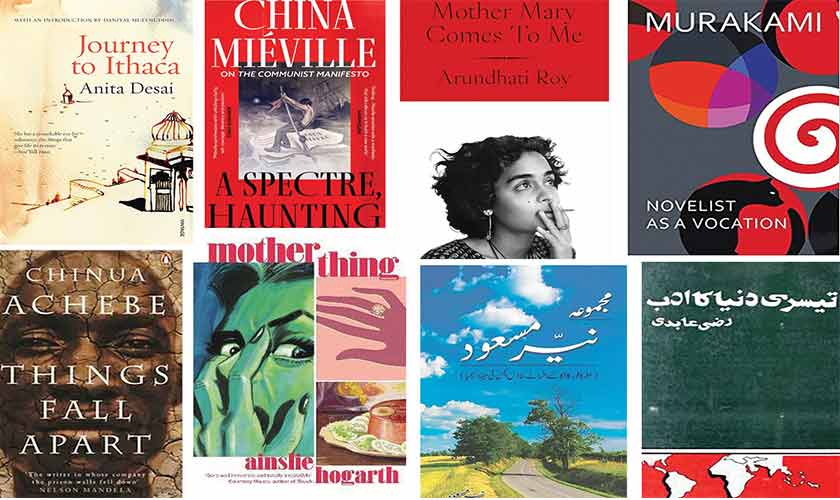
The end-of-the-year books list at The News on Sunday is often less about listing the best books published and more about what moved us in a particular year. Sometimes it is about both. This time, we asked writers to reflect on the books that stayed with them as companions through a difficult year.
Their responses, presented in alphabetical order, reveal how private mourning and collective violence are deeply entangled; how, at times, the only way to confront challenges is to face them directly – and ask what existence is worth if we remain invisible. Some readers found solace in revisiting political texts written more than a century ago; others realised that sometimes all one needs to make sense of the present is a book and the strength to hold on to purpose without the need for external validation.
Dur-e-Aziz Amna
Author, A Splintering
| L |
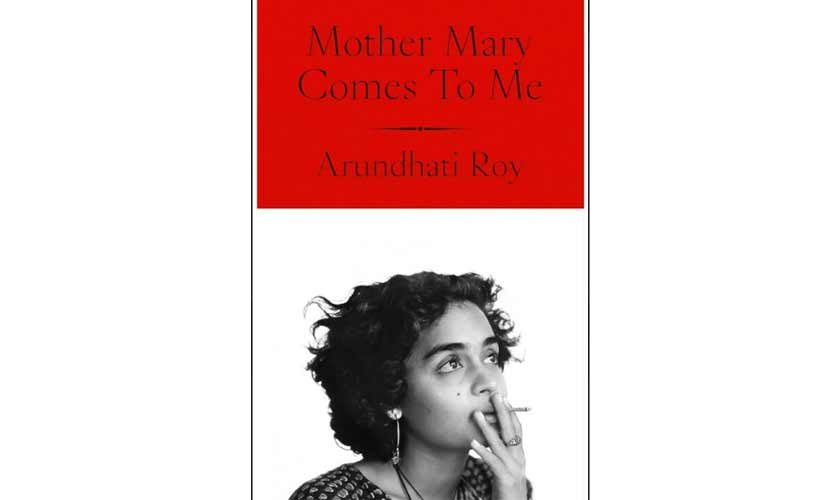
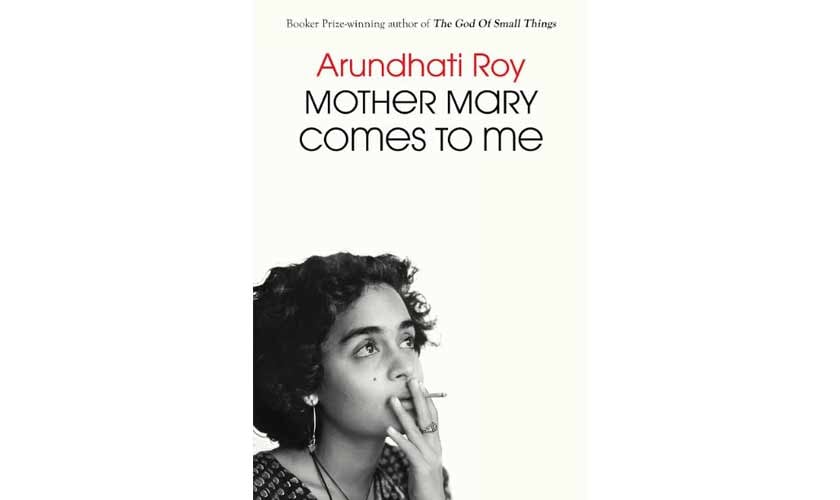
Like thousands of others, I desperately awaited September, so I could get my hands on Arundhati Roy’s memoir, Mother Mary Comes to Me, an account of her stormy relationship with her mother, Mary. It’s not a perfect book, but one that left a deep impression on me. Writing about Mary Roy’s funeral, Roy writes, “She said she wanted to be cremated. She had marked out two jackfruit trees that were to be cut down and used as firewood. That she believed it would take two gigantic trees to send her off was a measure of her undiminished self-regard.” Roy’s own larger-than-life stature as the remarkable thinker and writer that she is sometimes leads to diminishable self-regard too. The memoir requires a smart reader who can see through not just Mary but also through Roy. But God, the language, its twists and turns, its deep gashes, just as deep as the ones Mary left on Arundhati. “I had never wanted to defeat her, never wanted to win. I had always wanted her to go out like a queen,” she writes, touching anyone who has loved a forceful parent, who has ever roamed the earth with a picture of them in their heart. “Tairi soorat say kisi ki nahin milti soorat Hum jahan mein teri tasveer liyay phirtay hein.”
Mahmood Awan
Dublin-based Punjabi poet
| T |
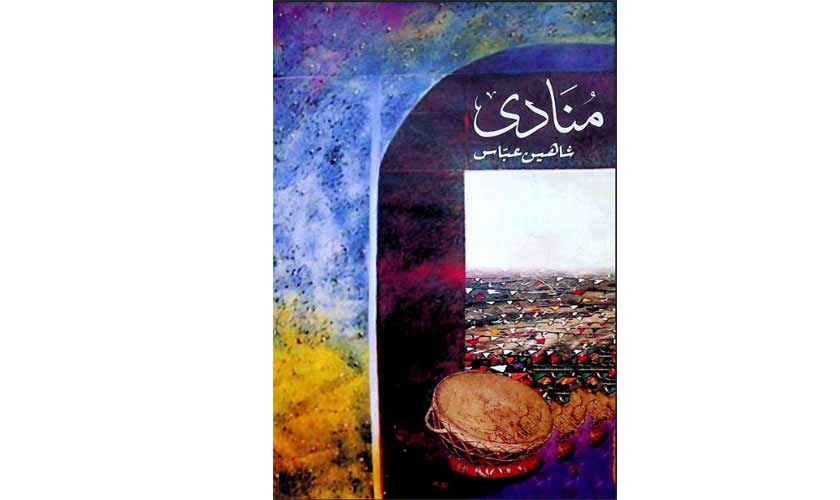
There are some years of when books quietly return one’s faith in the power of writing, research and remembrance. This was such a year for me. Among the most meaningful encounters was Dr Nabila Rehman’s meticulous research on the Sufi poet Faqir Qadir Bakhsh Bedil (1815–1873), culminating in the collected Punjabi poetry titled Ramz Wajood Wanjawan Di. Her work is not merely an act of compilation but one of devotion, where she recovered a spiritual and poetic legacy with scholarly care and cultural sensitivity. Equally reassuring was Shaheen Abbas’s Urdu poetry collection, Munaadi. Shaheen Abbas is a poet of rare versatility, equally at home in the discipline of the ghazal and the expanse of nazm. His voice moves effortlessly between introspection and upheaval, intimacy and chaos. Lines such as: Udhar baatein hi baatein hain / idhar main aur shor-o-sharr ka pehla tajruba maira / meri tareekh jaanay kon likhay ga.
However, the most profound literary moment of the year came through Safdar Wamiq’s extraordinary labour of love and his relentless effort to bring the forgotten Punjabi songwriter Manzoor Jhalla (c.1920-1979) back into public memory. Undertaken without institutional backing and any financial support, Wamiq’s work is powered purely by passion, grit and an unwavering sense of responsibility. Over eight years, he travelled across the Punjab, speaking to hundreds, piecing together fragments of a life that history had allowed to fade.
Manzoor Jhalla was once among the most popular Punjabi songwriters, his songs immortalised by voices such as Reshman, Noor Jahan, Alam Lohar, Naseem Begum, Maala, Masood Rana and Sain Akhtar. Songs like Lai Bayqadraan Naal Yaari, Hai O Rabba Nahin Lagda Dil Maira, Way Laggiyaan Di Lajj Rakh Lain, Kittay nain nah joReen and Takk patri waalia laikh meray were woven into the emotional fabric of a generation. And yet, following his death on June 4, 1979, he slipped into obscurity as if he had never existed. Wamiq’s tribute arrives in the form of two volumes: Manzoor Jhalla: Hayati Tay Fann and Kulliyaat-i-Manzoor Jhalla. The former, to my knowledge, is the first full-length work devoted to Jhalla’s life and a critical examination of his literary contributions; the latter restores his complete body of work to its rightful place. Together, they stand as an act of cultural justice, proof that remembrance, when pursued with sincerity, can defy erasure.
Taha Kehar
Author, No Funeral for Nazia
| T |
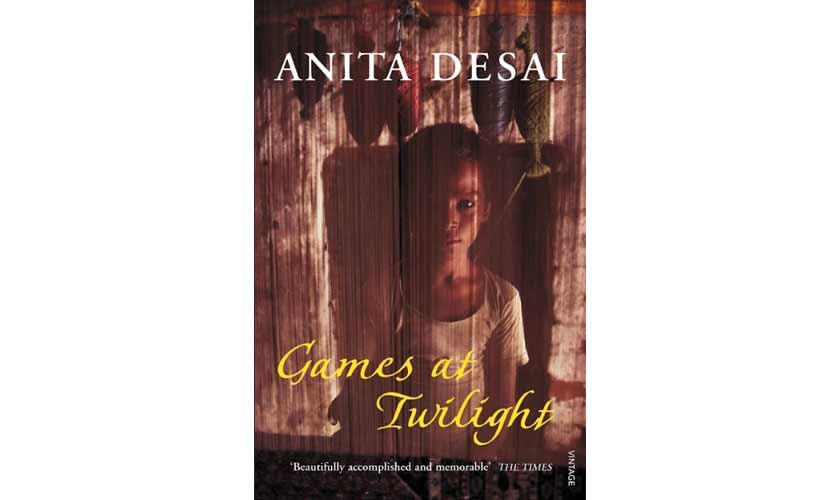
The year hurtled past in a dizzying blur, heavy with its chaos and tragedy, yet punctuated with occasional moments of joy. In these uncertain times, literature was my talisman – the only companion I could trust. Apart from discovering new creative voices, I drew comfort from the familiar words of a beloved author, albeit in a new avatar. I’ve been reading Anita Desai’s quiet, poignant novels since I was 17, but I had never explored her short fiction. Driven by a desire to take a short dip instead of a deep plunge into her fictional landscapes, I browsed through Games at Twilight, her first collection of stories.
It steadily dawned on me that Desai had sown the seeds of some of her accomplished novels in shorter narratives. Scholar and Gypsy served as a take-off point for Journey to Ithaca, her longest novel to date. The Accompanist laid the groundwork for In Custody, Desai’s Booker-shortlisted novel on the complexities of male friendship and the erasure of Urdu in post-colonial India.
Games at Twilight was a refreshing reminder of how short fiction can often become the space where ideas can be nurtured and honed, a playground of sorts for creative experimentation.
As I raced through the collection, I discovered that all ideas nag at writers, demanding their undivided attention, until they are pursued and brought to fruition. The same logic can be applied to our everyday challenges: they linger until they are confronted and addressed.
Harris Khalique
Poet and essayist
| A |
As 2025 draws to a close, even if I try to detach myself from the thick of things and attempt to rationalise the events of this year, placing them in a longer space-time continuum, it remains a year that has been incredibly tough, with nothing making sense. Indeed, it is a feeling shared by many from Palestine to Sudan to Ukraine to our part of the world. The external political stresses, coupled with certain happenings in my personal and professional life, caused me distress. I remained at the lowest ebb of motivation, with little desire to finish the unfinished work or start something afresh.
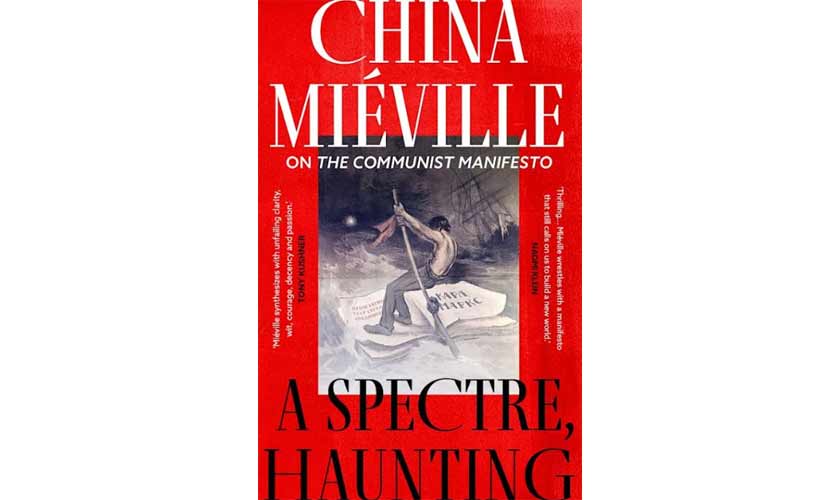
Then, one day, I received a book as a gift from the leading human rights defender and veteran journalist Zohra Yusuf. It is by the British author China Mieville, titled A Spectre, Haunting: On the Communist Manifesto, first published in 2022 by Head of Zeus in the UK. What gives me pleasure always, besides solace in troubled times, is poetry and fiction. It came as a surprise that a book that analyses, appraises, elaborates and then situates in our time a political tract written in 1848 by Karl Marx and Frederich Engels could bring me such comfort and hope. Mieville captures the human condition over centuries and argues how the Communist Manifesto is still relevant and looms large over the imagination of struggles for justice and egalitarianism. Perhaps the other reason to like the book was Mieville’s gripping language. Like Marx, his language is performative, ironic, witty and passionate. Whether I could make sense of 2025 or not, reading Mieville helped me find some meaning in the struggles we wage.
Saba Karim Khan
Author, Skyfall
| T |
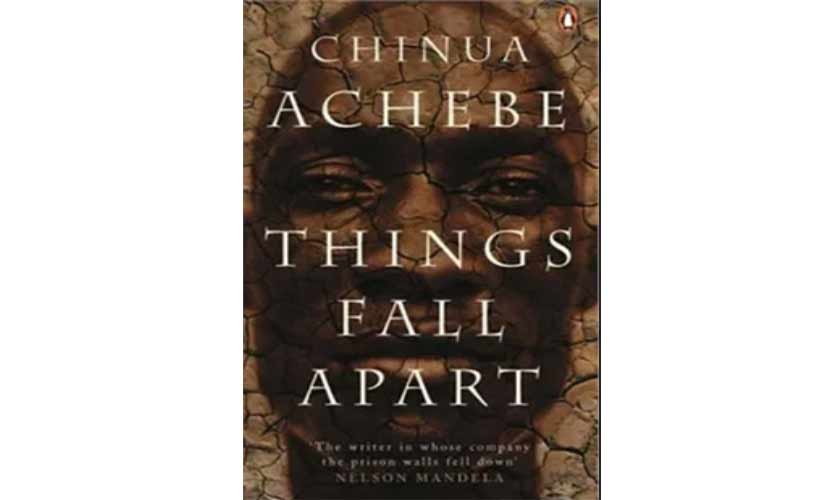
This year, reading Chimamanda Ngozi Adichie’s Notes on Grief alongside Chinua Achebe’s Things Fall Apart, I am struck by how loss moves quietly between the personal, the historical and the political present. Through these texts, I search for meaning in a world eroded by political paralysis, silenced dissent and the steady normalisation of human suffering. Adichie writes in the immediate aftermath of her father’s death, tracing how grief dismantles language, time and the body itself. Her account is intimate, disorienting and relentless. Achebe, writing about the unravelling of an Igbo community under colonial rule, offers another register of mourning, revealing how worlds rarely collapse all at once but are systematically dismantled – often in service of a powerful few who cling most fiercely to control.
After losing my mother last year, I have come to understand grief less as a moment than as a rearranged prism through which to move through the world. It sharpens my attention, alters what I notice, deepens my unease, and yet, unexpectedly, opens new capacities for gratitude. In this light, Adichie’s insistence that grief does not move on command or offer quick, neat fixes, feels both personal and essential. Grief asks to be witnessed, honoured, and perhaps, in time, embraced. When sorrow is rushed past or denied, it does not disappear; it settles into both the body and the common air we breathe.
From Karachi to Khartoum, in a world shaped by war, displacement, imprisonment and an unending web of suffering, Adichie and Achebe help me see how private mourning and collective violence are deeply entangled. Between them lies a difficult but necessary invitation: to refuse to look away, to sit with what has been broken, to name what is being undone before it vanishes completely – and, above all, to imagine, albeit imperfectly, what it might mean to begin again. That this imagining remains possible is, for me, the quiet and enduring promise of literature and storytelling.
Nasir Abbas Nayyar
Author, Naiy Naqqad Kay Naam Khatoot
| A |
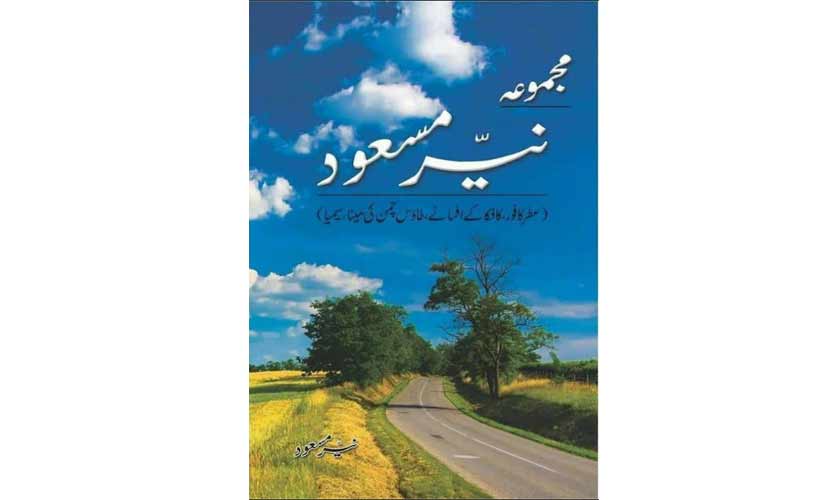
A great book does not serve as a key to unlock a mystery; instead, it offers a journey into the unexplored dimensions of existence. For me, the most profound encounter of the past year has been with the Majmooa-i-Nayyar Masood (Collected Works of Nayyar Masood). A scholar of classical Urdu and Persian from Lucknow, Masood (1936–2017) was an outstanding figure who seemed to bridge the gap between classical tradition and modern experimentation. He pioneered a technique known as “dream realism,” a style that remains unparalleled in Urdu fiction. In stories like Nusrat, Murasala and Sultan Muzaffar ka Waqea Navees, Masood vividly recreates his own dreams. In other stories, he employs what can be called a grammar of dreams.
Story serves as the underlying architecture of all dreams, making every night’s vision a unique form of flash fiction. While masterpieces such as Seemia, Bara Koora Ghar, Maskan, Nudba, Itr-i-Kafur and Ojhal are enthralling, they resist easy, single interpretation. At times, the effect of these stories is so profound that any attempt to decode their meanings becomes a futile exercise. What makes Masood truly exceptional is his rejection of the supernatural. Despite the poignant yet melancholic atmosphere, his work lacks metaphysical elements and avoids tropes. He portrays the lives of ordinary people, with rare exceptions like Taoos Chaman ki Maina, which draws from the royal history of Lucknow. His characters are often nameless and his settings are stripped of specific geography or time, creating a sense of universal displacement.
Most remarkably, Masood is perhaps the only Urdu writer to fully embrace a “pure prose aesthetic.” He deliberately avoids the crutches of poetic devices, such as similes and metaphors, relying instead on a startlingly direct and stripped-back narration. By removing dramatic tension and suspense, he creates a purposeful deceleration. This calmness allows him to capture the essence of life’s flow – the quiet, undeniable realities of birth, death, love and loneliness that are always present but rarely fully perceived. In Masood’s world, the mundane becomes monumental, not through exaggeration, but through the sheer clarity of his gaze.
Naima Rashid
Author, Sum of Worlds
| T |
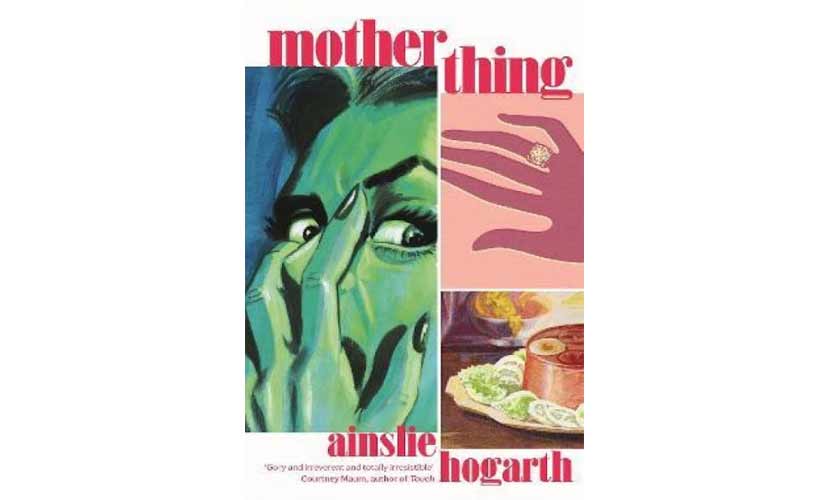
This year, the book that left a mark on me was Motherthing by Ainslie Hogarth. It’s a dark, domestic horror/ comedy about a woman’s troubled relationship with her mother. I love stories about difficult mother-daughter relationships, so I reread Burnt Sugar as an accompaniment, though tonally different.
In Urdu literature, I enjoyed the small wonder that is Jandar by Akhtar Raza Saleemi. Stories that open up a place linger with me, especially those with a mytho-allegorical element. On the other end of the length spectrum, Marg-i-Dawam by Indian writer Siddique Alam stayed with me. Alam is charting new paths in Urdu novel, merging storytelling with a Dostoevskian moral/ philosophical strain. The novel asks an unsettling question of us – what is existence worth if we are invisible?
Finally, in Pakistani Anglophone literature, there were some valuable additions that either lived up to the promise of a trajectory or held a light to new potential. Ferdowsnama, Shandana Minhas’s new novel, told from the point of view of Ferdows, from a Mughal hunting party, questions who records history, what we must believe and what we mustn’t. Faiqa Mansab’s The Sufi Storyteller, almost a decade after This House of Clay and Water, mixes murder mystery with Sufi storytelling.
Among debuts, Ammar Aziz’s poetry collection, The Missing Prayer, is brilliant poetry and very fine production in its Aks hardback edition. I recently read Coming Back by Shueyb Gandapur, a collection of travel vignettes that made for an engaging and honest read.
Saad Shafqat
Author, Rivals
| E |
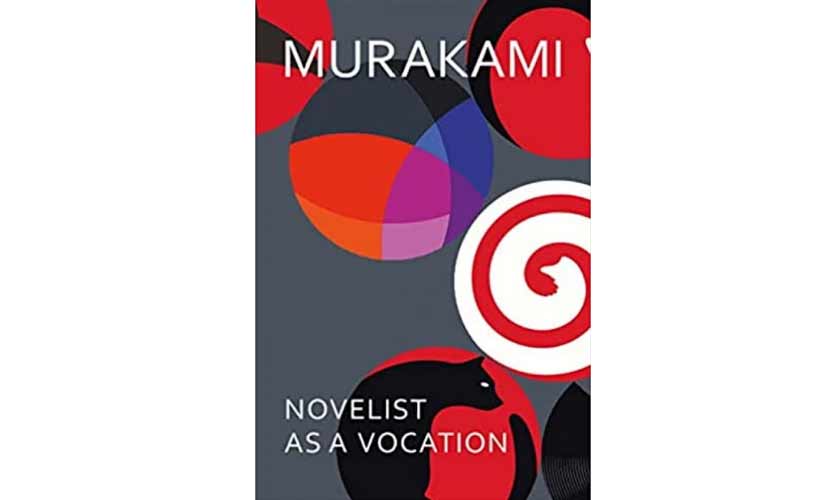
Earlier this year, while browsing the discounted shelves of my favourite Karachi bookstore, I spotted an intriguing book by a renowned author. As someone who has himself taken a stab at novel writing, the title Novelist as a Vocation grabbed me instantly.
It proved to be an authentic window into the mind of Haruki Murakami, a master storyteller. Murakami writes in Japanese. His works have been extensively translated, including into English and Urdu. Starting in 1979, his output to date comprises around 30 books, encompassing novels, short story collections, memoirs and essays. He is frequently discussed as a potential Nobel laureate.
Novelist as a Vocation opens with the assertion that almost anyone can produce a novel. All you need is some basic writing ability (which most people have) and the urge to tell a story (which is part of the human condition). What sets great novelists apart, however, is talent combined with longevity and endurance. Murakami also stresses the solitary, inward nature of the writing act; it is best done when you ignore the pressures of popularity, criticism and awards. Underpinning all this is hard-wired discipline and dedication. These reflections are expressed with remarkably self-assured clarity and declarative candour.
Murakami’s ideas appealed to me as a helpful lesson in coping with what has been a truly tough and challenging year. You have to find a way to positively contribute to the world and stick to it without needing external validation.
Haider Shahbaz
Author and translator
| T |
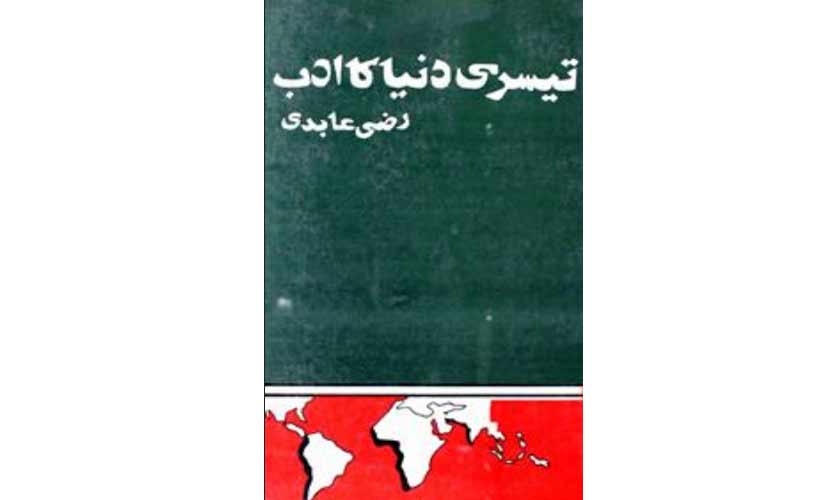
The writer and critic, Razi Abedi, passed away in Lahore this year. He studied literature at Punjab University and Cambridge University, and spent his life teaching at various educational institutions in Lahore. His most important critical contribution is the study of the literatures of the downtrodden, especially in the Third World, what is now commonly referred to as post-colonial literature.
The news of his passing took me back to his 1988 classic, Teesri Dunya ka Adab (Literature of the Third World). After all these years, the book remains a seminal study. The essays in the book engage with Black writers, especially the Négritude movement, Arab poetry, African writers like Ama Ata Aidoo and Amos Tutuola, anti-apartheid writing from South Africa and Dalit literatures, among other writers and geographies. Abedi also translated Dalit poets, including JV Pawar and Arjun Dangle, founders of the Dalit Panthers. Abedi’s work reflects a larger focus in Urdu literature from the 1960s to the 1980s on the study and translation of literatures from Asia, Africa and Latin America.
Today, as the world turns once again towards ideas and practices of resistance in the Global South or the Third World to save us from what seems like the inevitable catastrophe of ongoing capitalism and colonialism, we might find an orientation, if not meaning, in the work of people like Abedi and books like Teesri Dunya ka Adab.
Farah Zia
Former editor, TNS
| I |
It was a difficult year, but which year isn’t? Nor was I too keen on making sense of the year or its difficulties through reading. Yet, I did make an effort to go and buy a copy of Mother Mary Comes to Me because I wanted to know about one of my favourite authors, whose first memoir this was. It must take some courage to write about your own life…
This may have been the only book this year that I read cover to cover. Roy, the daughter, must know about the scrolling addiction of the likes of me to have divided the book into bite-sized chapters. Yet, only a master like her could compress the about sixty or so years of her own life, and that of her country, in a structure that is both readable and profound.
The mother’s figure is only incidental to the story. Or that’s how I read it.
One incident that stayed with me is when the tyrant mother, the supposed protagonist, beats her son (Roy’s brother) in the middle of the night “until the thick wooden ruler broke” for bringing bad exam results. In the morning, she hugged her daughter, Arundhati Roy, for her brilliant exam report. The consequent insight of the author — that every time she is applauded for a personal achievement, “I always feel that someone else, someone quiet, is being beaten in the other room… it’s true, someone is” — is to me the essence of Mother Mary.
She uses the sentence at least one more time in the book. Perhaps twice. How could she not. The humility, the ability to put one’s own achievement in perspective, was again at play when she got the Booker Prize and understood, in that very moment, its potential to become a gilded cage.
I could go on and on about the book (or is it all writing?) being an absolute lie and the whole truth at the same time. Let’s just settle for this: it redeemed the act of reading for me, and elevated it. I must reread it.