Print Story
X




For Hafeez Khan, the kafi is not only devotional, it is a form of protest as well
| H |
afeez Khan, a distinguished author in Seraiki and Urdu, appears to hold the view that literature transcends mere witnessing the contemporary world; it serves as a realm where the grand narrative of the present, past and future is re-enacted, contested and restructured. To assert that literature merely paints the outside world or the influences that permeate the inner lives of individuals is reductive and a misconception. Literature does not simply document events; it also transforms real occurrences into fantasy, diverges from chronological order and is unafraid to alter the time-space relationships articulated by historians, scientists and philosophers. Literature reimagines the world, presenting an alternative yet redemptive reality. The desire to forge an alternative version of reality arises from humanity’s instinct for survival and the pursuit of beauty and perfection, as well as from the struggle of the oppressed against their oppressors. The battles that the oppressed lose on the battlefield seek to be initiated, fought and ultimately won within their narratives and poetry. For these individuals, the literature of their native languages represents a domain that cannot be colonised. The pages of indigenous literature are markedly different from the folios of history. While history may become a tool to further the ideology of the oppressor, poetry written in the language of the oppressor can, in some cases, serve a similar function. However, the language of the oppressed flows through their veins and remains beyond the sight and control of the oppressor. It is a hard fact of colonialism that what lies within sight of the coloniser is condemned to be colonised. This is why a grand project of studying indigenous languages, their orature and literature is initiated in every colonial country. What is thought to be obscure is sought to be brought into sight.
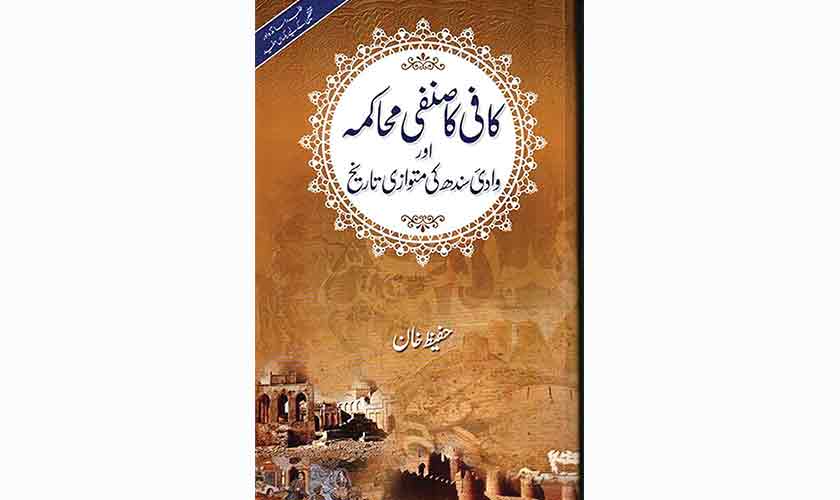
In this context, Khan has analysed kafi. He believes that kafi is genuinely indigenous, representing a great cultural product of the Indus Valley. It is one of the most celebrated forms of poetry, particularly in Punjabi, Seraiki and Sindhi. He contends that the subaltern voices of the Indus Valley are articulated through kafi. Khan distinguishes himself from those who regard Kafi as merely Sufi poetry. For him, Kafi represents an alternative historical narrative expressed through poetry by the marginalised individuals of the Indus region. He maintains that the Sufis from this land have composed kafis that encompass themes of divine love; however, there exists a significant divide between the concept of God held by the rulers, viceroys, priests, mullahs, pandits and missionaries, and that embraced by Sufi poets. The ruling exploiters not only bring with them horses, swords, cannons, and professors but also a specific interpretation of God. Paradoxically, their notion of God serves their earthly, secular and political ambitions. They engage in exploitative practices under the guise of religion. They require God to validate their actions, which are from the outset entangled in moral dilemmas. Their God demands absolute obedience and exhibits wrath in response to disobedience. Ironically, the wrath of their God is manifested through their punitive systems. In contrast, the conception of God presented by kafi poets is one of kindness, benevolence and forgiveness. While one must submit to kings and their God, the oppressed seeks to engage in dialogue with God. They pray to Him, commune with Him and lay before Him their miseries and sufferings. They even complain, questioning why He allows stone-hearted rulers to inflict such hardship. This theme of shikwa (complaint) is common among these kafi poets.
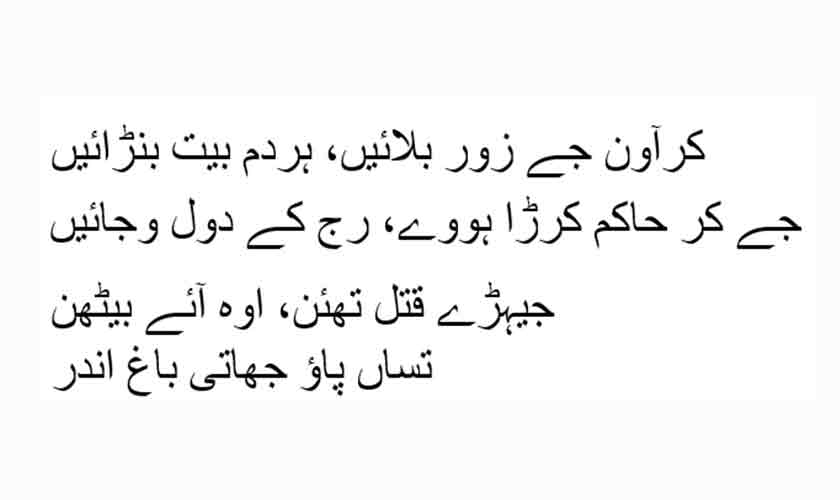
It is important to emphasise that poetry is not a mere refuge or a space for lamentation and sorrow for the oppressed; rather, it actively confronts power and colonial narratives of history. Poetry possesses its own means of resistance and its own ways to advocate for the downtrodden. Khan has referenced verses from the works of Rifat Abbas, a distinguished Seraiki poet and novelist.
[If the evil spirits are unleashed, create poetry every moment. If the ruler is harsh, beat the drum uninterruptedly.]
[Those who were murdered have arrived. Just look inside the garden.]
The garden, as created by kafi poets, is a paradise. Here arrive the ‘sons of soil’ who were killed by oppressive rulers and erased from the pages of history. Kafi poetry never lets the memory of these ‘wretched of the earth’ fade. In this way, it resists the forces of death and erasure.
Khan emphasises that while kafi’s language is predominantly religious, its primary thematic focus is on the ordinary and the secular. It is infused with themes of devotion to God and His compassion, aiming to foster empathy for the oppressed. The concept of ishq in kafi encompasses both divine and human aspects, haqiqi and majazi. Essentially, kafi transcends any singular religious identity. It articulates the sufferings and struggles of the common folk. Just as in kafi, the voices of the marginalised are also present in genres like shabd, pad, ashlock and ganan. He contests some critics’ view that kafi represents Muslim poetry, shabd is Hindu and ashlock Sikh.
Khan’s examination of kafi is anti-colonial in nature, yet he refrains from using academic jargon. He appears to believe that academic discourse often falls prey to its elitist framework. In the second chapter of the book, he systematically deconstructs all academic definitions of kafi. He asserts that kafi cannot be defined by any distinct formal or structural traits. While he takes stock of traditional explanations – like its Arabic etymology (sufficient) or its links to musical forms like the kafi raga and asthai (initial line of song) – he concludes that its true nature is functional: kafi is the poetry of resistance. He argues that resistance itself is not a static category but a dynamic flow, a stream that creates its own form based on its needs. It is poetry that springs directly from the injured yet courageous souls of the wretched of the earth.
In kafi, we find a continuous dialogue with history, God, kings, beloved and one’s inner self. However, an intimate exchange with either the earthly or divine Self does not adhere to a specific structure. Consequently, kafi, as a form of poetic resistance, can be found in every indigenous language, though with different names. Regarding the feminine narrator of the kafi, Khan argues that this does not signify subservience or cowardice; rather, it reflects the strength of indigenous culture, which grants a central role to the feminine voice and perspective.
Khan’s anti-colonial perspective appears to be intricately woven into the unyielding boundaries that separate the oppressor from the oppressed. They inhabit two distinct realms, their identities being unique, monolithic and unchanging. They typically originate from far-off, foreign territories, bringing with them their languages, such as Persian, Arabic, and English, along with their literary traditions. The cultural and literary impact of the foreign ruler mirrors their political and economic framework. The oppressed find themselves compelled to either conform or resist.
In situations where open resistance is not feasible, they express their defiance through their oral traditions and literature.
Khan articulates his argument in Urdu, a language he criticises for its significant Persian influence, stemming from the language of Muslim rulers. This indicates that every language, whether indigenous or foreign, has multiple functions. A language that is politically and economically favoured, regarded as a means of power and social status, can also serve as a medium for resistance. Resistance can manifest not only in any language but also through other mediums and signs. Resistance can manifest through any means, even the profound silence of the oppressed. Paradoxically, the very symbols of a subjugated culture can be co-opted to reinforce colonial authority. A potent example is the use of indigenous languages to write qasidas (traditional panegyric poems) praising the coloniser, thereby transforming a potential tool of defiance into one of subjugation.
In another significant book Nauabadiayti Khiton ka Niya Mukalma,(A New Dialogue of Colonial Nations), Khan extends the theme he introduced in his book on kafi. In the above-mentioned book, Khan examines Rifat Abbas’s poetry. He posits that through the work of Rifat Abbas, Seraiki transcends its isolation and connects with the contemporary anti-colonial literary movements of Latin America, Africa and Asia. Within the poetry and novels of Rifat Abbas, we encounter an indigenous individual emerging from the remnants of history, narrating the tale of his defeat, violence and erasure from the chronicles of kings.
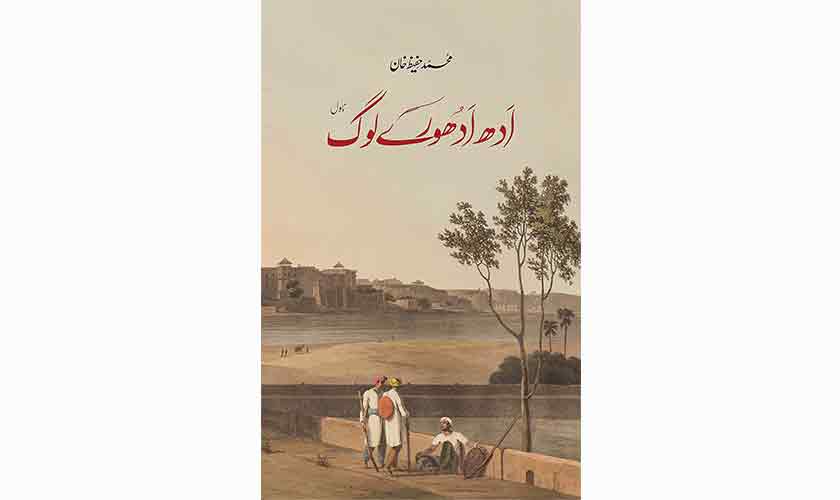
In addition to literary criticism, Khan writes fiction in Seraiki and Urdu. His fictional works challenge the narrative of power constructed by colonisers or their accomplices. It appears that kafi serves as the local poetic instrument of resistance, while the novel functions as a global mechanism of defiance.
The writer is a Lahore-based Urdu critic and fiction writer. He is also the current head of publications at Gurmani Centre, LUMS. His new book Mera Daghista-i-Jadeed is in press.