Pakistan should not just think of a pipeline. Pakistan should think of an energy corridor – oil, gas, power, storage, refining, transit and border industry. Iran has hydrocarbons. Pakistan has geography. Iran has energy. Pakistan has the shortest route to the Arabian Sea and South Asia.
Pakistan should establish a Pak-Iran Power Grid. Pakistan must start with electrons before molecules because electricity is faster than a gas pipeline – less controversial, more modular. Pakistan must scale it to 500MW, 1,000MW and then to 3,000MW.
Pakistan should create a Pak-Iran Energy Belt along the Makran coast from Gwadar, Pasni, Ormara and Karachi. Pakistan should use Iranian gas and electricity for minerals processing, cold storage, fisheries, desalination and export zones. Don’t just bring energy into Pakistan. Use energy at the border to create industry.
Pakistan should put up a Pak-Iran Petrochemical and Ammonia Hub near Gwadar. Convert gas into fertiliser, methanol, ammonia and shipping fuel. Gas should create dollars, not circular debt. Iran supplies gas and power, Pakistan supplies labour land and access to ports. Use Iranian gas not for household consumption but for export industries – textiles, data centres, steel, chemicals, ceramics and copper processing.
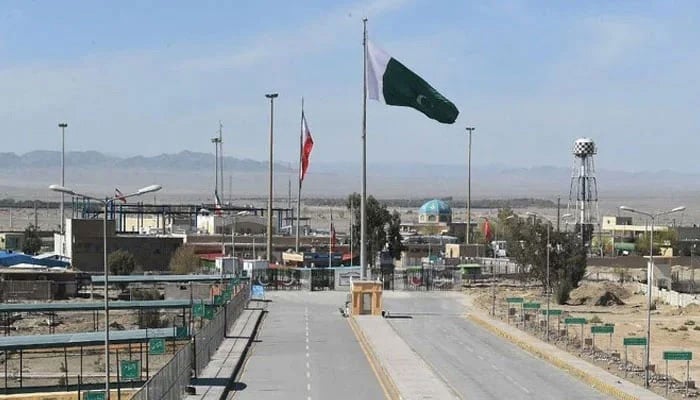
Pakistan must build four energy-backed Pak-Iran Border Industrial Parks at Taftan, Gwadar, Panjgur and Turbat. Alongside the future gas pipeline, Pakistan should immediately develop mini-LNG and CNG corridors comprising compressed gas trucking, small-scale LNG, border regasification and industrial off-take clusters.
Pakistan must develop a Gwadar-Chabahar Energy Twin-Port Model, a joint logistics platform for oil, gas, containers and minerals. Gwadar for storage, re-export and CPEC connectivity; Chabahar for Iranian access and regional trade. Pakistan must not treat Gwadar and Chabahar as rivals – create complementarity.
How about a Pak-Iran Blue Ammonia Hub? Iranian gas, Pakistani geography, and carbon capture combined to produce fertiliser, methanol and shipping fuel. The objective is simple: convert gas into dollars, not circular debt.
Pakistan must create a Corridor Financing Structure with separate bankable modules for power import lines, storage terminals, industrial parks, refinery upgrade, port logistics and border markets (each project to have its own revenue stream).
An oil pipeline: Iranian crude to Gwadar storage and then export. Every major energy hub has storage – Fujairah, Rotterdam, Singapore and Cushing. Pakistan must build strategic crude oil storage facilities at Gwadar.
Pak-Iran Power Grid will add $2-3 billion a year. Pak-Iran Energy Belt $3-5 billion. Pak-Iran Blue Ammonia Hub $1-1.5 billion. Pak-Iran Border Industrial Parks $2-4 billion. Mini-LNG corridors $2-3 billion. Gwadar-Chabhar Twin-Port Model $2-4 billion. Iran-Pakistan Gas Pipeline $4-6 billion. Expanded goods trade $6-10 billion. Refinery upgrades: $3–5 billion. Petrochemical $3–5 billion. Transit fees/logistics/storage: $2–3 billion.
Collective potential under a realistic strategic case: $30-35 billion a year. Collective potential under a full corridor case: $40-45 billion a year. First phase: 2–5 years. Full corridor: 5–8 years.
The historical pattern is clear: Energy corridors transformed Rotterdam. They transformed Singapore. They transformed Fujairah. Pakistan now has an opportunity to build one of the world’s great energy corridors linking the Gulf, Central Asia, South Asia and Western China.
Old thinking: Iran-Pakistan gas pipeline. New thinking: Pakistan-Iran energy corridor. Lesson from history: One pipe is vulnerable. A corridor is bankable. A corridor creates revenue. A corridor creates leverage.
The writer is a columnist based in Islamabad. He tweets/posts @saleemfarrukh and can be reached at: [email protected]