Budget 2026–27 has been presented at a pivotal moment for Pakistan’s economy. After several years marked by economic uncertainty, high inflation, external financing pressures and difficult stabilisation measures, the country appears to be moving toward a more stable macroeconomic environment.
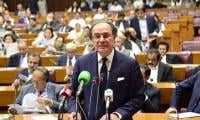
The budget, with a total outlay of Rs18.77 trillion, reflects a cautious but deliberate approach. Rather than pursuing an expansionary path, policymakers have opted for a framework that prioritises stability while introducing selective measures to encourage investment and economic activity. This approach may not satisfy every stakeholder, but it reflects the realities facing an economy operating under significant fiscal constraints.
One of the most notable features of the budget is its emphasis on fiscal responsibility. The government has set a fiscal deficit target of 3.6 per cent of GDP and a primary surplus target of 2.0 per cent. These targets are intended to reinforce confidence among investors, international financial institutions, and development partners. Fiscal discipline may not generate headlines in the same way as large spending programmes, but it remains essential for long-term economic sustainability.
From the perspective of the business community, the budget contains several positive measures. Relief for the salaried class through adjustments in tax rates and slabs is likely to be welcomed, particularly at a time when households continue to face the lingering effects of inflation. Similarly, reductions in the super tax burden for certain corporate entities signal recognition of concerns raised by businesses regarding the cumulative impact of taxation on investment decisions.
The real-estate sector, which has experienced periods of slowdown in recent years, has also received attention through reductions in certain withholding taxes related to property transactions. While opinions may differ on the extent of these measures, they are likely to encourage greater activity in a sector that supports a wide network of industries.
The budget also acknowledges the growing importance of technology and exports. The continuation of incentives for IT exports and measures supporting the digital economy reflects an understanding that future growth will increasingly depend on knowledge-based industries. Pakistan’s technology sector has demonstrated considerable potential in recent years, and policies that support export-oriented services can help diversify the country’s foreign exchange earnings beyond traditional sectors.
At the same time, the government has maintained its commitment to social protection by increasing allocations for the Benazir Income Support Programme. In a country where many citizens remain vulnerable to economic shocks, strengthening social safety nets remains both an economic and social necessity.
Yet, despite these positive elements, the budget also raises legitimate questions. The most significant concern is whether the measures announced are sufficient to accelerate economic growth and industrial expansion. While stabilisation has undoubtedly improved, businesses are increasingly looking for policies that move beyond stabilisation and towards growth.
Industrialists, exporters and investors have long argued that Pakistan requires a more comprehensive strategy to promote manufacturing, expand exports, attract investment and create employment opportunities. Many were hoping for stronger incentives aimed at industrial modernisation, import substitution, export diversification and new investment in productive sectors. While the budget provides selective relief, it stops short of introducing a broad-based industrial growth agenda.
Another challenge lies in the ambitious revenue targets. The FBR has been assigned a tax collection target exceeding Rs15 trillion. While improving revenue collection is essential for fiscal sustainability, concerns remain regarding how these targets will be achieved. The documented sector often argues that it bears a disproportionate share of the tax burden, while significant portions of the economy remain outside the formal tax net. Going forward, policymakers must ensure that revenue growth is driven not only by improved enforcement but also by genuine expansion of the tax base.
The allocation of resources also highlights the structural constraints facing Pakistan. A substantial portion of government expenditure is committed to essential obligations and recurring expenditures, leaving limited fiscal space for development spending and large-scale economic initiatives. Consequently, while the budget includes development allocations in critical areas such as infrastructure, energy, water resources and digital transformation, the overall scale of development spending remains modest relative to the country’s needs.
This reality also gives a broader lesson. Pakistan’s long-term economic progress cannot depend solely on annual budgets. Sustainable growth requires structural reforms that improve productivity, competitiveness, and investor confidence. Issues such as energy costs, regulatory complexity, contract enforcement, access to finance and policy consistency often influence investment decisions more than individual tax measures.
For this reason, the true success of Budget 2026–27 will ultimately depend on implementation. Investors will closely monitor whether announced reforms are executed effectively, whether regulatory processes become more efficient, and whether the broader business environment becomes more predictable. Confidence is built not only through policy announcements but through consistent delivery over time.
In many respects, the budget can be viewed as a continuation of Pakistan’s transition from crisis management to economic normalisation. It seeks to preserve hard-earned stability while providing targeted relief to key sectors of the economy. However, stabilisation should be seen as a foundation rather than an endpoint. The next stage of Pakistan’s economic journey must focus on investment, industrialisation, exports, innovation and job creation.
A balanced assessment, therefore, suggests that the budget neither deserves unqualified praise nor excessive criticism. It is a pragmatic budget shaped by fiscal realities and external commitments. It offers meaningful relief in certain areas, demonstrates commitment to macroeconomic stability, and supports selected growth sectors. At the same time, it leaves unanswered questions about how Pakistan intends to achieve the higher levels of growth, investment and industrial expansion that its future demands.
Economic stability is an achievement worth preserving. The greater challenge now is to transform that stability into broad-based prosperity. If future reforms build upon the foundation established in this budget, Pakistan may be better positioned to unlock its considerable economic potential and move toward a more resilient and inclusive future.
The writer is a leading Pakistani industrialist. He can be reached at: [email protected]