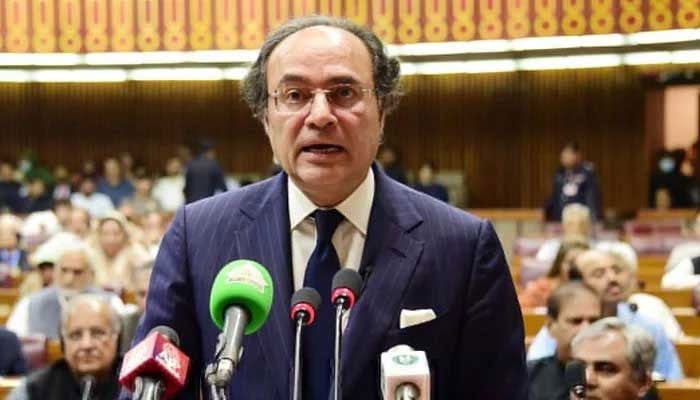
Budget FY2026–27 comes at a time of severe fiscal constraint. Total federal expenditure is estimated at Rs18.771 trillion, with current spending alone at Rs17.495 trillion. Interest payments account for Rs8.054 trillion, defence Rs3 trillion, while the Federal Public Sector Development Programme receives just Rs1 trillion. Debt servicing, defence, pensions, subsidies and transfers continue to dominate spending, leaving little room for development.
These constraints are real, but they should not justify weak prioritisation. When fiscal space is limited, the quality of public investment becomes even more critical. For the energy and climate policy community, the budget is a test of whether Pakistan is aligning fiscal policy with its climate vulnerability, energy transition and long-term green development goals. A notable feature is the reporting of green-linked fiscal flows, with Rs2.026 trillion in green revenues, including the petroleum levy, Climate Support Levy, EV Adoption Levy, gas development surcharge, royalties and other energy-related receipts.
This figure is significant. But it also needs careful interpretation. The petroleum levy, which accounts for almost 83 per cent of this green-linked revenue pool, is not automatically considered climate finance. It is primarily a general fiscal revenue instrument imposed on fossil fuel consumption and used to finance the broader budget. Calling the entire amount ‘climate revenue’ would therefore be misleading unless the proceeds are earmarked, tracked or reinvested in climate-related outcomes.
Yet this is exactly where the policy question begins. If the state classifies such revenues as green or climate-relevant, then citizens and investors have the right to ask: how much of this revenue is being converted into resilience, energy transition and environmental protection? The answer, so far, is not reassuring. Climate-tagged allocations, excluding subsidies, stand at around Rs214 billion in FY2026–27. This includes Rs70.462 billion for adaptation, Rs124.067 billion for mitigation and Rs19.490 billion for supporting areas. Compared with FY2025–26, adaptation has declined from Rs85.435 billion, mitigation from Rs603 billion and supporting areas from Rs28.331 billion. Total direct climate-tagged allocations have fallen sharply.
Disaster-related allocations have risen from Rs50.2 billion to Rs116.2 billion, reflecting Pakistan’s growing exposure to floods, heatwaves, droughts, GLOFs and other climate hazards. While this increase is necessary, it also highlights a persistent pattern: Pakistan continues to budget more for recovery than for resilience.
The 2025 floods underscored the cost of this approach. According to the Economic Survey, they caused Rs822 billion in damages, claimed more than 1,039 lives, displaced over 4.0 million people and affected 6.5 million across 70 districts. Agriculture suffered losses of Rs430 billion, infrastructure Rs307 billion, and the disaster contributed to a reduction in FY2026 GDP growth from the targeted 4.2 per cent to 3.5–3.9 per cent.
Climate change is therefore not just an environmental issue but a macroeconomic risk. Climate spending should be viewed as an investment in economic resilience, not simply as disaster relief. This is where CPEC 2.0 becomes relevant. The development budget reportedly carries an overall national development outlay of Rs3.675 trillion, including Rs1 trillion in the Federal PSDP, Rs2.224 trillion in provincial ADPs, and Rs451 billion in development spending by state-owned enterprises. CPEC-II appears as one of the few new initiatives, with an initial allocation of Rs1 billion.
This amount should not be criticised in isolation. CPEC is not a normal PSDP scheme; it is a bilateral, investment-driven and project-based cooperation framework. Its financing depends on G2G coordination, Chinese investment, private capital, joint ventures, SEZs, project preparation and commercial viability. Therefore, Rs1 billion should not be read as the full financing envelope of CPEC 2.0.
However, it can be read as a signal. It suggests that CPEC 2.0 is still at a preparatory budgetary stage. The real question is whether Pakistan is creating the domestic fiscal architecture needed to translate CPEC 2.0’s Green Corridor into bankable projects.
CPEC Phase II is framed around five corridors: Growth, Innovation, Green, Openness and Livelihood. The Green Corridor has been associated with renewable energy manufacturing, electric mobility, climate-smart agriculture, water and climate resilience. These priorities strongly overlap with Uraan Pakistan’s 5Es, especially Energy, Environment, Exports and E-Pakistan.
Budget FY2026–27 already contains some relevant elements. There are allocations for electricity, renewable energy, solar and wind projects, grid expansion, water projects, sustainable urban development and climate-resistant housing. But these remain scattered unless they are integrated into a coherent Green Corridor investment pipeline. Pakistan’s policy challenge is to build a fiscal bridge between green-linked revenues and CPEC 2.0’s Green Corridor. This does not mean earmarking the entire petroleum levy for climate action, as that would be fiscally unrealistic. But it does mean ring-fencing selected instruments, such as the Climate Support Levy and EV Adoption Levy, for project preparation, resilience-building and energy transition investments.
A practical step would be to establish a Green Corridor Project Preparation Facility. This facility could finance feasibility studies, climate-risk screening, grid integration studies, environmental safeguards, bankability assessments and provincial project pipelines. Without such preparation, Pakistan will continue to announce large visions but struggle to attract implementation finance.
The priority areas are clear: renewable energy manufacturing, battery storage, smart grids, EV and battery value chains, green SEZs, energy-efficient industry, climate-smart agriculture, water resilience, wastewater treatment, resilient housing and urban flood management. These are not only climate projects; they are productivity, export and competitiveness projects. Pakistan has made progress in climate budget tagging by mapping more than 5,000 cost centres and expanding climate tagging to subsidies, grants and climate-relevant revenues. This is a useful public financial management reform. But tagging is not a transformation. Existing projects can be tagged as climate-relevant without necessarily becoming climate-resilient.
The next reform should be climate investment discipline: every major PSDP and CPEC-linked project should be screened for future heat, flood, water, emissions and disaster risks. The government should also publish an annual climate revenue-to-expenditure statement showing what was collected, what was allocated, what was released, what was spent and what outcomes were achieved.
Budget FY2026–27 has made green revenues visible and has given CPEC 2.0 a symbolic budgetary entry. The missing link is a fiscal corridor that connects the two. Without such a mechanism, green-linked revenues will continue to flow into the general treasury, while the Green Corridor will remain a corridor of intent. Pakistan does not need more climate labels. It needs green revenues to become green investments.
The writer specialises in energy policy and management. He works at the CPEC Centre of Excellence, PIDE and can be reached at: [email protected]