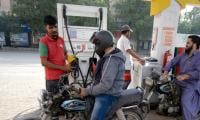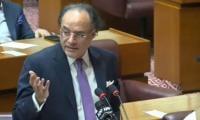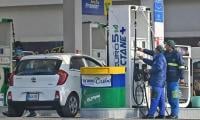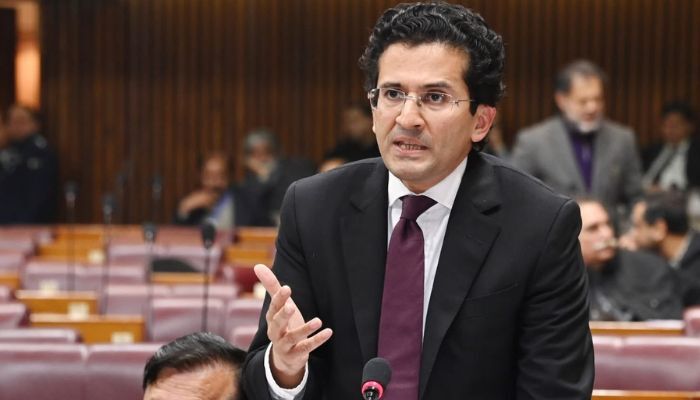
Petroleum Minister Ali Pervaiz Malik on Saturday said "good news" was likely for fuel consumers in the coming days as the government monitored international oil-market trends and worked to ease the burden on the public.
Speaking to a local media outlet, Malik said a high-level committee constituted on Prime Minister Shehbaz Sharif’s directives would oversee petroleum price determination to ensure transparency.
The minister said the government would pass on any available benefit to consumers within the scope of its international obligations, while neither favouring any sector nor placing an undue burden on another.
In a post on X, Malik asked the public to review international Platts prices for petrol and HSD during the week.
Figures shared by the minister showed petrol falling from $98.35 per barrel on June 22 to $95.23 on June 23, $92.23 on June 24 and $90.36 on June 25, before rising to $91.68 on June 26.
The HSD benchmark stood at $109.09 per barrel on June 22, fell to $105.02 the following day, rose to $105.76 on June 24, then eased to $105.06 on June 25 and $100.92 on June 26.
Malik said the government had so far reduced petrol prices by Rs155 per litre and diesel prices by Rs200 per litre, describing the cuts as part of efforts to provide relief to the public.
He said fuel supplies had remained stable despite global market volatility and war-related uncertainty, with no shortages reported.
Petroleum Division sources said the petroleum levy on HSD was raised by Rs6.57 per litre to Rs79.54, from Rs72.97. The levy on petrol increased by 39 paisas to Rs66.64 per litre from Rs66.25, while the levy on kerosene remained unchanged at Rs20.36 per litre.
In the preceding weekly review, the government cut petrol prices by Rs74 per litre, HSD by Rs67 per litre and kerosene by Rs48.29 per litre, bringing the latter down from Rs282.19 to Rs233.90.
The reductions followed the US-Iran peace agreement, facilitated through Pakistan's diplomatic efforts, and the reopening of the Strait of Hormuz, which eased concerns over oil supplies and contributed to a decline in international crude prices.
Petrol is mainly used by commuters in small vehicles, rickshaws and two-wheelers. HSD is widely used in heavy goods transport, buses, trains and agricultural machinery, making its price inflationary.
Malik said the government would continue to pursue fair, transparent and responsible fuel pricing in line with international market conditions and the prime minister's directives.