ISLAMABAD: Pakistan Tehreek-e-Insaf’s Kisan Wing on Sunday called for the revival and activation of Farmers Field Schools to ensure that modern agriculture technologies developed by research bodies reach farmers directly and contribute to increased crop yield.
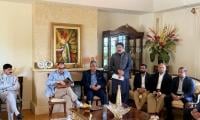
PTI Kisan Wing Information Secretary Khalid Nawaz Sadhraich said this in a statement issued following his meetings with local farmer organisations and growers from various districts -- including Ghulam Muhammad, Shahid Khan Numberdar, Chaudhry Imran Nadeem Sidhu, Numberdar Sajid Shamim, Irfan Sapra and Chaudhry Saif.
He emphasised that valuable agricultural research conducted by the Pakistan Agricultural Research Council (PARC), the National Agricultural Research Centre (NARC) and provincial agricultural research institutions remains largely confined to files instead of benefiting farmers in the field.
The Farmers Field Schools, he pointed out, had previously served as an effective bridge between agricultural scientists and farmers, enabling experts to personally educate cultivators about modern farming practices, improved crop varieties, efficient water management and advanced production technologies.
“Unfortunately this system has become almost inactive leaving farmers deprived of the latest innovations and technical guidance. Farmers’ prosperity is Pakistan’s prosperity, while the exploitation of farmers is a loss to the national economy,” he remarked.
Sadhraich recalled that PTI founder Imran Khan during his tenure as prime minister personally visited farming communities, listened to their concerns and was working on a comprehensive strategy for agricultural development. In contrast, he criticised the current policymakers for formulating agricultural policies in closed doors and thus unable to realise the realities faced by farmers in the field.
He further said that the agriculture sector and farming community had been largely ignored in the current federal budget creating widespread anxiety among farmers from Khyber Pakhtunkhwa to Karachi. “Farmers continue to struggle with inadequate storage facilities, soaring prices of agricultural inputs, exploitation by middlemen and numerous other challenges that are undermining agricultural productivity and profitability,” he noted.
Sadhraich urged the prime minister, the federal minister for National Food Security and Research, and other relevant authorities to visit agricultural areas personally and witness firsthand the difficulties confronting farmers across the country. He maintained that billions of rupees spent annually in the name of agricultural research often fail to deliver practical benefits to cultivators.
He proposed that substantial portions of funds currently spent on seminars, conferences and administrative activities should instead be allocated as long-term interest-free loans to farmers. Such support, he said, would enable growers to establish storage facilities, reduce post-harvest losses and sell their produce directly to government agencies when necessary rather than being exploited by middlemen.
Highlighting the export potential of Pakistani agriculture, he stressed that farmers require access to internationally recognised packaging standards, particularly for fruit exports. “A significant portion of Pakistan’s fruit production is lost each year due to inadequate storage infrastructure and poor packaging practices resulting in losses not only for farmers but also for the national economy.”
Sadhraich noted that farmers were demanding restoration of meaningful coordination between agricultural research centres and farming communities. “Maintaining close contact with farmers and understanding their challenges is the responsibility of the government. We are playing our role by remaining connected with farmers and conveying their concerns to policymakers,” he said.