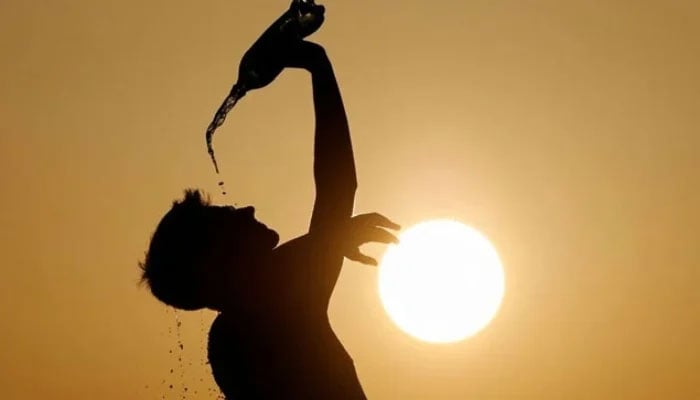
Excessive heat in Pakistan has become a national emergency and is no longer a minor inconvenience. According to the Economic Survey 2025-26, the country recorded its second-warmest year in 65 years in 2025, following 2024, which remains the hottest year on record. Two consecutive years of extreme heat are a signal that the much-feared climate crisis is now here. This sweltering heat has led to more frequent devastating floods and losses in agricultural output. Pakistan has experienced recurring heatwave-related deaths in recent years, particularly among outdoor workers, the elderly and urban residents in densely built, poorly ventilated neighbourhoods. These deaths are often underreported or absorbed into broader categories of natural causes, masking the scale of heat as a direct public health threat. This year, because of the fuel crisis created by the Strait of Hormuz closure in the wake of the US-Israel war on Iran, the summer season has been accompanied by long hours of power outages.
Heat stress overwhelms the body’s ability to regulate temperature, particularly in environments where electricity is unreliable, water access is uneven and housing is not designed for thermal resilience. In cities like Karachi, where humidity compounds the heat, the danger intensifies, turning ordinary workdays into health risks. Security guards and delivery riders are among the most exposed urban workers during extreme heat, and their uniforms often worsen that exposure rather than mitigate it. Many standard-issue outfits, typically made of dark-coloured polyester or other synthetic fabrics, are heat-absorbent and poorly breathable, trapping body heat and limiting sweat evaporation. This means workers who spend long hours outdoors in direct sunlight are effectively wearing insulation in conditions where they need cooling. Combined with prolonged standing or cycling, helmet use in some cases, and limited access to shaded rest areas, these uniforms can contribute to rapid heat stress.
Much of Pakistan’s urban and rural housing was not designed for sustained extreme heat. Concrete-dominant construction, minimal insulation, poor ventilation and dense urban sprawl create heat traps in which indoor temperatures can exceed safe thresholds even when outdoor temperatures are only moderately high. Rethinking architecture in Pakistan must move beyond aesthetic or cost considerations and become a core pillar of climate adaptation policy. Cross-ventilation, shaded courtyards and airflow corridors must become standard features in our architecture. Roofs, in particular, are major heat absorbers and must be redesigned for thermal resistance. Pakistan’s challenge is not simply to reduce emissions, its global share is small, but to survive and adapt to the consequences of a warming world it did little to create.