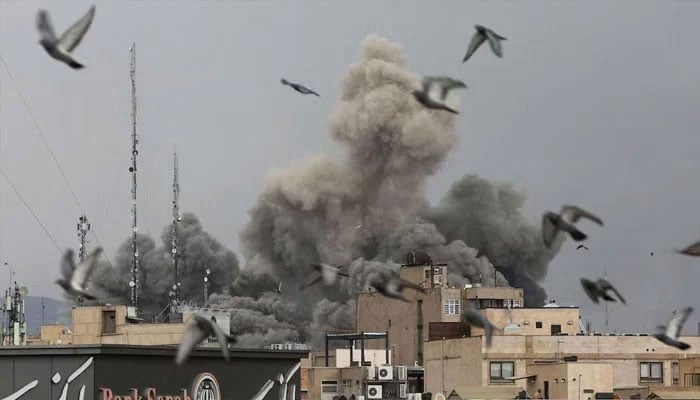
In recent years, a lot has been said and written about the world’s transition away from US-led unipolarity and towards a new multipolar order. The underlying cause behind this shift has been the apparent decline in US power and that of the West in general and the simultaneous rise of new powers in Asia like China. In developing countries like Pakistan, this shift has, almost unanimously, been welcomed. People are eager to leave behind the era of constant US interventions and wars in the region and move towards something that at least seems more balanced and stable. However, for now, the world seems to be transitioning towards anything but more peace and stability. According to the ‘Conflict trends: A global Overview, 1946–2025’ report by the Peace Research Institute Oslo (PRIO), 2025 saw the highest number of state-based conflicts since 1946 with 65 conflicts, six more than ever previously recorded. Approximately 245,000 individuals were also killed in battle-related deaths, making 2025 the third most violent year in the post–cold war era. The 65 conflicts were recorded across 35 countries, an increase from 2024 in both the number of state-based conflicts and the number of countries experiencing them.
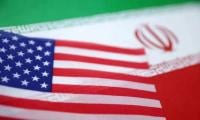
The report defines state-based conflicts as a contested incompatibility over government and/or territory, where at least one party is a state and the use of armed force results in at least 25 battle-related deaths within a calendar year. It is important to remember that this data covers last year and 2026 has seen new conflicts, most notably the US-Israel war on Iran, indicating that the trend is continuing. Pakistan has not been spared this global rise in conflicts. Last year saw the war with India and continuing fights against terror groups in Khyber Pakhtunkhwa and Balochistan. Deaths from terrorism in Pakistan reached their highest level since 2013, with the country recording 1,139 terrorism deaths and topping the Global Terrorism Index 2026. The PRIO report identifies Pakistan as seeing four state-based conflicts, noting that the number of countries hosting multiple simultaneous conflicts has risen. India and Myanmar are the other countries in the Asia region hosting more than three state-based conflicts.
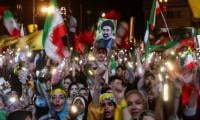
Most troublingly, much of the violence that wars and conflicts generate remains one-sided, with civilians bearing the brunt. Fatalities from one-sided violence rose from 14,200 in 2024 to 76,500 in 2025. None of this should be taken as a defence of Western or US global hegemony or to portray the heyday of their power as an era of peace and stability. Indeed, many of the conflicts we are experiencing now, particularly the ones in Gaza and Iran, seem to be the result of countries like US and Israel being unable to accept that they must make peace with a new world and their own limitations within it and pursuing wars, and in Israel’s case a genocide, that bring them no strategic gain and only lead to unnecessary death and destruction. The West and its appendages might be in decline, but they still have the power to cause horrific violence and global economic shocks. More importantly, it is still unclear what will replace the Western order. Institutions like the UN have failed to live up to the task of truly global governance and the doctrine of ‘might makes right’ seems to be rushing into the vacuum. One must hope that an era of unjust empire is not replaced by one of chaos.