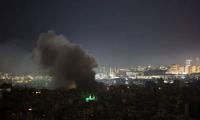
Yesterday saw the release of the Pakistan Economic Survey, laying out the country’s economic position in the ongoing fiscal year with the budget for the upcoming fiscal due today. According to the Pakistan Economic Survey (PES) 2025-26, Pakistan accelerated its growth momentum in FY26 and recorded a growth of 3.7 per cent compared to 3.18 per cent last year. While this was below government expectations of over 4.0 per cent growth, government officials have said that the Middle East conflict weighed on the growth picture. The improvement comes down to effective macroeconomic management, a better fiscal account, growth in Large Scale Manufacturing, a resilient agriculture sector, exchange rate stability and reforms under the IMF Extended Fund Facility (EFF) Programme. Average inflation stayed at 6.2 per cent during the July to April period of FY26, then rose to 7.3 per cent in March and then shot to 10.9 per cent in April, with the impacts of the Middle East conflict truly setting in. Fiscal discipline saw the most marked improvement, with the fiscal deficit declining to 0.7 per cent of GDP in the July-March period of FY26 from 2.6 per cent of GDP during the same period last year, with the survey citing improved tax and non-tax revenues and declining mark-up expenditure as facilitating the improvement. While the current account recorded a marginal surplus of $72 million during July-March, it then slipped back into deficit territory with Pakistan’s heavy dependence on fuel imports costing at as fuel prices skyrocketed.
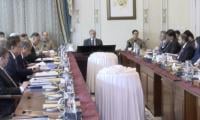
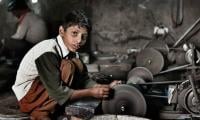
The picture that emerges is of an economy that is stabilising and yet still remains in a difficult position, with the Middle East conflict unfortunately reversing some hard-won gains. It is also important to remember that the fuel crisis is not the only global challenge, with US tariffs also darkening the global economic outlook. As such, while government officials are right to say that Pakistan’s economy has demonstrated resilience and delivered improved performance despite domestic and global challenges, this is no time for the country to rest on the laurel of stability, especially with the Middle East crisis lumbering on. As the National Economic Council (NEC) meeting, which took place a day before the PES was released, was informed, this is still a country where that lags behind all regional and comparable economies on developmental goals. Poverty and unemployment rates stand at 28.9 per cent and 7.1 per cent, respectively. Exports and investment, the big growth generators for a developing economy, remain stagnant. Over 25 million children are out of school. And the country’s rapidly rising population is straining resources. The state will need a much better growth rate than 3.7 per cent if it is to keep up.
Anyone looking at the general state of the country would think that development spending is what is most needed. How does a country compete in terms of exports and investments on the global stage when things like water, power and food are a struggle for many families and 37 per cent of people are illiterate? Why should investment dollars not flow to our more developed regional competitors? And yet, the NEC has unanimously slashed the national development outlay by Rs1,046 billion for the upcoming budget 2026-27. If the government is not going to spend a lot on the people, it should at least try not to tax them so much, whether it is through direct or indirect means. However, given Pakistan’s position, even a matter like this might be out of its hands. One should hope that the IMF has been kind this time.