We live in a highly stratified society, with 10 per cent of persons at the top of the pyramid holding 59 per cent of the country’s wealth. The bottom 50 per cent hold just 19 per cent.
Governments at both the federal and provincial levels need to make a long-term effort to resolve this divide and determine whether it deals with the lack of compassion for the poor that we see everywhere.
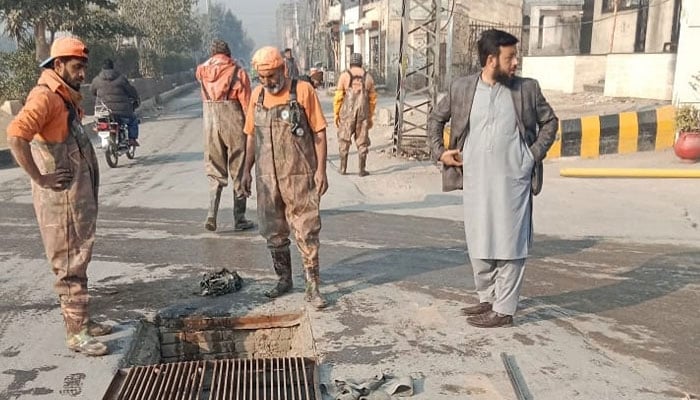
We see this in the fact that we still have sewage workers in our society, with our sewers cleaned by men who must physically descend into the cesspools of filth and clean them out. Everywhere in the world, machines perform this task. Ironically enough, we have machines, but not the compassion to use them. There have been cases in which one member of a family had descended into the sewer, fainted there because of the toxic fumes, with another family member attempting to rescue him, and so on. In the mining sector, we have the same lack of compassion, with people forced to work in the most inhumane conditions and at extreme danger to themselves. Technology that could make the mines safer workplaces is not used.
The same situation is seen in the domestic workspace, hidden from public view by doors and curtains that descend over homes. Inside them, according to international agencies and the Human Rights Commission of Pakistan, up to 8.5 million domestic workers, most of them women and children, have been abused and exploited in various ways. The most recent example of this comes from Model Town in Lahore, where an 18-year-old female employee was allegedly gang-raped by the son of the house owner and their driver, causing her to become pregnant and then die in hospital during an attempted abortion. Some reports suggest that over 85 per cent of female domestic workers are subjected to harassment of one kind or another. Some have been killed.
In this environment, the Sindh government’s enactment of a law to protect domestic workers from exploitation and harm is welcome. The bill, which became an act this year, sets out working hours for domestic workers, requires that they be granted leave, limits the number of hours they can be made to work and establishes a commission to resolve disputes. It also demands a contract between the employer and employee. This will come as something of a shock to persons who treat domestic workers as if they do not even exist. A commission is to be established under that act to resolve disputes between employers and employees.
The lack of labour unions in the country makes things worse for workers everywhere. Unions should exist for domestic workers, sewage workers and others from all sectors of society. It is a tragedy that traditional unions were allowed to collapse and be exploited by political agents in all kinds of different ways. This has contributed to how people are treated in factories, on railway lines, and in other workplaces.
We also know that we live in a society where compassion has disappeared. Most people do not even look at the policeman or traffic warden standing in the blistering heat of June on the streets of Lahore, Karachi, Faisalabad or other cities, with even a semblance of feeling for his plight. The same is true of other persons, such as workers of every kind, even employees at small stores.
Of course, as far as the same domestic workers’ employment law goes, there is no guarantee that laws will have any real effect on the nature of events that take place in hidden spaces. This is also true of the laws enacted to protect the vulnerable. However, laws are a beginning towards making a change of one kind or another. The fact that they exist on paper means they can be taken up by those who need to do so and turned into cases when required. In some instances, even though they make up a minuscule percentage of such events in the country, labourers have taken employers to court for misleading them or failing to implement the correct safety precautions.
The far harder task is, of course, cultivating the compassion that all who make up the higher-income groups in society should feel for the less privileged. Achieving this is something of a challenge. It will take time. But it is best to start as quickly as possible. We need to put in the need for change in the textbooks of primary level children and teach them compassion, not in some kind of meaningless sense, but as a component of life.
Minimum wage needs to be paid universally. Measures such as this will not bring about change immediately. Perhaps in time, something can alter. There is also the need for changes of other kinds, not only in workplaces but also in the education, health and social welfare sectors. We need to create an environment in which every person attending any school, whether public or private, can hope to climb the ladder of society. This privilege should not belong only to those who attend elite institutions. Compassion should be a part of governance. At present, this is not the case. And this needs to change, with policies adopted to ensure it happens, so that in the years to come, we have a more caring society that accepts that all of its members are equal citizens and equal human beings. At present, I feel far from this goal.
The writer is a freelance columnist and former newspaper editor. She can be reached at: [email protected]