NEW DELHI: India's water minister said the government is working to stop "every single drop of water" from flowing into Pakistan, after New Delhi suspended a major treaty last year.
Pakistan had warned that any effort to alter the flow of shared rivers would be viewed as an "act of war," maintaining that the 1960 Indus Waters Treaty remains valid because it contains no provision for unilateral withdrawal.
"It is certain, not a single drop of water will go [to Pakistan] in the coming years," Minister of Water CR Patil told India's ANI news agency late Tuesday.
Patil, speaking in Hindi, said that India is "actively working on it" after "directives" from Prime Minister Narendra Modi.
The treaty governs the use of water from six rivers, whose headwaters originate in India but flow into Pakistan as part of the Indus basin — a resource relied on by hundreds of millions.
Last month, Minister for Climate Change and Environmental Coordination Musadik Malik said that India was attempting to politicise shared water resources in violation of long-standing international commitments, including the Indus Water Treaty.
The minister warned that efforts to undermine international water-sharing agreements could jeopardise the rights of downstream nations.
"Water aggression is unacceptable," Malik said, stressing that no country should be allowed to use water as a weapon or suspend international agreements unilaterally while depriving other nations of their lawful water rights.
The Indus cuts through demarcation lines between India and Pakistan in contested, Muslim-majority Kashmir.
India said in May 2025 that it suspended its IWT membership, after accusing Islamabad of backing a deadly attack on tourists in India Illegally Occupied Jammu and Kashmir (IIOJK) — charges Pakistan categorically denied.
The issue of water has remained a bitter point of contention since.
Earlier this month, Pakistan accused India of wanting to "weaponise" water, after two initiatives were announced by New Delhi on the section of the Chenab River it controls.
In May, India's government-owned National Hydroelectric Power Corporation issued a tender notice for a proposed tunnel project that would transfer water from the Chenab River to the Beas Basin.
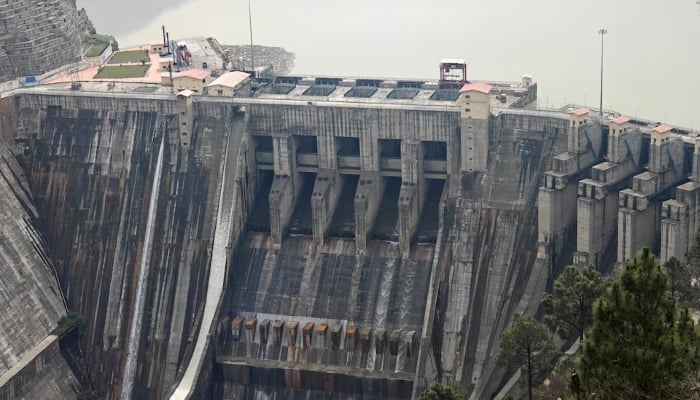
India's power ministry said in January it was undertaking "sediment removal" at Salal Power Station on the Chenab River "following the termination of the Indus Waters Treaty".
Experts say that India's existing dams do not have the capacity to block or divert water, and can only regulate timings of when it releases flows.
Cutting flows would have serious implications for Pakistan's agriculture and overall economy, but any project would take several years before they have an impact.
An official in IIOJK said that any work would "not be possible to start before mid-2027", and would take at least five years to complete.
— With additional input from APP