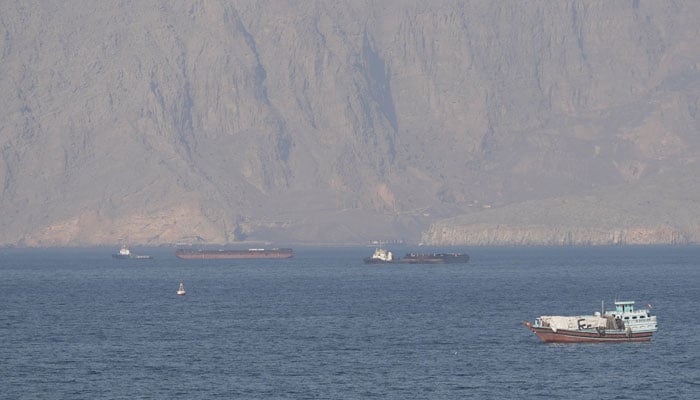
On February 28, 2026, Iran closed the Strait of Hormuz, setting off the most serious stress test the petrodollar system has faced in its fifty-year history. Ship transits collapsed from 130 vessels per day to just 6, according to UN Trade and Development data. Brent crude rose above $110 per barrel. War risk insurers withdrew Strait coverage entirely.
The blockade has now lasted three full months. A draft memorandum of understanding is under discussion, but no agreement has been signed as of the time of writing. The structural damage to oil trade and the acceleration of alternative payment systems cannot be undone by a ceasefire agreement alone.
The petrodollar system was constructed in 1974 through negotiations between then-US secretary of state Henry Kissinger and Saudi Arabia. In exchange for US security guarantees and arms supplies, Saudi Arabia agreed to price its oil exclusively in US dollars and recycle its surplus revenues into American treasury bonds. OPEC followed. As the Atlantic Council has documented, this made dollar demand a fixed condition of global energy trade, since every country that needed oil was required to first acquire dollars. For 50 years, the system held. In 2026, it is under pressure on all fronts simultaneously.
The conflict that began on February 28 was not, in Iranian framing, simply a military confrontation. Iranian leadership described the US-Israeli strikes as an attempt to prevent a non-dollar oil settlement system that Tehran had been constructing with Russia, China and several Gulf states. Washington has not confirmed this. Per the Congressional Research Service, approximately 27 per cent of the world’s maritime oil trade transits the Strait of Hormuz. Blocking it severed the dollar denominated settlement flows the petrodollar recycling mechanism depends on. UNCTAD warned in April 2026 that global merchandise trade growth is projected to fall from 4.7 per cent in 2025 to between 1.5 and 2.5 per cent in 2026 as a direct consequence.
Washington’s response, which has included naval deployments, strikes on Iranian infrastructure, a formal naval blockade of Iranian ports, and secondary sanctions on countries purchasing Iranian oil outside dollar channels, represents the most forceful exercise of petrodollar defence in the system’s history. But defence policy analysts have noted that the operation does not address the underlying problem, since shipping companies remain too uncertain about safety to transit regardless of escort. As of May 2026, commercial shipping through the strait has not returned to normal.
The crisis has also revealed the limits of the historical petrodollar enforcement model. Previous governments that challenged dollar-pricing conventions, including Iraq in 2000, Libya and Iran itself with its 2008 oil bourse, paid severe economic and military prices. In 2026, Iran tested the system differently, as rather than simply pricing oil in another currency, it closed the physical passage through which dollar priced oil flows. Financial sanctions could not absorb that. Even direct military escalation has not resolved the disruption after three months.
Meanwhile, BRICS nations have used the crisis to accelerate alternatives to dollar based infrastructure. According to Disruption Banking, China’s CIPS processed a single day record of $178.5 billion in March 2026, driven by yuan demand in oil trade, while BRICS Pay, a dedicated cross-border payment system outside the dollar framework, is reportedly moving towards operational status.
Against this backdrop, the UAE’s decision to exit OPEC in May 2026 is significant beyond its stated rationale. The primary driver was production economics, as ADNOC had invested approximately $150 billion expanding capacity to 4.85 million barrels per day, yet was constrained by OPEC+ to approximately 3.4 million barrels, which is more than 30 per cent below capacity. According to the Middle East Council on Global Affairs, this imposed an annual opportunity cost of between $50 billion and $70 billion. It would be premature to describe it as a petrodollar rejection, as its contracts remain predominantly dollar-denominated.
The UAE is not Iran or Venezuela. It is a US security partner with American military bases on its soil. Its departure from OPEC removes one of the few producers holding meaningful spare capacity from the cartel’s quota discipline, materially weakening the institution that has enforced dollar-pricing conventions since 1974. Saudi Arabia has been in yuan settlement negotiations since 2022. Taken together, the Gulf’s relationship with the dollar-pricing convention is no longer unconditional, and that shift is driven by economics rather than ideology, which makes it more durable, not less significant.
The counterarguments to petrodollar decline are real. As of early 2026, approximately 80 per cent of global oil trade is still transacted in dollars, and IMF data confirms the dollar accounts for 59 per cent of global foreign exchange reserves. Analysts at leading investment firms have argued that oil exporters hold dollars not because of any arrangement but because of what dollars represent: access to the deepest capital markets in the world. The dollar will not collapse. The arrangement built around it is a different question entirely.
Jeffry Frieden, professor of political science at Columbia University, has warned of an erosion of confidence in the dollar amid mounting doubts about US Treasuries, while analysts at major financial institutions maintain that the dollar’s structural advantages remain firmly intact. Whether the Iran conflict and the UAE’s OPEC exit represent the beginning of a sustained fragmentation, or a turbulent episode the system absorbs, is the central unresolved question of global finance in 2026.
Fifty years ago, Kissinger built a system in Riyadh that shaped global finance for half a century. Today, there is no comparable plan being developed in Washington, Beijing or Abu Dhabi.
The writer is a political science – tech management graduate. He can be reached at: [email protected]