Almost 100 days have passed since the US and Israel launched a massive attack against Iran. Barring the first round of direct talks between Iran and the US, held in Islamabad to resolve their contentious issues, there is no significant breakthrough toward a final agreement.
Why does the US-Iran standoff continue, and how do the two sides adhere to their inflexible positions on the reopening of the Strait of Hormuz, Iran’s nuclear programme, unfreezing of Iranian assets by the US, compensation for losses, lifting of sanctions against Iran and commitment by the US not to launch attacks?
Trust deficit is a major cause of the standoff between Iran and the US. Efforts for mediation by Pakistan and other countries tend to only give a pause to the prevailing hostilities engulfing Iran and the US. If the US has spent around $35 billion in its war and standoff with Iran, Tehran has suffered heavily in terms of destruction of its infrastructure and enormous physical losses.
Six weeks of war led to enormous destruction of Iranian infrastructure, but it failed to cause any substantial damage to the Iranian nuclear and military arsenal. On the contrary, taking advantage of the ceasefire with the US, the Iranian leadership has been able to strengthen its rank and file and compensate for its military losses.
As reported by Iran International on May 28, “Iranian President Masoud Pezeshkian said [the] Iranian people must endure economic and political pressure as part of its confrontation with the United States, adding that Iran would not pursue ‘humiliating’ diplomacy or seek nuclear weapons”. Despite criticism from the Gulf States and the US that Iran’s closure of the Strait of Hormuz is detrimental to the regional and global economy, Iran has been able to broaden its diplomatic space by reaching out to China, Russia, Oman, Qatar and Turkiye.
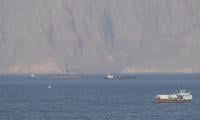
Ali Vaez of the International Crisis Group has said that neither side has shown willingness to make “the painful concessions” needed for a deal. “Both believe time is on their side and they have the upper hand, and that perception is precisely what is making a deal impossible. The result is a war of endurance centred on one of the world’s most critical waterways. Before the war, the strait carried roughly 25 per cent of global oil trade and 20 per cent of liquefied natural gas. Now, with the strait near-closed, the economic fallout is growing, disrupting supplies”.
With a variety of conditions put by the US and Iran to end the standoff, neither side has been able to bend and express flexibility. The US blames Iran for blocking the Strait of Hormuz and charging tolls from ships crossing the strait with the permission of the Iranian Revolutionary Guards, whereas Washington is not ready to end its own blockade of Iranian ports. The US also blames Iran for not agreeing to liquidate its enriched uranium and forego its nuclear ambitions. Iran blames the US of being untrustworthy and, along with Israel, planning to launch another round of attacks. Henceforth, the blame game from both sides continues, causing enormous global economic losses.
The Iran-US standoff needs to be examined from three angles. First, regarding the reopening of the Strait of Hormuz, Iran must not use it as a bargaining chip and deny navigation to foreign ships without paying a toll. Iran’s policy is counterproductive and is amplifying regional and global criticism. The US should immediately lift its blockade of Iranian ports because it is giving a chance to Tehran to continue with its own denial of navigation on the strait.
The Strait of Hormuz was not an issue at the beginning of the war in the Persian Gulf, but was used by Iran in order to preclude further American-Israeli attacks. Now, it has emerged as a major issue because its closure or partial shutdown is detrimental to the regional and global economy.
Second, on the nuclear issue, it is Iran’s right to protect its sovereignty and deny any external pressure to dismantle its nuclear programme. And why is no such demand made against Israel, which is the only nuclear state in the Middle East with 200 nuclear weapons? If Iran is compelled to go nuclear, it will be because of the US and Israel, because these two powers compelled Tehran to opt for nuclear deterrence.
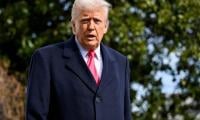
When North Korea withdrew from the Nuclear Non-Proliferation Treaty (NPT) and conducted nuclear tests, the US failed to take any action, and Pyongyang is pursuing nuclear deterrence as a successful strategy to prevent any American attack. The same approach may be pursued by Iran. By withdrawing from the 2015 nuclear deal with Iran in 2018, the US provided Iran an opportunity to enhance its uranium enrichment. Finally, frequent U-turns and inconsistent behaviour by the US president are another reason for sustaining the standoff with Iran. From its resolve to dismantle the Iranian regime to destroying its military and nuclear arsenal, the Trump administration failed in its objectives and is now asking Iran to open the Strait of Hormuz, which was not an issue at the beginning of the crisis.
The only way to end the Iran-US standoff is American commitment not to interfere in the sovereignty of Iran, unfreeze its assets, lift sanctions and force Israel to end its occupation of Lebanon. Iran must end the naval blockade of the Strait of Hormuz and cease support for proxies. Only by pursuing a policy of give-and-take can the prevailing standoff between the US and Iran end.
The writer is a meritorious professor of International Relations and a former dean of the Faculty of Social Sciences, University of Karachi. He can be reached at: [email protected]