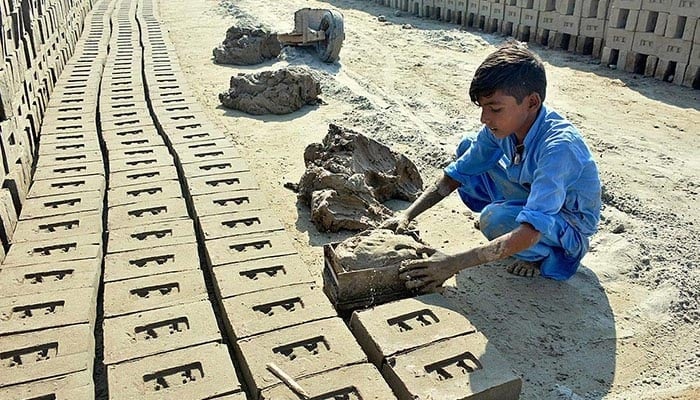
It is often said that one cannot get a good job these days without at least some tertiary education. If anything, in today’s job market, even a Masters degree can often feel insufficient. The country is overflowing with graduates unable to find a job, or one that actually pays them enough to compensate for the money they have poured into their education. Now, imagine what life is like for those millions who never enter school in the first place. How are they supposed to find their place or contribute in the era of AI and automation? This is no time for a country to have over 25 million children between the ages of 5 and 16 out of school or to spend just 0.8 per cent of its GDP on education. These details were presented earlier this month by the federal education minister to the National Assembly. According to Unicef, this is the second-highest number of out-of-school children in the world and Unesco says that it reflects systemic inefficiencies in education access, internal efficiency and retention pathways. This is stated in a Unesco report, ‘Bridging the equity gap: Addressing out-of-school children in Pakistan with the 2026 Unesco GEM Report’, published in April.
The out-of-school children demographic is not simply children who have never entered a school in the first place, though they are part of the problem. It also includes early dropouts and late entrants. And, like most of the country’s social problems, it disproportionately impacts women, rural residents and the poor. Solving the out-of-school crisis is thus not simply about building more schools, hiring more teachers and just generally spending more on education. Though these steps are indeed necessary, they are not sufficient. The multi-dimensional nature of the problem, with certain demographics more likely to be out of school than others, necessitates a targeted approach to the deployment of funding and resources. According to Unesco, transition bottlenecks between primary and lower secondary levels, coupled with low survival rates to Grade 10, indicate structural weaknesses in system progression and learning continuity. And, limited integration of non-formal education (NFE), accelerated learning programmes (ALPs), and second-chance pathways within mainstream systems constrain re-entry opportunities. On one level, a big part of reducing the number of out-of-school children is ensuring that children actually stay in school once they are there and have opportunities to re-enter should they drop out.
Given how frequently things like floods and economic crises like the ongoing fuel shock disrupt access to education, Pakistan can expect many children to leave school and must have a plan to get them back. How many children are, right now, unable to afford the long journey to the only school in their district because of the high cost of fuel? What is the plan to get them back? Unesco also recommends targeted, needs-based funding formulas that prioritise high OOSC districts and marginalised populations. This includes increasing investments in foundational education, girls’ education, and post-primary transition, while also strengthening financing for non-formal and second-chance education pathways. All of this will require spending more resources on education and more time on planning how those resources are spent. However, does a state that is often lurching from one crisis to the next, and now trying to put out the crises started by major powers, have the bandwidth for this? Given the way the global economy is shaping up, simply exporting poor labour to rich countries and hoping they send remittances is no longer a fallback.