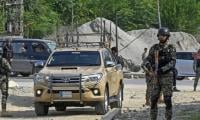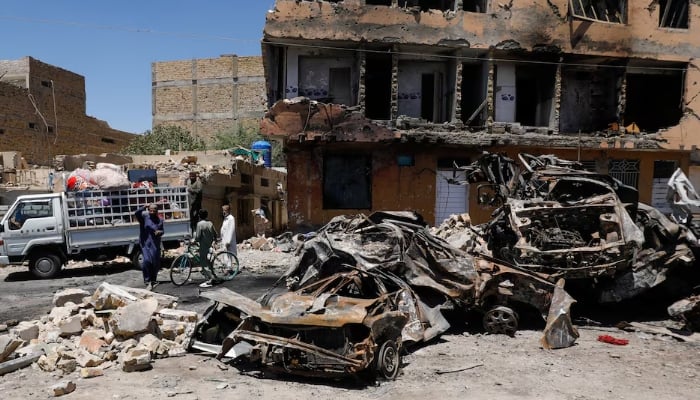
The horrific suicide attack on a train near Quetta’s Chaman Phatak, which claimed at least 14 lives including Frontier Corps personnel, is a horror-laden knock on our door to remind us that Balochistan continues to bleed while the country struggles to formulate a comprehensive response to its worsening security and political crisis. That the train was carrying hundreds of civilians and soldiers returning home for Eid makes the tragedy even more painful. The attack, claimed by the Balochistan Liberation Army (BLA), also points to the growing sophistication and brutality of militant violence in the province. The spectre of the Jaffar Express hijacking still haunts the national psyche and this latest assault confirms that terrorist groups remain determined to strike symbolic and high-impact targets. There is no ambiguity about the need for forceful action against terrorist organisations. The state has every right and obligation to dismantle networks that target civilians, security personnel and public infrastructure. Security forces and law-enforcement agencies have continued to conduct intelligence-based operations across Balochistan and Khyber Pakhtunkhwa, sacrificing lives in the process. The rise in suicide attacks linked to Baloch separatist militants is particularly alarming because it signals an evolution in tactics once associated primarily with the TTP. Pakistan is also justified in raising concerns about militant sanctuaries across the border in Afghanistan. The Afghan Taliban regime cannot continue to deny responsibility while groups hostile to Pakistan operate from its soil with apparent impunity.
Yet military operations alone cannot resolve the Balochistan crisis. This is where the state has repeatedly failed to distinguish between terrorism and legitimate political grievance. The problems of Balochistan are rooted not only in militancy but in decades of political alienation, economic deprivation and institutional mistrust. Enforced disappearances remain a deep wound for countless families. Questions regarding resource distribution, representation and provincial autonomy continue to fuel resentment. Many ordinary Baloch citizens who reject violence nonetheless feel unheard, marginalised and excluded from decision-making processes that shape their future. Successive governments and political elites have also contributed to this sense of disenfranchisement. Electoral engineering, weak representative structures and the sidelining of nationalist political voices have hollowed out parliamentary politics in the province. When moderate and democratic voices lose faith in the political process, extremist elements find space to exploit frustration and despair. This is precisely why the state must avoid the dangerous temptation of painting all dissent with the same brush. Not every critic of state policy is a militant sympathiser. Conflating peaceful political demands with terrorism only deepens the divide and strengthens the narrative propagated by violent groups.
Pakistan therefore requires a two-pronged approach in Balochistan. The nationalist leadership and genuine representatives of the Baloch people must be brought back into the democratic fold through dialogue, trust-building and meaningful inclusion. The province needs justice, representation and a sense of ownership within the federation. Winning the war against terrorism is impossible without winning the trust of the people. That said, no political grievance, however genuine, can ever justify terrorism against civilians and public infrastructure. The BLA’s campaign of bombings, suicide attacks and assaults on passenger trains is indefensible and must be condemned unequivocally. Such acts do not advance the cause of the Baloch people. There is also increasing evidence and repeated security claims pointing towards hostile foreign involvement, particularly from India, which Pakistan has long accused of exploiting unrest in Balochistan to destabilise the country and weaken internal cohesion.