_updates.jpg)
MAKKAH: Thousands of Muslims began to leave the holy city of Makkah on Friday after having completed the Hajj pilgrimage in scorching heat and despite the shadow of war across the Middle East.
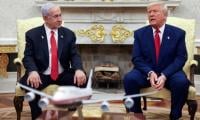
This year, more than 1.7 million people from 165 countries took part in one of the world's largest religious gatherings, against the backdrop of the conflict sparked by US-Israeli strikes on Iran.
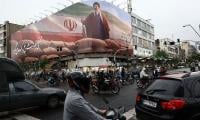
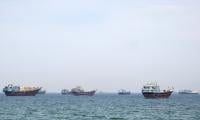
Since war erupted in February, Tehran has retaliated with waves of drone and missile strikes, hitting infrastructure and energy installations across the Gulf, including in Saudi Arabia.
More than 30,000 Iranians made the journey to Makkah, about a third of the 86,000 originally expected. Iran's IRNA state news agency said the "wartime situation" explained the drop.
"I can't believe I completed the Hajj," said Ahmed Mamdouh, a 37-year-old Egyptian who performed the pilgrimage for the first time.
Fighting back tears, he added: "I am very happy that I completed the rituals safely. Hajj is truly exhausting, especially in such hot weather."
Algerian pilgrim Al-Zaoui, 74, wrapped his arm around his wife and said, "It was our dream to perform the Hajj together. Now that dream has come true after 50 years of marriage."
On Friday, the faithful will complete the third day of a stoning ritual in the valley of Mina, southeast of Makkah, during which they throw pebbles at concrete pillars symbolising the devil.
The pilgrims then board buses to the Grand Mosque in Makkah to perform the farewell "tawaf" — walking seven times around the Holy Kaaba, the giant black cube at the Grand Mosque that is the focal point of Islam.
The Hajj, one of the five pillars of Islam, must be performed at least once by all Muslims with the means to do so.
It involves a series of mostly outdoor rituals over several days and took place during intense heat this year.
After more than 1,300 pilgrims died during the 2024 Hajj, when temperatures soared above 50°C, Saudi authorities introduced heat-mitigation measures, including more shaded areas and thousands of extra health workers.
The Saudi Red Crescent said on Thursday it had provided emergency services to "more than 83,000 people since the beginning of the Hajj season".