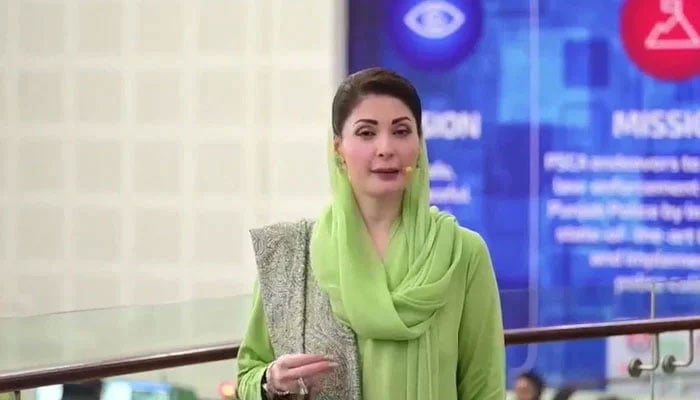
LAHORE: Punjab Chief Minister Maryam Nawaz Sharif delivered what was described as a “historic address” at the World Urban Forum in Baku, Azerbaijan, highlighting the Punjab government’s welfare, housing, infrastructure and environmental initiatives, says a handout.
Addressing the Leaders’ Summit of the World Urban Forum in Baku, she said it was an honour to participate in the global gathering, describing Baku as a reflection of modern urban transformation, vision and international connectivity.
She said governments should be judged not by speeches but by the positive changes brought to people’s lives. “From housing to urban resilience, every project I undertake is driven by the courage to challenge the status quo,” she said, adding that no one should be left behind in the journey of development.
The chief minister said cities become truly resilient only when development remains people-centric, environmentally sustainable and data-driven. “If something is not measured and assessed, it can never be fixed,” she remarked.
Punjab CM said she had brought with her greetings from former prime minister Nawaz Sharif, Prime Minister Shehbaz Sharif and the people of Pakistan, while expressing gratitude to the government of Azerbaijan for its warm hospitality and excellent arrangements.
Referring to the longstanding ties between Pakistan and Azerbaijan, she said the historic old city of Baku reflected the shared civilisational links between the two countries, while ancient trade routes such as Multan Sarai stood witness to centuries-old public connections.
She praised Azerbaijani President Ilham Aliyev for his vision for sustainable development and resilient cities, and commended his leadership in transforming Baku into a vibrant and globally connected city.
The chief minister said the relationship between her father, Nawaz Sharif, and Azerbaijan’s founding leader Heydar Aliyev was built on trust and mutual respect. She described her visit to Baku as her first tour to Central Asia, saying the city symbolised resilience and progress.
Standing in Baku, she added, she did not feel like she was in a foreign country but rather “at home”. She said she had come with the story of determination and transformation from Punjab, a province of over 130 million people.
She said cities were not merely roads and buildings but places where human dignity was either protected or denied. She said when she took oath as chief minister, she realised she had inherited not a position but a responsibility towards women walking miles for water, children breathing polluted air and homeless families.
Highlighting the government’s welfare initiatives, she said Punjab had launched the Punjab Social Economic Registry, the province’s first door-to-door data collection system aimed at ensuring inclusive development.
The chief minister said providing shelter to the people was among her government’s foremost priorities. Under the flagship “Apni Chhat Apna Ghar” programme, Punjab was implementing what she described as one of the world’s largest interest-free housing initiatives.
She said housing support had been provided to 160,000 families in less than a year, while over 100,000 families had completed construction of their homes and moved in. “Behind every number in this housing programme lies a transformed human life,” she remarked.
The chief minister said the “Model Village Programme” was transforming more than 2,000 villages through clean drinking water, drainage systems, paved streets and solar infrastructure projects. Access to safe drinking water, she added, remained central to public health and human dignity across Punjab.
She said Punjab was expanding filtration systems and water supply networks equally in urban and rural communities so that no woman would have to walk miles for water and no child would suffer due to unsafe drinking water.
The chief minister said Punjab had launched a historic urbanisation development programme worth more than Rs2 billion across the province, covering roads, drainage systems, water storage and urban resilience infrastructure.
She said over 30,000 kilometres of roads had been constructed and completed within just two years, restoring mobility and economic activity by reconnecting communities. Organised and data-driven measures were also being implemented to address urban flooding, she added.
Speaking about tourism and heritage conservation, Punjab CM said more than 100 historical sites, museums, archaeological locations and religious places were being restored and preserved under the “Magnificent Punjab” initiative.
She noted that Lahore had proudly been declared the ECO Tourism Capital for 2026-27, while the Shanghai Cooperation Organisation had also recognised Lahore as a major tourism and cultural centre.
The chief minister said restoration of cultural heritage was not only about preserving the past but also about creating new opportunities and strengthening identity. “We are opening our cities to the world with pride and confidence,” she added.
Referring to the “Suthra Punjab” initiative, she said over 150,000 sanitation workers were serving across the province daily, making it one of the world’s largest solid waste collection programmes. She added that the initiative was now moving towards a “waste-to-value” model through recycling, composting and energy recovery systems.
She said clean air was not a privilege or luxury but a fundamental right of every citizen. Under the Punjab Clean Mobility programme, she said, the province had introduced 1,100 electric buses in the first phase and aimed to provide 5,000 electric buses, electric bikes and electric taxis by 2029.
She further stated that 50 million trees had been planted across Punjab under the “Plant for Punjab” campaign, while one percent of all development expenditure had now been formally allocated for climate resilience.
On public safety, the chief minister said the Safe City programme had been expanded across Punjab through technology-driven surveillance systems. “Safe cities are not merely about monitoring and law and order, but about technology-led crime prevention and ensuring protection for women, children and every citizen,” she added.
Concluding her address, Punjab CM said progress always required courage and determination.
“Development is never timid; courage is what creates the difference,” she remarked, reiterating that the true success of governments was measured through transformed lives rather than speeches. She said the shared message emerging from Baku was that resilient and safe cities were not privileges but a fundamental right of all humanity.