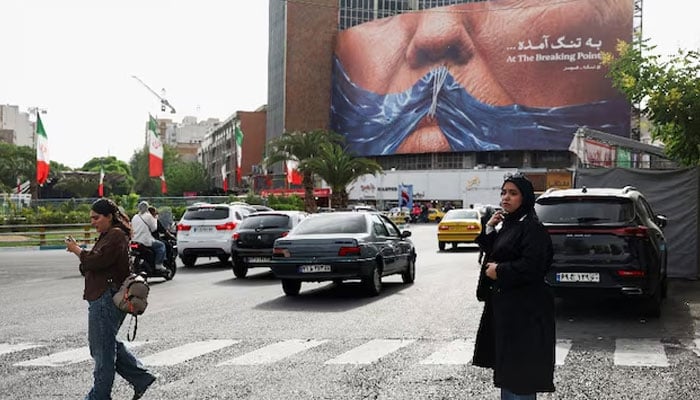
TEHRAN/ ISLAMABAD: Iran said Monday it had responded to a new US proposal aimed at ending the war, adding that diplomatic exchanges continue despite Iranian media reports describing Washington’s demands as excessive.
Washington and Tehran have been swapping proposals in an effort to end the conflict which the US and Israel launched on February 28, but they have held only a single round of talks despite a fragile ceasefire.
“As we announced yesterday, our concerns were conveyed to the American side,” foreign ministry spokesman Esmaeil Baqaei told a news briefing, adding that exchanges were “continuing through the Pakistani mediator”.
Baqaei defended Iran´s demands, including the release of Iranian assets frozen abroad and the lifting of long-standing sanctions.
“The points raised are Iranian demands that have been firmly defended by the Iranian negotiating team in every round of negotiations,” he said.
He also defended an Iranian stipulation that the US pay war reparations, describing the conflict as “illegal and baseless”.
On the possibility of another military confrontation, Baqaei said Iran was “fully prepared for any eventuality”.
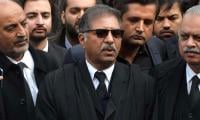
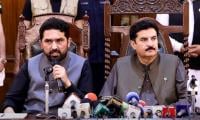
Earlier, Pakistan’s Interior Minister Mohsin Naqvi visited Tehran, where he held high-level talks with Iranian Foreign Minister Abbas Araghchi.
The meeting focused on the fast-changing situation in the Middle East. Both the sides discussed regional developments in detail and reviewed security concerns as well as shifting geopolitical conditions.
Iranian media reported that the discussions were extensive and important. The two ministers exchanged views on regional stability and also talked about cooperation between Pakistan and Iran.
Earlier, Mohsin Naqvi met Iranian President Masoud Pezeshkian in Tehran. That meeting lasted around 90 minutes and covered bilateral relations and current regional challenges.
On Sunday, Iran´s Fars news agency said Washington had presented a five-point list, which included a demand for Iran to keep only one nuclear site in operation and transfer its stockpile of highly enriched uranium to the United States.
The US had refused to release “even 25 percent” of Iran´s frozen assets or pay any reparations for war damage, Fars said.
The report said the US had also made clear it would only cease hostilities when Tehran engages in formal peace negotiations.
Iran´s Mehr news agency said “the United States, offering no tangible concessions, wants to obtain concessions that it failed to obtain during the war, which will lead to an impasse in the negotiations”.
In an earlier proposal, which was sent last week, Iran had called for an end to the war on all fronts, including Israel´s campaign in Lebanon, as well as a halt to a US naval blockade on Iranian ports in place since April 13.
It also called for the lifting of all US sanctions on Iran and the release of its assets frozen abroad.
On Monday, Iran´s Tasnim news agency, citing an unnamed source close to the Iranian negotiating team, said “contrary to previous texts, the Americans agreed in a new text to waive oil sanctions during the negotiation period.”
Fars said that the Iranian proposal had emphasised that Tehran would continue to manage the strategic Strait of Hormuz, a vital energy conduit which Iran has largely kept closed since the start of the war.
On Monday, Iran´s Supreme National Security Council announced the formation of a new body to manage the strait.
On its official X account, the Supreme National Security Council shared a post from the Persian Gulf Strait Authority (PGSA) saying it would provide “real-time updates” on operations and developments in the strait.
The PGSA account later said in a post that it was “the legal and official representative authority of the Islamic Republic of Iran responsible for managing transit through the Strait of Hormuz”.
It added that “navigation within the designated jurisdictional area of the Strait of Hormuz” required “full coordination” with the authority and that passage without authorisation would be considered illegal.
Earlier this month Iranian English-speaking broadcaster Press TV said it constituted a “system to exercise sovereignty over the Strait of Hormuz” and that ships passing through the strait were to be sent instructions by email.
Iran´s Revolutionary Guards (IRGC) also said on Monday that internet fibre optic cables passing through the Strait could be brought under a system of permits.
“Following the imposition of control over the Strait of Hormuz, Iran, citing its absolute sovereignty over the bed and subsoil of its territorial sea... could declare that all fibre-optic cables passing through the waterway are subject to permits,” the ideological arm of Iran´s military said in a social media post.
Separately on Monday, the IRGC said its forces had struck groups linked to the United States and Israel in the western Iranian province of Kurdistan, near the border with Iraq.
In a statement carried by the ISNA news agency, the Guards said groups from “northern Iraq and acting on behalf of the US and the Zionist regime were attempting to smuggle a large shipment of American weapons and ammunition” into Iran.
They said the groups were hit in the Iranian city of Baneh in the Kurdistan region.
Meanwhile, US President Donald Trump posted on social media on Monday that he was holding off on a planned military attack on Iran scheduled for Tuesday, while efforts continue to reach a deal, adding that the United States was ready to resume attacking if one is not reached.
Trump said the US “will NOT” follow through with “scheduled” attacks on Iran on Tuesday, after he said partner nations in the Middle East asked him to hold off. The president made the announcement on Truth Social.
“I have been asked by the Emir of Qatar, Tamim bin Hamad Al Thani, the Crown Prince of Saudi Arabia, Mohammed bin Salman Al Saud, and the President of the United Arab Emirates, Mohamed bin Zayed Al Nahyan, to hold off on our planned Military attack of the Islamic Republic of Iran, which was scheduled for tomorrow, in that serious negotiations are now taking place, and that, in their opinion, as Great Leaders and Allies, a Deal will be made, which will be very acceptable to the United States of America, as well as all Countries in the Middle East, and beyond,” he wrote.
“This Deal will include, importantly, NO NUCLEAR WEAPONS FOR IRAN! Based on my respect for the above mentioned Leaders, I have instructed Secretary of War, Pete Hegseth, The Chairman of The Joint Chiefs of Staff, General Daniel Caine, and The United States Military, that we will NOT be doing the scheduled attack of Iran tomorrow, but have further instructed them to be prepared to go forward with a full, large scale assault of Iran, on a moment’s notice, in the event that an acceptable Deal is not reached.”
Earlier on Sunday, Trump threatened “there won´t be anything left” of Iran if no peace deal is reached, as their truce came under further strain with drone attacks on US allies in the Gulf.
“For Iran, the Clock is Ticking, and they better get moving, FAST, or there won´t be anything left of them,” Trump wrote on his Truth Social platform Sunday. “TIME IS OF THE ESSENCE!”
Saudi Arabia reported intercepting three drones entering the country from Iraqi airspace, while the United Arab Emirates said a drone sparked a fire at its Barakah Nuclear Power Plant, one of three UAVs that entered from the “western border direction”.
UAE presidential adviser Anwar Gargash appeared to refer to Iran and its regional proxy groups when he condemned the attack, which ignited a fire but caused no injuries or impact on radiation levels.
“The terrorist targeting of the Barakah clean nuclear power plant, whether carried out by the principal perpetrator or through one of its agents, represents a dangerous escalation,” he wrote on X.
Iranian-backed armed groups equipped with drones are based in Iraq, while Tehran´s allies in Yemen -- the Houthi rebels -- also possess combat-grade UAVs.
Attacks on the Gulf states, which Tehran says it has targeted for harbouring US military and economic interests, have dramatically reduced since Washington and Tehran agreed to the temporary truce on April 8, but sporadic strikes have continued.
Separately, stock markets diverged Monday as investors worried about borrowing costs, while oil prices rose after Trump ratcheted up pressure on Iran.
The price for a barrel of Brent crude oil, the international standard, got as high as $112 overnight after Trump threat.
Prices eased from there on hopes the two sides can reach a deal that would get oil flowing worldwide again. The price for a barrel of Brent crude was at $110.80, up 1.4 percent from May 15. That’s well above its roughly $70 price from before the war.
Meanwhile, the Government of Pakistan condemned in the strongest possible terms the drone attacks carried out against the brotherly Kingdom of Saudi Arabia on May 17.
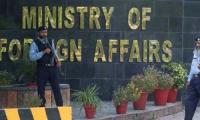
“Such attacks constitute a serious violation of kingdom’s sovereignty, and territorial integrity, and appear to be an attempt to further undermine the regional peace and stability,” the Foreign Office said in a statement on Monday.
The Government and the people of Pakistan stand in solidarity with the Government and people of the Kingdom of Saudi Arabia during this critical time, and reaffirm their full and unwavering support for the kingdom’s security, peace and prosperity.
Separately, Pakistan also strongly condemned a drone attack on the Barakah Nuclear Energy Plant and reiterated that it stood in “full solidarity” with the United Arab Emirates.
Prime Minister Shehbaz Sharif and the Ministry of Foreign Affairs in their reactions pushed for “dialogue and diplomacy”. However, the drone attacking country was not identified in the statements.
The prime minister a statement on ‘X’ noted, “Pakistan strongly condemns the drone attack on the Barakah Nuclear Energy Plant in the United Arab Emirates. We stand in full solidarity with the leadership and the brotherly people of the United Arab Emirates. We urge all parties to exercise maximum restraint and fulfil their obligations under international law. Dialogue and diplomacy remain the only viable path toward lasting regional peace, stability and de-escalation.”
The Foreign Office in a more detailed reaction, while strongly condemning the drone attack and standing in full solidarity with the brotherly people and Government of the UAE, noted that the deliberate targeting of nuclear facilities constitutes a grave violation of international law, including international humanitarian law, the United Nations Charter and the fundamental principles of nuclear safety and security enshrined in the Statute and resolutions of the International Atomic Energy Agency (IAEA).
“Nuclear installations must never be targeted under any circumstances. Such reckless actions carry potentially catastrophic and irreversible consequences for human life, the environment, and regional as well as global peace and security,” it noted.
Inviolability of civilian nuclear infrastructure, the FO stressed, is a well-established international norm and must be upheld without exception.
“Pakistan calls upon all parties to exercise maximum restraint, fulfil their obligations under international law and international humanitarian law, and avoid any actions that could further escalate tensions with consequences extending far beyond the region. Dialogue and diplomacy, consistent with the principles and purposes of the United Nations Charter, remain the only viable path toward lasting peace, stability and de-escalation in the region,” added the statement.
Meanwhile, the Gulf countries which have faced the brunt of the continuing conflict in the Middle East was the focus at the closing session of the Regional Envoys Conference at the Foreign Office.
Foreign Minister Ishaq Dar chaired the closing session of the Regional Envoys’ Conference which took stock of the comprehensive deliberations and key recommendations emerging over the past few days.
“Dar underscored Pakistan’s longstanding, historic and brotherly relations with the Gulf countries, reaffirming the commitment to further strengthen these important partnerships across political, economic and people-to-people dimensions,” said the Foreign Office.
He reiterated Pakistan’s commitment to enhance economic engagement and promoting regional peace and stability.
He emphasised that the welfare of the Pakistani diaspora in Gulf countries and across the world remains a top priority of the government.
“He also highlighted Pakistan’s constructive and facilitative role in promoting regional peace and stability, and stressed the importance of sustained engagement, while directing the Ministry of Foreign Affairs, Heads of Missions and relevant ministries to maintain close coordination, pursue proactive engagement, and ensure effective follow-up on the recommendations,” added the statement.
Monday also saw Saudi Arabia appreciating Pakistan’s role in promoting peace and stability in the region.
Ambassador of the Kingdom of Saudi Arabia to Pakistan Nawaf bin Saeed Ahmad Al-Malkiy called on Dar at the Foreign Office where discussions focused on the fraternal Pakistan–Saudi Arabia relations.
“The foreign minister reaffirmed Pakistan’s strong commitment to further strengthening cooperation across all areas. Views were exchanged on recent regional developments and other matters of mutual interest. The Saudi ambassador appreciated Pakistan’s role in promoting regional peace and stability,” said the FO.
Qatar too appreciated Pakistan’s diplomatic efforts when in a telephone call Dar spoke to his Qatari counterpart Minister of State for Foreign Affairs of Qatar Mohammad bin Abdulaziz Al-Khulaifi.
They discussed the evolving regional situation and matters of mutual interest. Both the sides underscored the importance of dialogue and diplomatic engagement in addressing regional challenges.
“Minister Al-Khulaifi appreciated Pakistan’s constructive role and ongoing diplomatic efforts while Dar reaffirmed Pakistan’s commitment to advancing the shared objectives of peace, stability and prosperity in the region and beyond,” said an FO statement.