Among today’s defining paradoxes is that states are more interdependent than ever before, yet also more prone to confrontation. We live in a world where disputes are frequent, power is shifting and proliferating, yet no framework can fully manage global tensions. As global institutions struggle, the key question is how states preserve cooperation amid contestation.
Several institutions reflect cracks in the post-World War II governance architecture: the UN, IMF, World Bank, Nato, GATT/WTO and the EU. In this context, one question deserves attention: how does China conduct its affairs with other states? The answer lies not only in China’s economic power or military modernisation, but also in its diplomatic method. China often seeks to prevent disagreement from becoming a diplomatic rupture. Its engagement with ASEAN best illustrates this approach. China does not always resolve disputes; instead, it creates channels through which disputes can be managed while trade, connectivity and political dialogue continue.
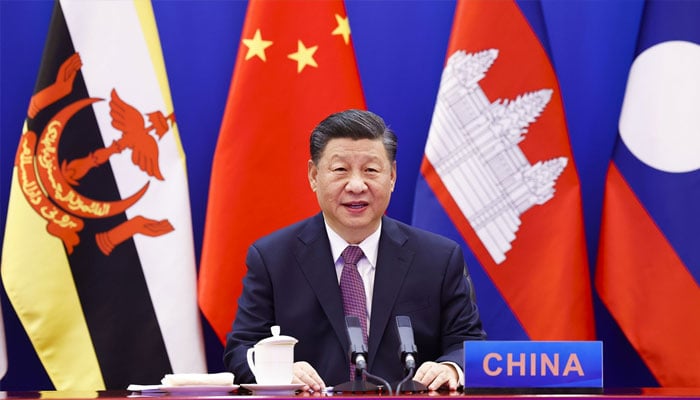
This is a distinctive feature of Chinese statecraft. ASEAN reflects this through its habit of continuous consultation, keeping states with differing systems and disputes around the same table. China is not a member of ASEAN. It is a Dialogue Partner and, since 2021, a Comprehensive Strategic Partner. In November 2021, ASEAN and China announced a Comprehensive Strategic Partnership. This status matters. China engages ASEAN outside the organisation, but through dense, institutionalised mechanisms that give the relationship political continuity and strategic weight.
The ASEAN-China relationship is especially instructive because China has maritime and territorial disputes with several ASEAN member states, particularly in the South China Sea. Yet these disputes have not prevented both sides from building one of the world’s most active regional relationships.
The first element of China’s method is compartmentalisation. Disputes are not denied, but neither are they allowed to define the entire relationship. The South China Sea remains contested and ASEAN claimant states remain concerned, yet diplomatic, economic and institutional engagement continues. The second element is rule-referencing. In 2002, ASEAN and China adopted the Declaration on the Conduct of Parties in the South China Sea, committing themselves to peaceful dispute resolution and working towards a future Code of Conduct.
The third element is acceptance of regional diplomatic norms. China joined ASEAN’s Treaty of Amity and Cooperation in 2003, endorsing principles such as sovereignty, non-interference and peaceful settlement of disputes. This did not end disagreements, but placed China’s regional diplomacy within ASEAN’s framework of restraint and consultation. The fourth element is economic deepening alongside political friction. Despite maritime disputes, ASEAN and China have expanded trade and supply-chain ties. In 2025, both sides completed negotiations on the upgraded ASEAN-China Free Trade Area 3.0. China’s method is to create mutual stakes so that any rupture becomes costly. Finally, China emphasises patience through repeated summits, consultations and dialogues that sustain habits of contact even without quick settlements. In Western diplomatic traditions, success is often measured by the signing of an agreement.
In the Chinese and ASEAN diplomatic approach, the continuation of the process itself is a form of stability. China does not necessarily solve disputes quickly. Instead, it works to prevent disputes from automatically translating into diplomatic breakdowns. In strategic terms, this is escalation management through continuity of institutional continuity.
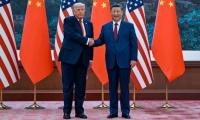
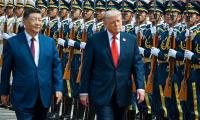
Interestingly, in the global context, there is little to compare with US President Donald Trump’s style of engagement. Trump often avoids permanently closing channels. He has engaged adversaries and partners through pressure, personal diplomacy and transactional bargaining. But the similarity is only partial. Trump’s approach is often improvised, reactive, personalised and transactional. China’s is more institutional, sequenced and embedded in structures. Trump may keep a phone line and social media open; China tries to keep the summit, working group, trade mechanism, security dialogue and regional forum alive at the same time. This was visible in Washington’s ties with India. Even as Trump-era tariffs and trade pressure strained the relationship, the US continued to engage India for broader strategic reasons. But the engagement often lacked the disciplined institutional layering visible in China’s ASEAN policy. It depended heavily on pressure, personality and deal-making rather than a coherent engagement architecture.
China’s method is subtle and sober, even if not without some coercion or contradiction. China’s structural approach links economics, diplomacy, regional norms and repeated consultation into a larger strategic practice. That gives it durability.
Clearly, China is a competitive global power navigating its journey in a Hobbesian world. ASEAN states continue to worry about Chinese power. The China-India contestation after Galwan is there, and so is continued militarisation along the LAC. The South China Sea remains contested. The Code of Conduct remains unfinished. But China’s method is clear and not benign. It is wise. China seeks to operate alongside disagreement. It compartmentalises disputes, references and works with prevailing regional norms, deepens economic interdependence, keeps institutional channels active and uses process as a stabilising instrument.
In a world of strategic disorder, this approach gives China diplomatic advantage. It allows Beijing to present itself not merely as a power with demands and claims, but as one with mechanisms and mechanisms for accommodation. ASEAN is central to understanding this practice because ASEAN’s own culture of consultation, consensus and non-finality provides a regional environment in which disputes can be managed and engagement ensured.
A broader lesson from China’s approach is that stability is not always produced by settlement. Sometimes it is produced by disciplined engagement in the absence of settlement. China’s diplomacy, especially with ASEAN, shows how a major power can continue to contest, compete and negotiate without allowing every dispute to become a complete rupture.
The writer is a foreign policy & international security expert. She tweets/posts @nasimzehra and can be reached at: [email protected]