Twenty million children are characterised as ‘out of school’ in Pakistan. This figure is alarming on its own. But there is a second, quieter crisis unfolding inside the school system that we’re neglecting. A crisis that never makes the headlines and a crisis no enrollment campaign will solve.
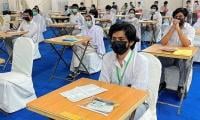
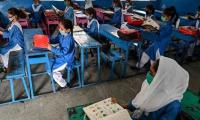
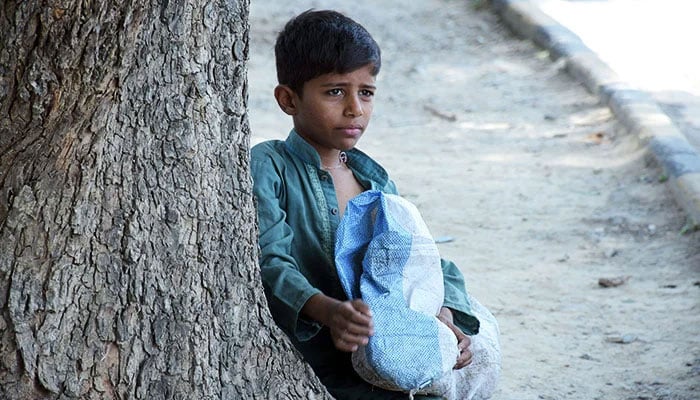
When you enter a government primary school in rural Sindh during planting or harvest season, there is a good chance you will find it half empty. Officially, a whole class is enrolled and counted amongst the government’s statistics. But in reality, they are in the fields. For them, their immediate income, earning a few hundred rupees a day for their families, matters much more than whatever might happen in the future by staying in school. A headteacher in Sindh interviewed under a recent Aga Khan University study put it simply: most children leave when seasonal work arrives and many do not come back.
This observation is not new. But it has been brought into sharper focus after a recent Unesco report and a 2026 study by researchers at AKU’s Institute for Educational Development. According to the 2026 Global Education Monitoring Report, chronic absenteeism is one of the biggest causes of eventual dropout. It also shows that Pakistan and other developing countries are not addressing their education problems by focusing more on enrollment than attendance.
Our constitution guarantees free and compulsory education to all children between the ages of five and sixteen. Enrollment campaigns are politically popular and the numbers they generate provide an appearance of progress. The national out-of-school rate has fallen from 30 to 28 per cent according to the latest Household Integrated Economic Survey released in January 2026. Politicians on all sides have seen this as evidence that the Education Emergency the prime minister announced in 2024 was leading to positive results.
But these figures do not show attendance. They do not show whether children who are registered to attend school are actually in classrooms. They do not show whether, when children are present, a teacher is present with comprehensive lesson plans and materials. And of course, they do not show learning outcomes. Almost 77 per cent of ten-year-olds cannot read a simple sentence.
The reasons children are not attending school are well-documented. Boys primarily leave for seasonal farm labour, construction work or to take over family businesses. Girls mainly leave due to domestic responsibilities or family restrictions. Climate has made matters even worse. An example is the floods that year, which displaced thousands, including more than 140,000 people in Sindh alone.
Schools in such affected areas are destroyed again and again, and are either rebuilt at a very slow pace or not rebuilt at all. According to Save the Children, two-thirds of girls in Khyber Pakhtunkhwa dropped out of school following the 2022 floods. What’s worse is that two years later, the boundary walls of the school have still not been repaired.
The education sector has, understandably, primarily focused on getting children into schools post the declaration of the Education Emergency. But if a child who goes to school only three months a year has no textbooks and is being taught by a teacher who may not even have received any training in the last decade, they are not receiving an education. This is merely the appearance of education.
The metric of success currently is enrollment. But we need a collective shift that measures success by factors like attendance, retention and learning. The Student Attendance Monitoring and Redress System (SAMRS), launched in Sindh last year, is exactly the kind of evidence-based tool we need. This initiative uses technology to track absences and trigger follow-ups.
Another possible solution is to implement conditional cash transfer programmes that link household support to school attendance. Such initiatives have shown positive results in other countries with structural challenges similar to ours. Such policies may not produce glamour or ribbon-cutting moments. But they address the roots of the problem.
Our country’s education debate swings between ambition and despair. At one point, we are thinking about developments such as universal enrollment, digital transformation, and top-ranked universities. In another, we resign ourselves to the belief that nothing will ever change. Both approaches lead us to avoid answering the harder question: why a child registered in September is gone by November, and what it would cost to bring that child back to school.
The federal education budget was cut by 44 per cent in the 2025-26 fiscal year. Despite the government pledging 4.0 per cent of GDP for education by 2029, we are currently seeing only 0.8 per cent being spent. These numbers are not from a country that is seeing education as an emergency.
More than twenty million children being counted as out of school is a crisis. The millions more who are in school but not learning are a crisis that doesn’t yet have a name. Both deserve one.
The writer is a student at Davidson College in the US.