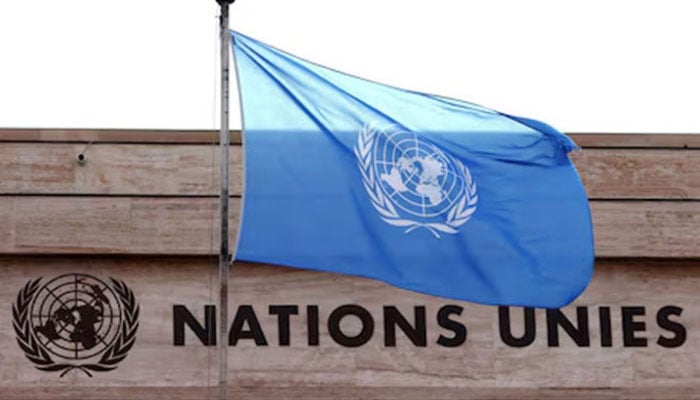
Drafted during WWII by Franklin Roosevelt and Winston Churchill, the Atlantic Charter promised a just international order. Within a year, 26 nations signed the Declaration of the United Nations. Dag Hammarskjold, the UN’s second Secretary General, famously noted that the UN was created not to take mankind to heaven but to save humanity from hell.
In reality, this moral shroud veiled a structural dichotomy. The organisation’s very foundation was the legalised dominance of the victors. Churchill remained committed to preserving imperial reach. Roosevelt’s postwar vision was shaped by American strategic and economic primacy.
This founding anomaly led the UN to diminish into a high-end morgue for global justice. The years saw it as a permissive framework for atrocities and as a mere chronicler of atrocities. From the 1994 Rwandan genocide, where 800,000 perished, to the killing ‘safe zone’ of Srebrenica in 1995, which saw 8000 people executed, the UN remained a bystander to the systematic erasure.
Southeast Asia presents a more harrowing picture. During 1962-71, millions perished in Vietnam. The US perpetrated ecocide by spraying over 76 million litres of toxic herbicides. Agent Orange accounted for more than half of it. It saw 400,000 of the exposed four million perish in Vietnam alone. Decades later, the toxic legacy of these chemicals continues to devastate the environments and populations of Vietnam, Laos and Cambodia.
Between 1975 and 1979, the Khmer Rouge exterminated three million people in Cambodia. Prioritising cold war realpolitik for over a decade after they were ousted, the UN preserved its seat as a government-in-exile. This decision diplomatically laundered the perpetrators of a genocide.
In 2010, UN personnel imported a cholera epidemic to Haiti that killed 10,000. The institution invoked legal immunity to block the victims’ path to justice. In a belated admission of guilt, Ban Ki-moon’s 2016 apology offered no restitution. From systemic sexual predation by peacekeepers to the graft of the Oil-for-Food scandal, the UN has hardened into a self-insulating system.
These failures were no accident; they were a blueprint for impunity. The 2003 invasion of Iraq dismantled a nation on a lie, leaving a million dead and zero accountability. From the 400,000 lost in Syria to Libya’s spiralling chaos, the UN has acted as little more than a coroner for the global south. Today, the genocide in Gaza and the strikes on Iran mark the final abdication of duty - the terminal collapse of the UN order itself.
Earlier this month, a troubling report was published by UN Women. It stated that 22,000 women and 16,000 girls were killed in Gaza between 2023 and 2025, representing an average of at least 47 women and girl fatalities daily. 11,000 sustained injuries resulting in lifelong disabilities. UNICEF reports that more than 50,000 children have been killed or injured in these two years. A grisly audit of systemic failure, the institution now attempts to remain relevant by cataloguing the carnage it was designed to prevent.
Financial and geographic asymmetries further cement the UN’s imbalance. As the primary bankroller, the US wields its chequebook to exert outsized hegemony over the organisation’s priorities. Earlier this year, Washington moved from influence to evisceration. It announced its withdrawal from 31 UN entities, sabotaging lifelines for everything from gender equality to climate action. This has paralysed critical programs in the most vulnerable of nations.
This abandonment signaled that the world’s largest economy was willing to barter global responsibility for short-term domestic posturing. To survive, the UN must sever this umbilical cord between financial dominance and undue influence. This can be done by capping maximum contributions, enforcing minimum participation and developing sovereign revenue streams to insulate global justice from the whims of a single treasury.
The geographic chokehold saw the US weaponising its host status. In 2019-20, it denied US visas to 58 Iranian delegates and Iran’s foreign minister for a UN session. Treating the UN headquarters as a controlled space, the US undermines the principle of its host status and crucially that of equal representation. This has reduced the UN to a gated community of the powerful.
This stranglehold needs to be broken. The UN should no longer orbit a single host. General Assembly sessions should be held by rotation in strengthened regional hubs. Even partial rotation would shift the institution from a territorially anchored forum into a genuinely global one.
Longstanding disputes further expose institutional paralysis. For the people of Kashmir and Palestine, a carceral duplex, the UN has become less an arbiter of justice and more a stage of oration and pageantry. The structure of the UN Security Council lies at the core of this dysfunction. Its veto power allows a single state to override the collective will. The resulting paralysis is not incidental but engineered into the system itself
Pakistan’s recent demand to abolish or restrict the veto directly confronts the asymmetry that has paralysed the UN for decades. The proposal advocates for dismantling the Security Council’s role as a source of institutional paralysis. By prioritising the General Assembly’s collective action in cases of mass atrocities and self-determination, it seeks to ensure that no single power can hijack the global will.
As trust in this outdated architecture evaporates, parallel frameworks shall emerge. The Washington-led Gaza Board of Peace marks a definitive fracture in the global order. This fragmentation, where coordination occurs outside the UN’s universal mandate, signals the final unravelling of a system that can no longer safeguard the principles it was forged to protect.
The UN has transitioned from a promised arbiter of justice into a sophisticated record-keeper of global failure. The weak view it as the crowning irony of a global architecture that forfeits principle to power. Orders rooted in entrenched inequality do not endure; they splinter under the pressure of their own contradictions.
The writer explores the forces which shape power, belief and society. He can be reached at: [email protected]