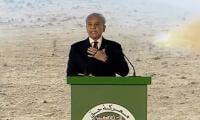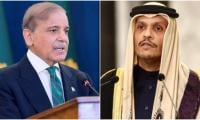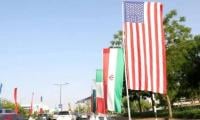
On April 23, 2026, eleven days after the Islamabad Talks concluded, a Wikipedia editor called Erakilos created a new article. By their own description, they occasionally create articles about historical buildings and sites.
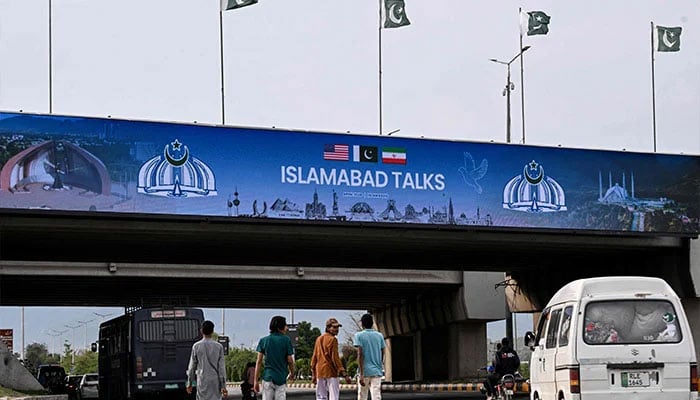
That morning, they documented the first direct US-Iran engagement since the 1979 Islamic Revolution. Twenty-one hours of negotiations. A 300-member American delegation. Held in Islamabad because both nuclear powers trusted Pakistan enough to send their most senior officials here.
Erakilos wrote it all down. The permanent global record of Pakistan’s most consequential diplomatic moment was assembled, on the world’s most visited reference site, by a volunteer who normally writes about old buildings. Not the Ministry of Foreign Affairs. Not ISPR. Not the PM’s Media Wing. Not a single official Pakistani communications institution had considered doing this first.
The story gets worse. A secondary contributor, Ibn Yagdhan, made dozens of updates before being identified as a globally blocked sockpuppet account. Their content was formally removed. The Islamabad Talks Wikipedia page was being partially written by a bad-faith actor while Pakistan’s government said nothing.
This is not a criticism of Erakilos. It is a diagnosis. A time-stamped illustration of Pakistan’s strategic communications failure – while history was being made.
The Wikipedia gap is not isolated. Search ‘Government of Pakistan’ on TikTok. The top result on both searches is the government of Khyber Pakhtunkhwa, a province governed by the opposition. The second result is a jailed former prime minister with 12.5 million followers and 537 million likes. The actual president of Pakistan appears fifth with 91,000 followers. The sitting prime minister appears eighth with 150,000.
The platform is not neutral. Its algorithm – shaped by engagement, consistency and volume – rewards those who show up. The opposition showed up. The government did not.
This is not a conspiracy but a consequence. The under-30 population is Pakistan’s demographic majority. TikTok is where they form opinions and understand power. And on that platform, the sitting government of Pakistan does not exist.
The gap is also editorial. Pakistan’s senior editors carry audiences that dwarf most government accounts. A single tweet from a prominent editor can generate close to a million views within hours, eclipsing the combined reach of the Foreign Ministry, the PM’s office and ISPR on the same day.
In the same week that Iran and America chose Islamabad as their negotiating table, a senior editor’s tweet about gym timings generated close to a million views and consumed the national conversation for days.
No editorial code requires journalists to amplify Pakistan’s diplomatic achievements. But editors who shape national discourse on platforms of that scale are part of Pakistan’s information environment, whether they acknowledge it or not. What they amplify, and when, has consequences beyond the domestic conversation they intend to start. The problem is not that Pakistan’s media lacks reach. It is that the reach goes elsewhere – precisely when the world is watching.
The solution does not require a new ministry or a budget line but a different kind of thinking. The people who carry that thinking already exist in Pakistan – in the private sector; in civil society; in communications professionals who have spent careers understanding how narratives are built and defended in the digital age. What is missing is but rather the institutional will to find it, trust it and give it room to work.
The Islamabad Talks Wikipedia page was written by a stranger. TikTok surfaces the opposition – not the government – when Pakistanis search for their own state. A senior editorial tweet about gyms generated a million views the same week Pakistan hosted history. These are strategic vulnerabilities dressed in digital clothing.
The good news is that vulnerabilities can be fixed. Pakistan has fixed harder things. The question is whether the people in the room – the ones who just hosted history – are willing to make the call.
The writer is the CEO of Campaignistan and founder of the Islamabad Science Festival. He tweets/posts @farhadjarralpk and can be reached at: [email protected]