Gender-based income inequality is a structural trap that keeps half of Pakistan’s population in a cycle of financial instability.
When women receive lower wages than men for work of equal value, it becomes hard for them and their families to afford basic needs like food, education, and healthcare, forcing tough choices that hurt their own health and well-being.
According to the Gender Gap Report by the World Economic Forum, Pakistan ranks at the bottom, 148th out of 148 countries, with a gender parity of 56.7 per cent. Women face barriers that restrict their economic participation to 34.7 per cent, far below regional and global averages. This intersection manifests in lower wages, fewer job opportunities and a reliance on informal sectors where protections are minimal. Consequently, women are disproportionately affected by income disparities, leading to cycles of poverty that span generations.
Cultural expectations around unpaid care work further exacerbate this inequality, as women spend significantly more time on household duties, limiting their ability to pursue paid employment. This ‘time poverty’ acts as a major barrier confining women to part-time or informal roles. They are often forced to stay at home or take low-paying, flexible jobs to balance their household responsibilities.
As a result, women face higher NEET rates at 55 per cent, limiting economic mobility and keeping them in a cycle of financial dependency. The Labour Force Survey 2024-25 shows that the male labour force participation rate is 69.8 per cent, whereas the female labour force participation rate is comparatively low at around 24.4 per cent, creating one of the widest employment gaps in the world today. This reflects the exclusion of women from economic activities, which stifles the country’s economic growth and development.
Even when women do enter the workforce, they face a consistent 25 per cent pay gap according to recent UN reports, when measured using hourly wages. It serves as a primary mechanism through which income inequality perpetuates poverty among women. This gap is not solely explained by differences in education or experience; much of it stems from systemic discrimination and occupational clustering, where men dominate the STEM sector, whereas women are clustered in low-paid sectors like agriculture and home-based work. Women’s lower participation in formal employment, only 13.5 per cent, shows that they often lack benefits such as paid leave or pensions, intensifying financial vulnerability.
In addition, jobs are divided by gender, worsening income inequality. One of the significant factors that causes the gender disparity in wages is that Pakistan is a male-dominated, patriarchal society. Here, both the households and the markets are dominated by men, which is why there is discrimination in education and then later in the job market, which significantly affects the wages of both genders.
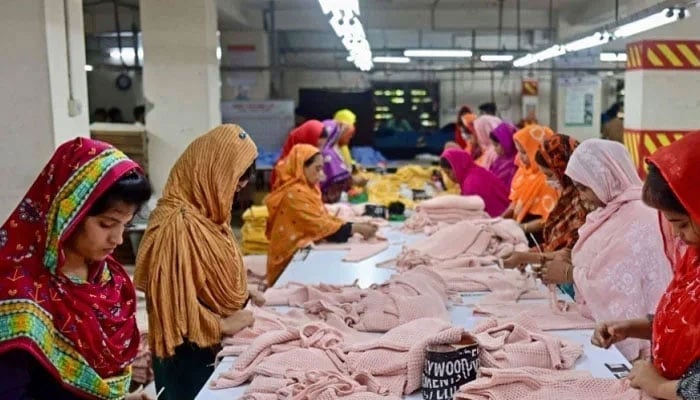
Most working women in Pakistan are concentrated in the informal sector, where jobs are typically undocumented, poorly regulated and often exploitative. Others work in manufacturing and social services, including home-based labour for larger industries. These roles are usually non-contractual, offer little job security and pay below the minimum wage.
This inequality is most visible in rural areas. Women in these areas often engage in unpaid family labour or informal agriculture, earning up to 50 per cent less than men in similar roles due to restricted mobility and societal expectations. The situation of agricultural workers in the Cotton Belt of Southern Punjab highlights the depth of this inequality. These women perform the hardest tasks, such as picking cotton by hand, which consumes so much of their time and physical labour, yet they are rarely counted as official workers in government records. They are often paid in portions of the crop or through informal cash payments well below the legal minimum wage. These women are also excluded from social safety nets like pensions or health insurance because their work is considered domestic or informal.
Wage disparities create a cycle in which women cannot invest in the education and health of their children, thus perpetuating intergenerational poverty. To change Pakistan’s growth trajectory, we need to dismantle the barriers that keep women in the shadows of the informal economy.
The writer is an MPhil scholar and research assistant at PIDE, Islamabad.