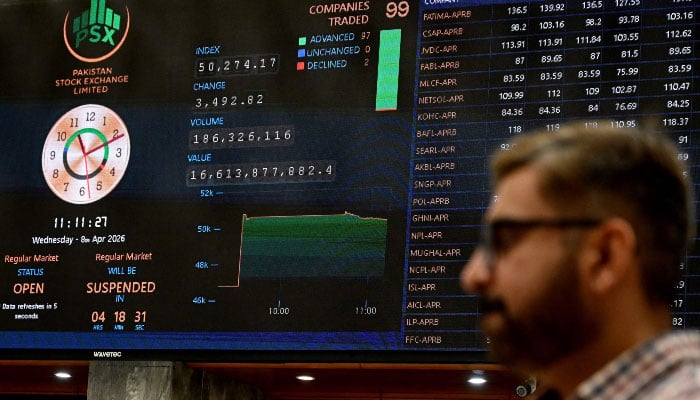
For generations, Pakistanis have been taught the importance of saving for difficult times. Yet for millions of ordinary citizens, turning that lesson into reality has never been easy. Traditional investment avenues have either remained inaccessible or mistrusted, leaving many people with few practical options beyond hoarding cash, buying property or investing in gold. With gold prices now soaring beyond the reach of most households and property increasingly becoming an elite market, the rise in retail participation in Pakistan’s stock market offers an encouraging sign that financial attitudes may finally be changing. The opening of over 25,000 new investor accounts in April 2026 alone reflects more than just interest in the Pakistan Stock Exchange. It signals the emergence of a more financially aware society, particularly among younger Pakistanis. That Gen Z and millennial investors dominate new registrations is perhaps the most important aspect of this trend. Unlike previous generations, many young people today are more open to learning about investments, digital finance and long-term wealth management. This shift matters because financial literacy is also about building economic resilience, encouraging disciplined savings and reducing dependence on informal, often exploitative financial systems.
Pakistan has long suffered from a lack of financial awareness. Many people avoided formal investment channels because they found them intimidating, inaccessible or incompatible with their religious beliefs. In that vacuum, scammers flourished. Countless people lost their life savings to fraudulent schemes promising unrealistic returns. The recent efforts by financial institutions, regulators and segments of the media to educate the public about scams and responsible investing, therefore, deserve recognition. Awareness campaigns explaining how fraudsters operate and encouraging people to verify investment opportunities are helping build a culture of caution alongside curiosity. Equally important has been the effort to simplify access to the stock market itself. In the past, opening an investment account could be a tedious process involving paperwork, repeated visits and technical jargon that discouraged ordinary citizens. Digital onboarding systems and simplified verification procedures have changed this dynamic considerably. The availability of Shariah-compliant investment options has also widened participation among more conservative sections of society who previously stayed away from formal financial markets. Meanwhile, social media has enabled brokerage houses and companies to communicate directly with potential investors, making complex financial concepts easier for first-time participants to understand.
This transition from idle assets towards productive investment channels could have significant long-term benefits for the economy. Greater participation in formal markets can improve capital formation, support businesses and strengthen financial inclusion. However, optimism must be balanced with caution. The stock market is not a shortcut to overnight riches, despite what online influencers and speculative hype may suggest. Investing requires patience, research and realistic expectations. Without proper understanding, inexperienced investors can still become vulnerable to manipulation and risky behaviour. That is why the authorities must continue strengthening investor protection mechanisms. Regulators need to act firmly against fraudulent schemes, insider trading and market manipulation to maintain public confidence. Financial literacy programmes should also be expanded beyond urban centres so that people across the country can understand the basics of saving, investing and risk management. A financially literate nation is ultimately stronger and more stable. If nurtured responsibly, this growing interest in formal investment could mark the beginning of a healthier economic culture in Pakistan, one based not on speculation or fear, but on informed decision-making and long-term financial security.