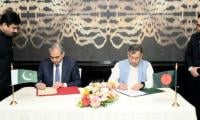
On Friday, the IMF Executive Board approved a staff-level agreement under Pakistan’s loan programme, clearing the way for the release of $1.32 billion in fresh financing. The Fund praised Pakistan’s overall implementation of the programme and emphasised the need to push through key targets, such as boosting revenue mobilisation, enhancing forex flexibility and liberalisation and advancing structural reforms, including SOE reforms and privatisation. The one thing that has changed this time around is the Middle East conflict and its economic fallout. The IMF noted that inflation has increased as higher global commodity prices have passed through to domestic energy prices and stressed the need to maintain strong macroeconomic policies while accelerating reform efforts. That being said, sticking to a tough IMF programme amidst a global energy crisis is nothing to scoff at and the government deserves due credit for securing this latest round of financing. However, if there is one point the government arguably deserves criticism for, it is the slow pace of many of the reforms the country’s economy needs. While the fiscal side is probably in a better place now than when the programme was first signed, why are the salaried and registered businesses still carrying most of the tax burden? When is the tax net actually going to be broadened? And while the PIA has been privatised, what is going to become of the other SOEs? Keeping them on the state’s books no longer seems sustainable.
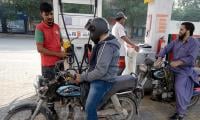
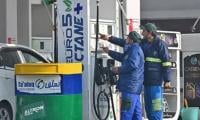
Then there is the power sector, which, by the power regulator’s own assessment, appears to still be trapped in a cycle of waste, inefficiency and rising circular debt, all of which lands in the consumer’s bill. And the charges simply keep going up. Consumers are currently paying 42 paisa per unit under a positive quarterly tariff adjustment tied to Rs10.8 billion in higher costs for Oct–Dec 2025 and, according to some reports, the gas utilities are now seeking tariff hikes. While the IMF has acknowledged recent improvements in energy sector finances, it seems like a lot more could have been done since September 2024. Why has it taken until now for the government to ensure that it will end the subsidy for 200-unit power consumers and move to a targeted subsidy provided through the BISP? While inefficient utilities have been a long-standing concern for Pakistani consumers, this weakness is only heightened when the country is dealing with a global crisis like the ongoing Middle East conflict, with consumers being bled by both the metre and the pump. Petrol and diesel rates were hiked again on Friday and while this can be passed off as an inevitable consequence of a global energy shock, few countries in the region have seen fuel hikes quite as painful as ours.
The discrepancy points to underlying weaknesses in the economy and the demands for some kind of relief, from people and businesses, appear to be getting louder. However, it is not just political prudence that demands an acceleration in reform. The energy shock is showing signs of threatening the government’s hard-won stability. Inflation crept back into the double digits (10.9 per cent) back in April and the merchandise trade deficit has surged 20 per cent to a worrying $32 billion, raising fresh forex and rupee concerns. And while the Middle East instability has not helped, betting on its end to make things better is not wise. Experts say that energy prices may well remain elevated for months after the war ends. The country can simply no longer afford bloated SOEs, a lopsided and narrow tax system, consistently failing to meet revenue targets and a power sector that charges customers for its own inefficiency. There is no point in fresh funds if they will only go towards preserving the status quo.