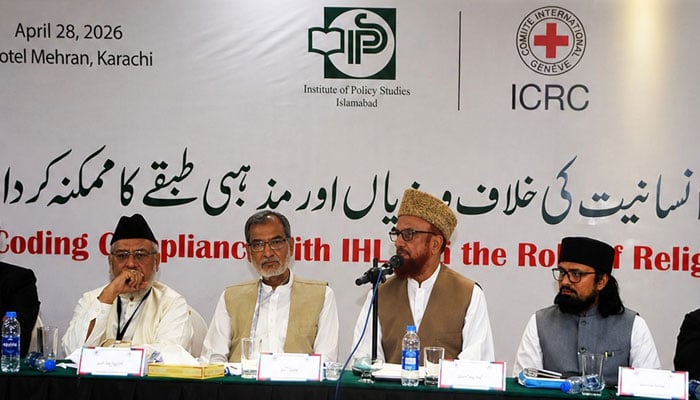
Islamabad: Panelists at a conference voiced concern over the growing erosion of compliance with international humanitarian law in contemporary conflict settings and underscored the need to revisit ethical frameworks and strengthen the role of religious communities in promoting humanitarian norms, protecting human dignity and fostering accountability.
They emphasised that Islamic traditions offered significant guidance for regulating conduct during armed conflict and safeguarding non-combatants.
The conference, titled “Eroding Compliance of IHL and Role of Religious Communities” and organised by the Institute of Policy Studies in collaboration with the International Committee of the Red Cross, brought together scholars, religious leaders, practitioners and civil society representatives to examine the challenges facing IHL implementation and explore the constructive role religious actors can play in reinforcing humanitarian principles.
The speakers included religious scholars Mufti Munibur Rahman, Mufti Abdur Rahim, Prof. Dr. Anis Ahmad, Dr. Mohsin Naqvi, Dr. Nigar Sajjad Zaheer, Dr. Umair Mahmood Siddiqui and Dr. Hafiz Muhammad Sani, IPS Chairman Khalid Rahman and ICRC Regional Adviser Dr Ziaullah Rahmani.
Khalid Rahman said the conference formed part of IPS’s ongoing efforts to facilitate dialogue on critical global issues, bridging classical ethical traditions with contemporary policy frameworks and contributing to a more informed and responsible discourse on humanitarian law and practice.
The first session highlighted the increasing disregard for established norms governing armed conflict, noting that violations of IHL have become more visible in recent global crises. The speakers underscored the importance of bridging legal frameworks with moral and religious values to strengthen compliance.
The keynote speaker, Dr. Anis Ahmad, highlighted the causes and manifestations of declining adherence to humanitarian principles and called for greater engagement by Muslim societies in upholding ethical conduct in times of conflict.
The speakers particularly drew on the tradition of Siyar, i.e., Islamic international law. They examined the principles governing conduct in war, including the protection of civilians, religious personnel, symbols, and places of worship, as well as the ethical treatment of prisoners and non-combatants.