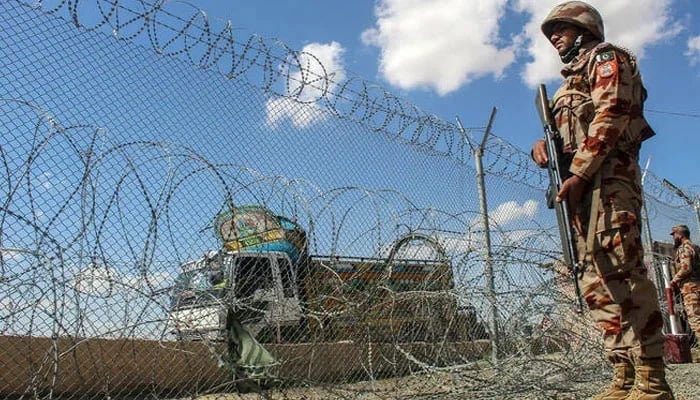
The recent cross-border attacks into Bajaur, which have claimed the lives of civilians including women and children, should be reminder enough that Pakistan’s western frontier remains volatile despite sustained military operations and diplomatic engagement. These are hardly isolated incidents; there is a continuous pattern of violence that keeps on testing the state’s capacity to secure its borders and protect its citizens. And even within this, the widening scope of militancy is increasingly evident. From attacks on police stations in Balochistan to infiltration attempts in North Waziristan – and even the unprecedented assault on a Pakistan Coast Guard patrol boat – the theatre of militancy is no longer confined to land-based insurgency. It is expanding, both geographically and tactically, raising urgent questions about preparedness and coordination. Groups such as the TTP and the BLA have demonstrated both operational capability and strategic intent. Their targets increasingly include not just security forces but civilians, which is really an obviously deliberate effort to sow fear and destabilise already fragile regions. The brazenness of these attacks – and their persistence – pretty much suggest that militant networks remain resilient, adaptive and enabled – a factor that is linked closely to the challenge Pakistan faces when it comes to foreign funding of terror on its soil.
This is not to say that Pakistan is not countering this terror. Military operations, including Operation Ghazab Lil Haq, have yielded measurable successes. Infiltration attempts have been foiled, militants neutralised and networks disrupted. Yet, kinetic measures alone cannot secure lasting peace. The problem is fundamentally transnational, at the root of which lies Pakistan’s uneasy relationship with the Afghan Taliban. Since their return to power in Kabul, expectations that they would curb anti-Pakistan militant groups operating from Afghan soil have not been fully met. Islamabad’s position is clear: Afghanistan must deny its territory to groups that threaten Pakistan’s security. This is not simply a bilateral demand. It is actually a basic obligation under international norms. Recent diplomatic engagements, including talks involving Pakistan, Afghanistan and China, have suggested a tentative opening and such commitments to dialogue and de-escalation are welcome. But experience cautions against relying solely on assurances. Progress will depend on verifiable action, particularly on dismantling militant infrastructure and ending any facilitation of groups targeting Pakistan.
There is also a broader context that cannot be ignored. Pakistan continues to face multiple, overlapping challenges – from economic strain to climate vulnerability and governance deficits. Persistent insecurity exacerbates each of these, deterring investment, disrupting livelihoods and eroding public confidence. In this sense, terrorism is not just a security issue but rather a structural one. At the same time, it would be reductive to view the threat solely through an external lens. While cross-border dynamics are central, internal factors such as governance gaps, underdevelopment in conflict-prone regions and the persistence of extremist narratives also continue to sustain militancy. Addressing these requires long-term commitment beyond immediate security responses. Ending terrorism, therefore, would require firm security measures, principled diplomacy and internal reform. And the clarity that there can be no tolerance, implicit or otherwise, for militant proxies, whether within Pakistan or across its borders. Peace will only come from sustained pressure, credible cooperation and the unequivocal dismantling of militant networks.