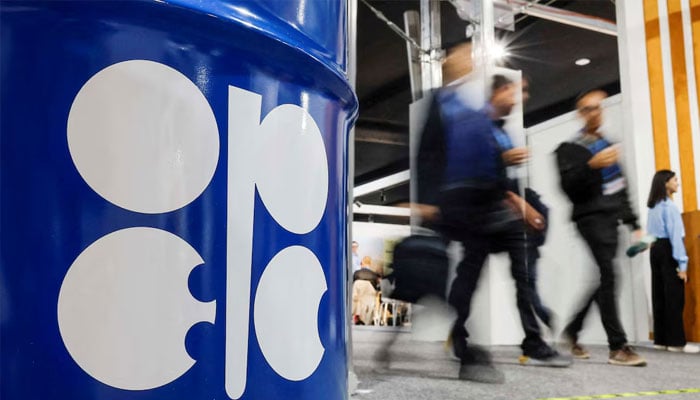
ISLAMABAD: The announcement that the United Arab Emirates (UAE) will formally withdraw from the Organization of Petroleum Exporting Countries and OPEC+ marks one of the most significant shifts in the global energy order in decades. Effective May 1, 2026, the decision ends a 59-year membership and repositions the UAE from a cartel participant to what analysts describe as a “global free agent” in oil markets. The move comes at a time of heightened volatility in global energy markets, with Brent crude already trading above $110 per barrel amid geopolitical tensions and supply disruptions.
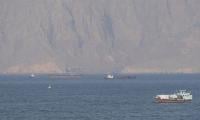
According to the details of the decision, the core driver has been a long-standing dispute over production quotas. The decision is also closely linked to worsening geopolitical instability in the Gulf region. The ongoing crisis in the Strait of Hormuz has severely disrupted oil flows, with estimates suggesting that up to 10 million barrels per day of regional exports were affected at the height of the disruption. The UAE has faced additional strain due to regional tensions, including allegations linking rival actors to attacks on Gulf infrastructure. These developments significantly weakened trust within the OPEC+ framework and contributed to the UAE’s reassessment of its membership.
A key strategic factor in the UAE’s exit is its ability to bypass vulnerable shipping routes. The Habshan–Fujairah pipeline, with a capacity of around 1.5 million bpd, allows crude exports to bypass the Strait of Hormuz entirely and reach the Gulf of Oman directly. This infrastructure ensures that even during maritime disruptions, the UAE can continue exporting oil, reinforcing its position as a reliable supplier independent of cartel coordination.
The UAE’s broader economic transformation also plays a central role in the decision. Non-oil sectors now account for approximately 77% to 78% of national GDP, with the economy projected to grow around 5.6% in 2026, driven by artificial intelligence, finance, logistics, and advanced manufacturing. Officials in Abu Dhabi have increasingly emphasized a long-term strategy of reducing dependence on hydrocarbons while monetizing reserves efficiently during the remaining decades of oil relevance. With production costs estimated at just $10-$15 per barrel, the UAE is among the lowest-cost producers globally, allowing it to remain profitable even if global oil prices decline into the $60-$75 range. The UAE’s departure is widely viewed as more consequential than previous exits by Qatar in 2019, Ecuador in 2020, or Angola in 2024, because it removes OPEC’s third-largest producer and one of its key sources of spare capacity. This spare capacity has historically served as a buffer to stabilize global prices during supply shocks. Analysts warn that its loss significantly weakens the collective ability of OPEC+ to manage global oil markets, leaving Saudi Arabia with a disproportionately larger burden in maintaining balance within the system. There are also concerns about broader “contagion effects,” with speculation that other producers such as Iraq or Kuwait could reconsider the value of remaining under strict quota systems if they perceive greater gains from independent production strategies. This raises questions about the long-term cohesion of OPEC+ as a coordinated supply management mechanism.
Looking ahead, analysts expect that once shipping lanes stabilise, the UAE could gradually increase production toward its full capacity of 5 million bpd. This potential expansion, if implemented, could exert downward pressure on global oil prices over time, particularly if coordinated supply discipline within OPEC+ weakens further.
For the UAE’s seven emirates—Abu Dhabi, Dubai, Sharjah, Ajman, Umm Al Quwain, Ras Al Khaimah, and Fujairah—the decision represents a strategic shift in national economic policy. It reflects a calculated move to prioritize sovereign control over production, accelerate diversification and fund a high-tech, AI-driven economy. At the same time, it signals a broader transformation in global energy governance, where traditional producer alliances may face increasing fragmentation in the face of shifting economic and geopolitical realities.
Energy expert and CEO of the Sustainable Development Policy Institute (SDPI), Dr Abid Sulehri, said that the UAE’s departure—following Qatar’s exit from OPEC in 2019—could significantly reduce the influence of OPEC and OPEC+ as coordinated oil-producing groups. He said the development may weaken supply discipline and increase uncertainty in global oil production decisions. According to him, the long-term implication could be greater unpredictability in oil output and pricing, as individual producers may increasingly prioritise national strategies over collective decision-making frameworks.