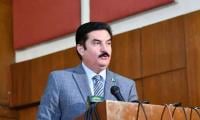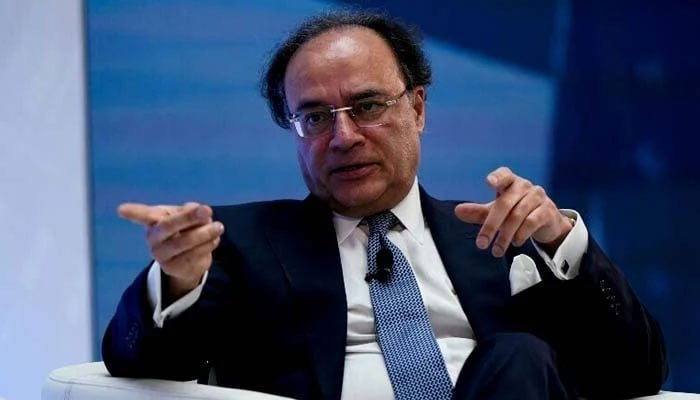
ISLAMABAD: Minister for Finance Muhammad Aurangzeb said on Tuesday Pakistan was undertaking scenario-based modelling to assess the economic impact of oil shocks, freight disruptions and inflationary risks stemming from the second and third rounds of the Gulf conflict. The exercise aims to determine the precise implications of regional instability on the country’s macroeconomic outlook.
The minister noted that energy infrastructure had been significantly affected, with far-reaching consequences for supply chains and pricing mechanisms. This, he said, is likely to intensify inflationary pressures, as already projected by the State Bank of Pakistan. He added that instead of relying solely on bilateral inflows, the government plans to raise external financing through international bonds and commercial borrowing in the coming months.
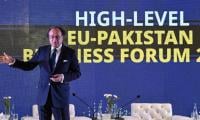
“Pakistan will launch a Panda bond by mid-May 2026, as the Asian Development Bank and Asian Infrastructure Investment Bank have recently provided guarantees,” the finance minister said while addressing the first-ever High-Level EU-Pakistan Business Forum, organised by the European Union in collaboration with the Government of Pakistan in Islamabad on Tuesday.
Later, speaking to journalists, Aurangzeb confirmed that a delegation from the International Monetary Fund is expected to visit Pakistan by mid-May to finalise key contours of the upcoming federal budget. Responding to concerns over rising fuel costs, he remarked, “What options does the government have when global fuel prices increase following the Gulf conflict?”
In his presentation at the forum, the minister stated that Pakistan’s foreign exchange reserves have remained stable despite heavy repayments during the ongoing month. He projected that reserves would reach $18 billion by the end of June 2026, even after repaying a $3.5 billion deposit to a bilateral partner and settling a $1.4 billion Eurobond maturity. Aurangzeb also announced that a contributory pension mechanism for the armed forces will be introduced in the 2026-27 budget. He noted that while Pakistan has managed the initial economic impact of the Gulf crisis, the government is now evaluating its secondary and tertiary effects across different sectors. To address these challenges, a National Coordination & Management Council (NCMC) has been established to ensure a coordinated, whole-of-government response.
The minister highlighted improved remittance inflows and the performance of Roshan Digital Accounts as key sources of foreign exchange support.
Meanwhile, the EU Ambassador to Pakistan, Raimundas Karobolis, praised Pakistan’s diplomatic role in easing tensions in the Gulf region and reaffirmed the European Union’s support. He noted that Pakistan would need to formally apply for the next phase of GSP Plus scheme, as there would be no automatic extension of the current arrangement. He also emphasized the potential to deepen and diversify bilateral trade and economic cooperation.
Special Assistant to the Prime Minister on Industries Haroon Akhtar Khan stated that Pakistan’s economy is increasingly positioned to attract foreign investment, adding that ties with the EU are expected to deepen further.
Secretary of the Special Investment Facilitation Council (SIFC), Jehanzeb Khan, noted that Pakistan’s exports to the EU reached €12 billion in 2024. He added that Special Economic Zones (SEZs) are being developed to attract investment across multiple sectors.