Asymmetric warfare is a form of conflict that employs unconventional tactics, strategies, technologies or politico-military methods to defeat an adversary.
Success in asymmetric warfare is achieved through surprise. The essence of the concept is captured by the famous golfer Bobby Jones, who, after watching another prodigy, Jack Nicklaus, remarked: “He plays a game that I am unfamiliar with”. For many, the climactic boxing match between Muhammad Ali and George Foreman – known as the Rumble in the Jungle – offers one of the clearest illustrations of this concept.
In that bout, Ali employed an asymmetric strategy by taunting Foreman, suggesting that his punches lacked power and posed no real threat. Provoked and enraged, Foreman unleashed a relentless barrage of blows. Ali absorbed these by leaning against the loosened ropes – a tactic later known as the ‘rope-a-dope’. After eight rounds of exhausting himself, Foreman was depleted and ultimately knocked out by Ali, whose strategy reflected careful study of Foreman’s personality and his reliance on brute force. Another example from antiquity is the biblical account of David defeating Goliath using a simple sling to strike a vulnerable point on Goliath’s forehead.
In modern history, asymmetric principles can be seen in Germany’s operational innovation during World War II, the blitzkrieg, which overwhelmed superior French forces through rapid, mechanised advances across the unexpected terrain of the Ardennes. Other notable examples include the Russo-Chechen War, the Soviet-Afghan War, the Vietnam War and the Battle of Mogadishu.
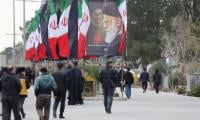
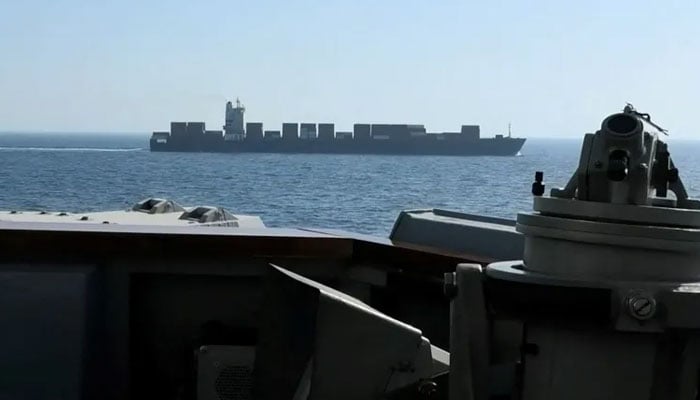
As the ongoing US-Israel war on Iran evolves into a naval blockade, eliciting an asymmetric response from Iran, it is useful to revisit key ideas on asymmetric warfare advanced by leading theorists. The pioneers of indirect strategy, such as Sun Tzu and B H Liddell Hart, emphasised the advantages of avoiding an adversary’s strengths while exploiting its weaknesses. Edward Luttwak extended these ideas into modern strategic thought, highlighting the limitations of conventional warfare when confronted with human ingenuity.
In his influential work ‘Why Big Nations Lose Small Wars’, Andrew Mack highlights the importance of human will in asymmetric conflicts, pointing to the political vulnerability of states under domestic public pressure. The US’s withdrawal from the Vietnam War is often cited as a classic example of this dynamic, where North Vietnamese forces demonstrated a greater willingness to endure sustained losses in pursuit of national objectives.
Ivan Arreguin-Toft, drawing on data from wars between 1800 and 1998, develops five hypotheses based on the interaction of strategies employed by strong and weak actors. According to his framework, these interactions fall into two broad categories: direct strategies (conventional military operations) and indirect strategies (unconventional or asymmetric approaches).
His first hypothesis posits that when both strong and weak actors adopt direct strategies, the stronger actor is likely to prevail. The German bombing campaign against civilian targets in the UK during World War II illustrates this dynamic. His second hypothesis suggests that when a strong actor employs a direct strategy while the weaker actor adopts an indirect approach, the weaker actor is more likely to succeed. The Soviet-Afghan War is a frequently cited example of this outcome.
In his third hypothesis, Toft argues that when strong actors employ indirect strategies – often involving coercive or punitive measures against civilian populations and infrastructure – against weak actors relying on direct strategies, the strong actor is likely to prevail. An illustrative example is Russia’s deforestation campaign in Chechnya during the 1859 Caucasus War.
The fourth hypothesis suggests that when strong actors use indirect or ‘barbaric’ tactics against weak actors that are themselves employing indirect strategies, such as guerrilla warfare, the strong actor is again likely to win. One example often cited is the Phoenix Program during the Vietnam War. However, this dynamic also contributed to escalation, culminating in the Tet Offensive.
The Vietnam case study, in fact, demonstrates the broader limits of conventional superiority in asymmetric settings. Over a decade of conflict, US forces often struggled in asymmetric engagements, even as they secured selective gains in more conventional operations such as Operation Attleboro, Operation Cedar Falls and Operation Junction City – none of which proved strategically decisive.
Arreguin-Toft’s fifth hypothesis synthesises these findings: strong actors tend to win when both sides adopt similar strategies (‘same-strategy’ interactions), whereas weak actors are more likely to prevail when they adopt opposing strategies (‘opposite-strategy’ interactions).
In light of this framework, the prospects for a decisive US victory over Iran appear uncertain if the conflict evolves further along asymmetric lines. Indeed, elements of asymmetry are already visible, with Iran reportedly employing unconventional tactics against US assets in the Gulf, including naval and regional targets.
For the US and Israel to shift towards an indirect strategy, this would likely entail a combination of ground operations alongside sustained air and missile strikes on critical infrastructure. Such an approach, however, carries significant political risks, particularly given the potential for high casualties and the domestic pressures associated with an election cycle.
At its most extreme, indirect strategy approaches what might be termed its apogee – the nuclear option – whose use would entail catastrophic consequences for all parties involved. Iran’s approach already reflects multiple layers of asymmetry: conceptual (expanding the conflict to the Gulf, threatening the Strait of Hormuz and leveraging regional proxies such as Hezbollah); operational (covert or deniable attacks against adversaries); and technological (the use of drone swarms, fast attack craft and naval mines). Taken together, these factors could tilt the balance in favour of the weaker actor.
The greatest danger lies within the fourth hypothesis – where a strong actor resorts to highly destructive indirect methods in pursuit of comprehensive victory. The current US naval blockade, while a direct response to Iranian actions, risks further escalation and could provoke more extreme retaliatory measures.
Ultimately, the most asymmetric response available to Iran may not be military but political: a calculated decision between prolonging a costly conflict or pursuing a negotiated settlement.
The writer is a security and defence analyst. He can be reached at: [email protected]