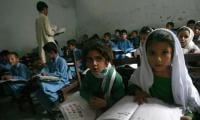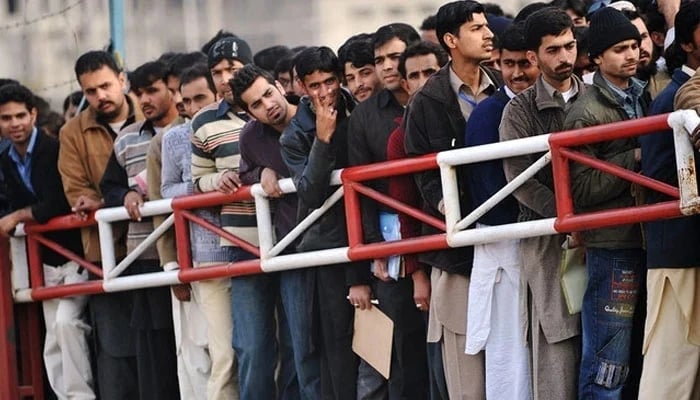
Pakistan today stands at a crossroads as more than 64 per cent of its population is under the age of 30 years.
We can make this young population a demographic dividend or continue suffering the grave consequences of the bulge. The latter sounds more relevant in the present situation, though. Latest estimates by Gallup Pakistan’s analysis of labour force participation 2024–25 show that youth (15–24 years) unemployment stands at 12.5 per cent, with young unemployed women exceeding 13 per cent.
Every year, millions of youth look forward to entering the labour market without any worthwhile opportunities. The impact of this can be seen all around us: be it struggling household budgets, educated youth losing hope and purpose, loss of productivity, or added pressure on the economy. On both micro and macro levels, a failure to absorb this workforce is a socio-economic emergency.
Cut through all that noise and just one district of Pakistan has a remarkable story to tell. Named ‘Pakistan’s export machine’, Sialkot has earned distinction as an island of prosperity through developing an export-led economy. However, unlike other industrial centres based around corporate industries, Sialkot has thousands of SMEs pumping out sports goods, surgical instruments, leatherware and textiles, and shipping them overseas. Billions of rupees are brought into the country through these exports annually, and the jobs sustained by this sector are skilled jobs. Why is this district so unique? Because generations of families have dedicated themselves to trade, developed technical skills, and started their own enterprises, all to turn locally sourced materials into quality finished goods that compete in the international market.
Without exclusion, individuals from all backgrounds are earning their education by doing, exemplifying how skill trumps degrees in Sialkot. With more people working, more money is being spent, which only expands the local market. What the city ends up with is a thriving economy where opportunity is only capped by how far one is willing to take it. The enterprises even built their own airport and collaboratively established a locally owned airline.
The pressing question, therefore, is: why can this model not be replicated across Pakistan? Each district in Pakistan possesses its own unique combination of natural resources, human capital and cultural strengths. From agricultural hubs in central and southern Punjab and Sindh to mineral-rich areas in Balochistan; from forestry and tourism potential in Khyber Pakhtunkhwa to handicrafts and fruit processing in Gilgit-Baltistan and Azad Jammu and Kashmir – the country is enormously rich in localised economic potential. What is missing is a structured mechanism to convert these strengths into sustainable, export-oriented industries.
To replicate the Sialkot model, the provinces, with the support of the federation, need to adopt a decentralised, district-level industrial strategy. Instead of a one-size-fits-all approach, each district should be developed based on its indigenous resources and comparative advantage. For instance, districts known for cotton production can be transformed into textile clusters, while those rich in fruits can develop processing, value addition and packaging industries for export. Similarly, areas with traditional crafts can be supported to scale up production and access international markets.
However, this transformation depends on one critical factor: skills. The fact is that our youth do not lack ambition, but skills, opportunity and exposure. This is where a structured national programme can serve as a game changer. On this front, the provincial and federal governments should collaborate on designing an initiative that selects 500-1000 young individuals from each district annually and places them as interns within established small and medium export-oriented enterprises, particularly in districts like Sialkot. These placements should be immersive, hands-on training experiences where young people learn the entire production cycle – from raw material handling and value addition to manufacturing, quality control, packaging, supply chain and export procedures. The government should provide accommodation and food, and pay them a stipend. Each unit can be asked to facilitate at least 6–10 such interns every year.
In order to steer the flagship programme, its rollout and oversight can be done by the SIFC, the National Vocational and Technical Training Commission (NVTTC) and the Small and Medium Enterprises Development Authority (SMEDA), which can take the lead in curriculum development and quality checks on these trainings, or even in establishing a specialised technical institute with boarding facilities in Sialkot. Once the trainees complete their cycle, they should be encouraged to start similar small units in their own districts. The government can provide them with startup grants or loans at very low interest rates.
To ensure sustainability and scalability, a unique condition can be introduced: each beneficiary who establishes a business must train at least ten additional youth from their district every year. This will create a multiplier effect. Over time, this approach will lead to the emergence of localised industrial clusters, each contributing to the national economy.
If implemented strategically, the government can initially select 5-10 districts each year for this programme. Within 10-15 years, the entire country can be covered, creating a nationwide network of skilled workers, entrepreneurs and SMEs. This gradual, phased approach allows for learning, adaptation and refinement along the way.
The economic dividends of such a model would be profound. With thousands of new enterprises emerging across districts, the nation could witness an unprecedented industrial boom. Export volumes would increase significantly, reducing reliance on imports and improving the balance of trade. The country’s foreign exchange reserves would strengthen, while local economies would become more resilient.
More importantly, this transformation would generate millions of jobs – not just direct employment within enterprises but also indirect opportunities. When local economies thrive, the benefits extend far beyond individual businesses.
Equally significant are the social implications of this enormous economic activity, as increased employment will reduce poverty, enhance social mobility and empower marginalised communities, including women and rural populations. In addition, this model fosters a culture of entrepreneurship, which is entirely missing right now. It will shift mindsets from dependency to self-reliance, from job seeking to job creation.
However, the envisioned idea demands strong political will and long-term commitment. It is sine qua non that governments prioritize skill development as a central pillar of economic policy, aligning education systems with market needs. Multilateral institutions such as the ADB, the World Bank Group and others can also contribute to achieving this goal. Replicating the Sialkot model is a pathway to national renewal. By adopting such models, we can turn an alarming demographic challenge into our greatest strength.
The writer is a climate governance expert. He can be reached at: [email protected]