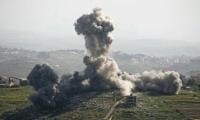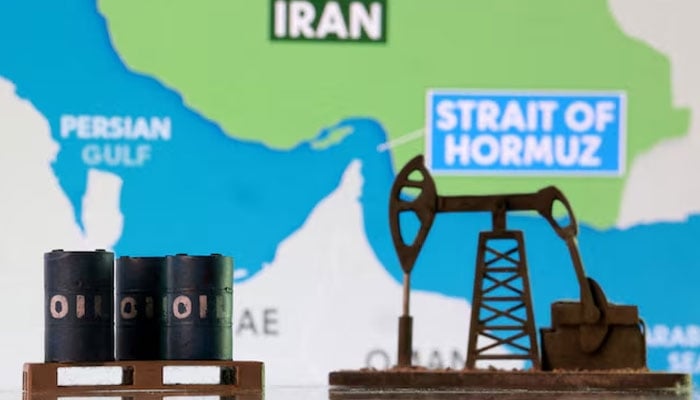
The conflict in the Persian Gulf is being read through a familiar lens: oil prices, supply shocks and geopolitical risk. But this framing misses the more consequential story. The conflict is exposing a deeper fault line in the global energy transition, one that markets and policymakers have yet to fully price in.
In the immediate term, war drives a return to fossil fuels. Over time, it strengthens the case to abandon them. This is the energy transition’s central paradox.
Faced with immediate uncertainty -- threats to supply routes, market volatility, and the risk of cascading energy shortages – countries are reverting to what they know. Fossil fuels are being secured, stockpiled, and, in some cases, expanded. Climate commitments are not being abandoned outright; they are being quietly diluted. Once again, energy security is trumping decarbonisation.
This response is rational. Modern economies remain deeply dependent on fossil fuels, and no government can afford prolonged energy instability. And yet, the same forces that are slowing the transition today may accelerate it tomorrow.
For energy-importing economies, the strategic risks of fossil fuel dependence are becoming harder to ignore. Reliance on globally traded hydrocarbons, often sourced from politically volatile markets, creates persistent exposure to disruption. Renewable energy offers a different proposition: decentralised, domestically anchored and less vulnerable to geopolitical chokepoints. The sun and wind do not pass through contested waters.
This is the paradox in its clearest form: war reinforces fossil fuel dependence today, while strengthening the case for abandoning it tomorrow.
And implicitly, this reality is constrained by a third, less visible force: the fragility of the supply chains required to scale a low-carbon economy. Decarbonisation is as much a materials story as an energy one. Lithium, cobalt, nickel, copper and rare-earth elements underpin batteries, electric vehicles, wind turbines and power grids. Without them, the transition does not slow but stalls.
Governments are doubling down on fossil fuels to secure short-term resilience. Yet the pathway out of that dependence – renewables, electrification, and storage – relies on supply chains that are proving brittle under geopolitical stress. The effects are already visible. Shipping costs are rising, insurance premiums are increasing and transit times are becoming less predictable. Volatility in critical mineral markets is feeding through into higher input costs for clean energy projects and tighter margins for developers.
What appears as geopolitical risk is rapidly becoming financial risk through higher capital costs, weaker project bankability and reduced visibility on long-term returns.
Resilience, therefore, is no longer a secondary concern. It is a precondition. Diversifying supply chains, investing in alternative materials and scaling circular-economy models will have to be central to the credibility of the transition.
It has become very clear now: an energy transition reliant on exposed global supply chains will continue to remain structurally vulnerable. Yet it is no longer optional; if anything, the current conflict underscores its necessity. The question is no longer whether the world will transition, but whether it can do so under a fractured geopolitical order.
The writer is an environmental economist and can be reached at: [email protected]