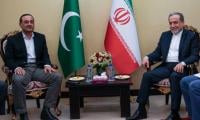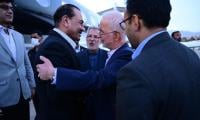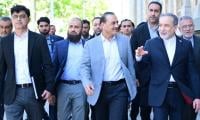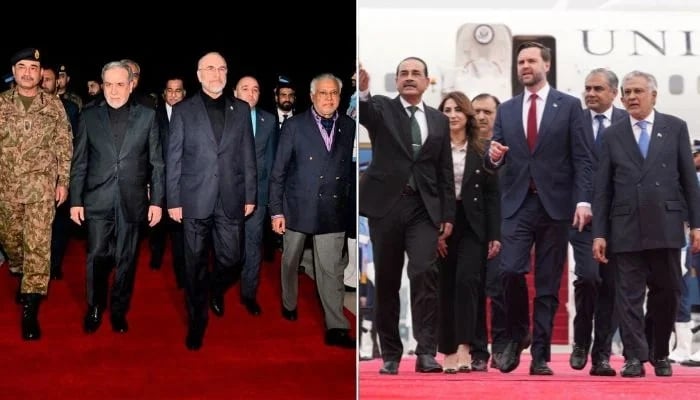
Last weekend, Pakistan accomplished what had long seemed diplomatically out of reach by hosting the first sustained, high-level face-to-face engagement between the US and Iran since the 1979 Islamic Revolution, led on the American side by Vice President JD Vance.
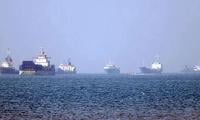
While no final agreement emerged – reflecting deep structural differences on nuclear guarantees rather than any failure of process – reporting across major international outlets indicates that substantive progress was made on de-escalation in the Strait of Hormuz, energy security, sanctions pathways and broader regional stability. Pakistan has been widely credited for providing a neutral, disciplined platform that enabled serious engagement, with Vance explicitly praising Islamabad’s role.
Crucially, follow-up reporting suggests that Pakistan is continuing its quiet facilitation efforts and that there are emerging indications the Iran-US dialogue could resume in the near term. Taken together, this reinforces the broader conclusion that Pakistan has not only facilitated a rare diplomatic opening but has materially enhanced its credibility and strategic weight on the global stage.
This is diplomatic centrality of a kind Pakistan has never sustained in living memory. For once, the geometry of power has shifted in our favour. When adversaries cannot speak to each other, they speak through us. That is leverage – real, rare and potentially fleeting.
But let us be brutally honest with ourselves, as a nation must be when history knocks. We have seen windows like this before, maybe less in importance, and watched them slam shut. We have celebrated photo-ops, chased short-term aid and convinced ourselves that external applause could substitute for internal discipline. The result has been the same every time: headlines fade, the moment passes and Pakistan returns to the same grinding cycle of crisis. We cannot afford to get carried away again. If we treat this diplomatic opening as an end in itself, we will have squandered the opportunity of a lifetime.
The only question that matters now is whether we will convert this external relevance into internal transformation before the world moves on. That conversion must start with energy, because energy is the artery of everything else. Pakistan’s chronic blackouts and price shocks are a national emergency that has crippled industry, terrified investors and kept millions in poverty.
We now have the diplomatic muscle to act decisively. Within the next six months, we must negotiate and ratify a tightly structured, legally compliant framework for Iranian energy imports – designed not as a geopolitical gamble but as a hard-headed stabiliser against global price spikes. At the same time, we must lock in a $5-7 billion US-Saudi-Pakistan Energy Transition Compact focused ruthlessly on results: modernising the grid, slashing transmission losses, building battery storage, and launching the largest solar build-out in our history.
As the non-negotiable precondition for this compact, we must finally confront and resolve the scandal of capacity payments to IPPs and the monstrous circular debt they have spawned. This requires immediate, transparent renegotiation of IPP contracts to replace guaranteed capacity payments with performance-based, take-and-pay mechanisms, coupled with a dedicated debt resolution facility that securitises and retires the arrears while converting toxic obligations into sustainable, lower-cost financing.
Only by excising this fiscal tumour can we create the fiscal space and investor confidence needed for genuine transformation. The target is unambiguous – 10 gigawatts of new solar by 2030, with the first two gigawatts already auctioned and under construction by the end of 2027. Anything less will not be sufficient.
The second front is digital infrastructure, because in the 21st century, broadband is not a luxury; it is the new highway system for wealth creation. We must launch a National Broadband Acceleration Programme that delivers 100 per cent high-speed fibre and 5G coverage to every industrial zone and major secondary city by 2029. This is not social spending; it is production capital. Pair it with the immediate, full digitisation of taxation, land records, procurement and licensing – every citizen and business must be able to complete these transactions online in 48 hours.
The state must stop strangling its own technology sector and instead become its largest customer. Only then can we realistically aim for $10 billion in annual digital services exports and turn our young talent from fragmented freelancers into globally competitive firms.
None of this will matter unless we finally break our addiction to consumption and build an economy that earns its own foreign exchange. We must move decisively to export-led growth. Special Economic Zones must become genuine export machines – uninterrupted power, one-window clearance, 10-year tax holidays granted only to those who hit real export targets, and independent audits to enforce them.
Agriculture, our greatest untapped asset, must stop exporting raw commodities and start exporting packaged, high-value food products to the hungry markets of the Gulf and East Asia. Launch the National Agro-Processing Initiative now: concessional credit and technical support for 500 modern processing units, with a hard target to double processed food exports in five years. Textiles must climb the value chain or die; technology services must scale from gigs to global contracts. Dispersion is death. Focus is survival.
None of these shifts is possible without human capital that can actually compete. With Pakistan ranked 168th out of 193 countries – with an HDI (Human Development Index) of 0.544 – we fall into the ‘low’ human development category. With millions of children out of school and pathetic learning outcomes of the ones attending school, high population growth, short birth spacing resulting in 44 per cent of children under five stunted, most even at birth, a large proportion of people below the poverty line, Pakistan cannot have sustainable growth.
We must stop the national scandal of producing certificates instead of capability. Immediately select five public universities, grant them full autonomy, and tie every rupee of future funding to measurable outcomes: international rankings, patents filed, and graduates actually employed. At the same time, establish fifty Industry-Aligned Vocational Excellence Centres that will produce 100,000 technically skilled workers a year by 2029, workers who can actually run the factories and digital platforms we claim to want. Treat technology not as a buzzword but as national infrastructure: slash the red tape on cross-border payments, enable company registration in one hour, and create a $500 million venture fund laser-focused on deep-tech exporters.
All of this, finally, rests on governance capacity – the one reform that determines whether anything else actually happens. Capital today flees uncertainty faster than it chases incentives. We must consolidate economic decision-making into a streamlined body with fast-track authority for every investment above $100 million. Every subsidy and protection must carry a sunset clause and measurable performance metrics. Publish independent, quarterly scorecards on these priorities so the public can see who is delivering and who is delaying. Execution discipline is no longer optional; it is our sharpest competitive edge.
Security itself has changed. It no longer ends at the border. Cyber resilience, energy continuity, financial stability and the uninterrupted operation of critical infrastructure are now matters of national survival. Economic weakness is itself a security threat.
This is not a wish list. These are the non-negotiable, measurable actions that must begin in the next twelve months, while the world is still watching Islamabad and the diplomatic leverage is still fresh. If we execute with the same urgency we once reserved for defence, this moment will not be remembered as a clever diplomatic interlude. It will be recorded as the turning point when Pakistan stopped managing decline and started building ascendancy.
History is not kind to nations that host the talks but fail to seize the moment. Let future generations say that in 2026, when adversaries came to our capital seeking peace, Pakistan did not merely provide the table but also used the moment to rewrite our destiny.
The writer is former head of Citigroup’s emerging markets investments and author of ‘The Gathering Storm’.