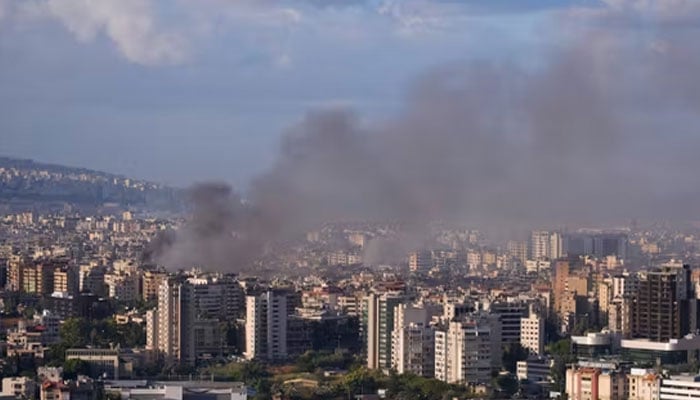
Even as a fragile diplomatic opening has emerged – thanks to Pakistan – Israel’s relentless assault on Lebanon has laid bare a troubling and constant truth: for all the talk of ceasefires and negotiations, Israel’s machinery of war does not pause. Instead, the genocidal state merely shifts theatres. The Israeli military’s continuation of bombing Lebanon, in the immediate aftermath of the Pakistani-brokered potential US-Iran ceasefire was not entirely unexpected. Israel as spoiler is Israel’s constant role: each time the world has come close to achieving a semblance of peace, this occupying terror state tries to sabotage the deal. Within hours of a truce being declared, Israeli bombardment killed over 200 people and injured more than a thousand in a single day in Lebanon. This brutality is a deliberate escalation that undermines whatever limited trust exists between the negotiating parties – the US and Iran. The manufactured confusion over whether Lebanon was included in the ceasefire is revealing. While Prime Minister Shehbaz Sharif maintained that Lebanon was part of the truce framework, the Trump administration ha snow suddenly decided to contradict this, with officials offering inconsistent explanations. JD Vance’s claim of a “legitimate misunderstanding” does little to inspire confidence. If anything, it exposes either a lack of clarity or a troubling willingness to allow ambiguity to justify continued violence. And one can almost bet on the latter, given the surreal hold Israel has on every single American government.
The truth is – and this is a truth that should now be declared universal – that Israel wants nothing more than to widen conflict and war and violence. This is so especially as diplomatic efforts quicken to contain the war[s]. Restrained from striking Iran directly during the ceasefire period, Israel has instead intensified its offensive against Lebanon. This strategy reflects a dangerous calculus that treats Lebanese civilian lives as expendable collateral in a broader geopolitical game. Rightly calling these attacks a violation of international law and humanitarian principles, Islamabad has aligned itself with a growing chorus of global concern. European leaders, too, have expressed rare and sharp criticism, warning that Israel’s actions risk derailing an already fragile ceasefire. The UK’s insistence on including Lebanon in any comprehensive truce is welcome.
Pakistan’s emerging diplomatic relevance has become the talk of the global town. But all efforts risk being rendered futile if Israel’s violence continues unchecked. Diplomacy cannot succeed in the shadow of ongoing bombardment. Negotiations require not just intent, but an environment conducive to trust. Iran, for its part, has articulated a clear set of demands – from sanctions relief to the withdrawal of US forces and the release of frozen assets. The apparent dismissiveness from Washington, however, raises concerns about the seriousness of its commitment to a lasting peace. A ceasefire must be a genuine step towards resolution. What is unfolding in Lebanon is part of a broader pattern of escalation that has already devastated Gaza. The international community must recognise that selective ceasefires are inherently unstable. If the US is serious about de-escalation, it must exercise its considerable influence over Israel to halt the assault on Lebanon. Anything less risks not only the collapse of the current ceasefire but a descent into a wider regional war with catastrophic consequences. The sole agenda for the US should now be on reining in Israel. The future of this world depends on that.