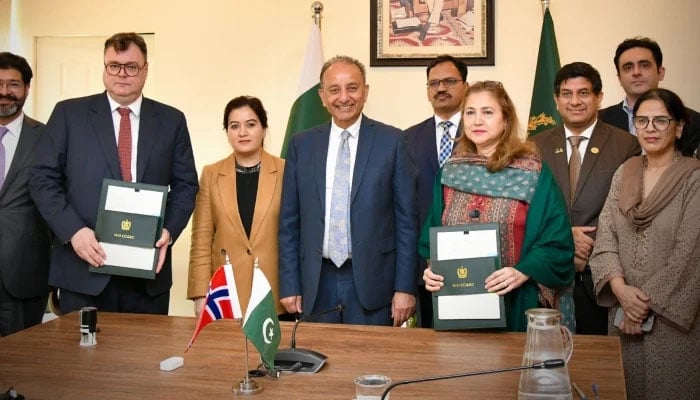
Earlier last week, Pakistan signed its first bilateral carbon agreement under the Paris Agreement with Norway. With the arrangement, Pakistan will reportedly be able to generate carbon credits through projects in sectors such as clean energy, transport and agriculture and then sell the resulting emissions reductions to Norway. The deal has been made under Article 6 of the Paris Agreement, which allows nations to collaborate on emissions reductions through carbon credit trading. Any carbon credits that Pakistan generates can be traded as internationally transferred mitigation outcomes (ITMOs). According to the Norwegian ambassador to Pakistan, his country – which aims to achieve climate neutrality by 2030 – is seeking to purchase ITMOs to go beyond its formal climate commitments.
At this stage, the agreement appears both timely and innovative. With global warming accelerating, Pakistan has faced a barrage of floods and heatwaves in recent years, oscillating between climate extremes that have pushed its people, economy and infrastructure to their limits. Agreements like these create an economic incentive for countries such as Pakistan to invest in projects that help mitigate and adapt to climate change, a potential reversal of the decades-old pattern in which wealthy nations effectively offshored their polluting activities to the developing world. Now, the inflow of foreign exchange could help push Pakistan towards cleaner development pathways. For far too long, Pakistan, which accounts for less than one per cent of global carbon emissions, has remained among the countries most vulnerable to climate change. Many other developing nations are in the same position. Meanwhile, the countries most responsible for the crisis have often been reluctant to part with the wealth generated by their polluting activities in the form of meaningful climate finance or reparations. While this latest agreement with Norway is a step in the right direction, it cannot quite be called reparations, at least based on what has been reported. Ideally, Pakistan should receive greater compensation for the damage that the climate crisis has already inflicted. That said, such arrangements may still serve a useful purpose by incentivising investment in renewable and low-carbon projects in developing countries.
This is, in any case, an area where Pakistan has tremendous potential. A 2023 study estimates that the country’s untapped renewable energy capacity stands at nearly 60,000 MW from hydropower, 40,000 MW from solar and 346,000 MW from wind. The recent solar boom has likely begun to tap into that 40,000 MW potential, but much more remains to be done. Officials have already claimed that renewables account for more than 46 per cent of Pakistan’s power generation mix, and the prime minister announced at a UN climate summit last year that the country aims to raise the share of renewables to 62 per cent of the energy mix by 2035. In this context, the target does not appear overly ambitious. If more agreements like the one with Norway are signed, the economic case for renewables will only grow stronger. The hope, then, is that other wealthy nations follow suit – not only through carbon markets, but through more direct and equitable forms of climate finance. For countries like Pakistan, grappling with the consequences of a crisis they did little to create, such support is essential.