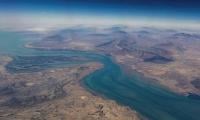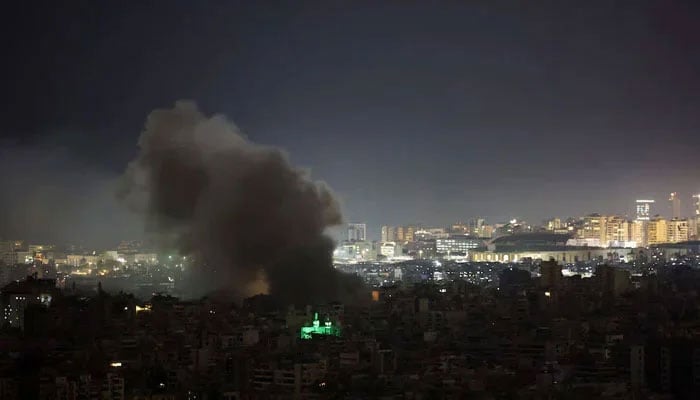
The latest developments in the US-Israel war on Iran are beginning to expose a reality that much of the Western narrative has tried to obscure: this is not a short, surgical conflict aimed at ‘restoring stability’, but a costly and increasingly untenable war against a state that has demonstrated both resilience and strategic depth. Reports of multiple US aircraft losses, including fighter jets downed inside Iranian territory, are glaring indicators of a miscalculation. In Iran’s case, both its political will and defensive capacity appear intact. Equally telling is Tehran’s calibrated use of leverage in the Strait of Hormuz. Iran is hardly the irrational actor Western media and politicians have portrayed it as for decades. Instead, it is clear Iran understands the geopolitical weight of its geography. The ability to disrupt a fifth of the world’s oil supply is a strategic deterrent and recent intelligence assessments suggest Iran is unlikely to relinquish this leverage anytime soon. If anything, it seems Tehran’s bargaining power has expanded. This should ideally force a reassessment of the assumptions underpinning the war. The claim that Iran is the primary destabilising force in the region becomes harder to sustain when the conflict itself was triggered by US-Israeli action, and when subsequent escalation appears to systematically undermine efforts at de-escalation.
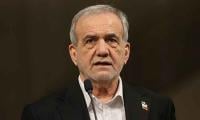
It is in this context that Iran’s refusal to accept current US terms must be understood. Reports that Tehran rejected a proposed ceasefire or expressed reluctance to engage in talks in Islamabad have already been clarified by Iranian officials themselves. The issue is not dialogue per se, but the conditions attached to it. As Iranian Foreign Minister Abbas Araghchi has made clear, Tehran has ‘never refused’ talks; what it rejects are proposals that fail to guarantee a just and lasting end to what it views as an illegal war. The distinction points to a position rooted not in obstinacy but in mistrust that is justifiable. Araghchi has also once again appreciated Pakistan’s role, which in this fraught environment continues to remain both significant and constrained. Islamabad has attempted to hold the centre, offering itself as a venue for talks and coordinating with regional actors to push for a ceasefire. That Iran has publicly expressed appreciation for these efforts speaks to the credibility Pakistan has managed to retain with both sides. At the same time, Pakistan has had to push back against speculative reporting and manufactured disinformation unleashed by domestic and foreign bad faith actors.
Pakistan’s consistent emphasis on dialogue, its condemnation of attacks on Iranian territory and its engagement with partners like China is an attempt to anchor itself on the side of de-escalation. This is an active effort to create space for a political resolution in a conflict where such space is rapidly shrinking. In doing so, Pakistan has implicitly challenged the logic of a war that continues to escalate without a clear endgame. The broader implications of this conflict are already visible. Energy markets remain volatile, inflationary pressures are building and the risk of a wider regional war continues to grow. There is another consequence too: it has become harder and harder for the West to sustain the narrative of Iran as an isolated aggressor. Instead, what is emerging is a more complex picture: of a state under attack, leveraging its strategic assets and insisting on its right to self-defence. Let’s be clear here: calls for ceasefire and dialogue cannot coexist with actions that repeatedly sabotage both. Pakistan, for its part, must continue to hold the line. Its diplomatic initiatives may not determine the outcome of this conflict, but they remain one of the few avenues through which escalation can be checked. Eventually, though, it all boils down to what the occupant of the Oval Office is thinking. If we just go by his social media posts, the signs are alarming.