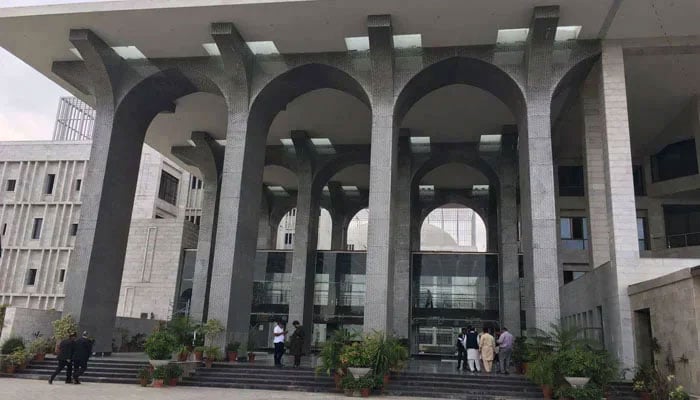
Last month, the Islamabad High Court (IHC) issued directives for legislation to protect and effectively enforce women’s financial rights and amendment in the marriage certificate (nikkahnama). In a landmark judgment, Justice Mohsin Akhtar Kayani ruled that the dowry and personal gifts of the bride belong to her and, after separation between husband and wife in case of divorce, the husband is bound to return the entire dowry. The judgment ruled that all assets acquired during the subsistence of a marriage, be it movable or immovable and regardless of the owner, constitute ‘matrimonial property’ and are subject to equitable distribution between spouses. Justice Kayani emphasised that there should be no bias in favour of a money earner over a home maker or child carer when dividing marital assets. This is a social reckoning long overdue. Interestingly, the IHC observed that domestic labour and household management are significant contributions that consequently facilitate the family’s wealth. Equitable property distribution and return of dowry is something is extremely important in a society that views homemakers as undeserving of any share in the wealth of their husbands. This is despite the fact that it is the wife’s unpaid domestic labour that often allows men to work without worrying about home management issues. For decades, this invisible labour has been normalised, even romanticised, but never compensated.
The IHC ruling reportedly came in response to a writ filed by a former air force officer, who challenged previous court orders regarding the recovery of her dowry and personal belongings. A trial court had granted her only 30 per cent of the alternate value of her dowry while an appellate court had later set that relief aside entirely, citing a lack of ‘tangible evidence’ such as receipts or parent testimony. The IHC has declared these earlier rulings null and void. In doing so, it has also rejected the troubling assumption that a woman must produce receipts to prove ownership of what is culturally and legally understood to be hers. Now, the government has been directed to enact legislation to protect and effectively enforce women’s financial rights. The court has said a law should also be made so that women can get a share in the assets acquired during marriage. The marriage certificate should also be amended so that the wife will get a share in the property of the husband during marriage. These are not minor procedural tweaks and, if implemented sincerely, they could transform the legal and economic status of women within marriage. Yet, legislation alone will not suffice. There are countless examples of how women are divorced at the whims of men who then just dump their children on their wives without giving them any alimony.
Women must also be educated about marital rights and legislation, so they can claim what is rightfully theirs. Legal literacy campaigns, accessible family courts and gender-sensitive judicial processes are essential complements to any reform effort. In this regard, Barrister Ali Zafar’s Senate bill from 2024, to further amend the Muslim Family Law Ordinance, should be revisited and strengthened in light of the IHC’s observations. Ultimately, the protection of women’s rights is integral for the development of a just society. A legal system that recognises women as equal economic partners within marriage challenges the very foundations of patriarchy. The IHC has taken a necessary step. It is now up to the legislature and society to ensure that this moment does not pass as yet another missed opportunity for meaningful change.