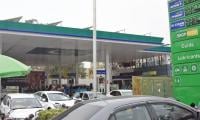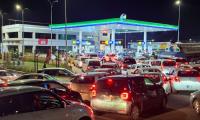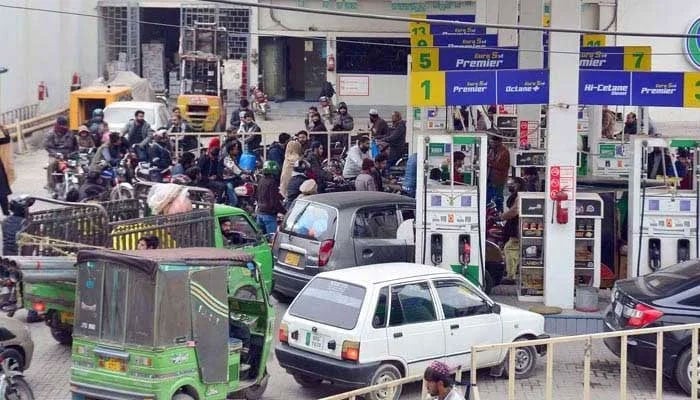
The moment the government had been trying to avoid finally came on Thursday. The government hiked petrol by Rs137.24 per litre to Rs458.41 per litre and high-speed diesel by Rs184.49 to Rs520.35 per litre, scrapping blanket subsidies. The petroleum levy structure has also been revised, with the levy on petrol raised by Rs55.24 per litre to Rs160.61 per litre, while the levy on high-speed diesel has been reduced to zero from the earlier Rs55.24 per litre. The maximum ex-depot price of kerosene has also been raised to by Rs34.08 to Rs433.40 per litre, with higher rates permitted in remote areas under freight equalisation rules. To say that these increases will be brutal for the people would be an understatement. Most were already wondering how they would cope with the Rs55 per litre increase in petrol and diesel prices the government announced last month. The centre has offered some targeted relief for two- and three-wheelers, freight trucks, public transport and small farmers. The Sindh and Punjab governments have also announced major relief packages, including subsidies for public transport, farmers, and motorcycles, with Punjab going so far as to make all public transport free. However, there is no getting around the higher prices. One aspect of this hike that has drawn the most ire is the revision of the levy structure, with some questioning why the petrol levy must also be raised alongside price increases. Volatility in global prices due to the ongoing Middle East conflict would seem to explain the former but not the latter.
That being said, the economy was not exactly in a strong position when the war started, with the country struggling to meet IMF revenue targets. The global lender has reportedly shown reluctance to accept Pakistan’s request for flexibility in petroleum levy adjustments, even as the government pushes for relief to shield consumers from the impact of rising global oil prices. However, it is unclear exactly how such high fuel prices further the goal of economic stability and this is a point the IMF itself should consider. The levy hike, once again, also highlights the country’s highly unequal revenue-collection structure, with the salaried majority being taxed far more than exporters, retailers and property buyers and sellers, all of whom make more money. The fact that this system has still not been reformed is a disappointment. While experts have described the latest fuel hike as painful but necessary, this is the line that people hear repeated every time there is a crisis. It is always ordinary Pakistanis who seem to have to pay more and sacrifice more on the altar of ‘stability’ and ‘necessity’.
And, for all the talk of a global crisis, some reports claim that when fuel prices are compared to average income levels, Pakistan has become the world’s second-most fuel-unaffordable country. If true, this would mean the energy crisis is hitting Pakistan harder than almost any other country. This is a reflection on just how precarious our economic status quo is, leaving the country highly vulnerable to such shocks. Our economic status quo is one of rank inequality, high poverty, low growth and unsustainable debts. This is why, even the stability achieved over the last two years or so did not draw much public support. The whole point for a country like Pakistan is to escape the status quo and now, with seemingly no clear end to the US-Israel war on Iran in sight, one can only wonder how far the nation will ultimately be set back. Already, schools in the largest province have shifted to a four-day workweek amid an education crisis in which around 25 million children are out of school. How many more will have to leave school in the coming days to help their parents pay for the new fuel rates?