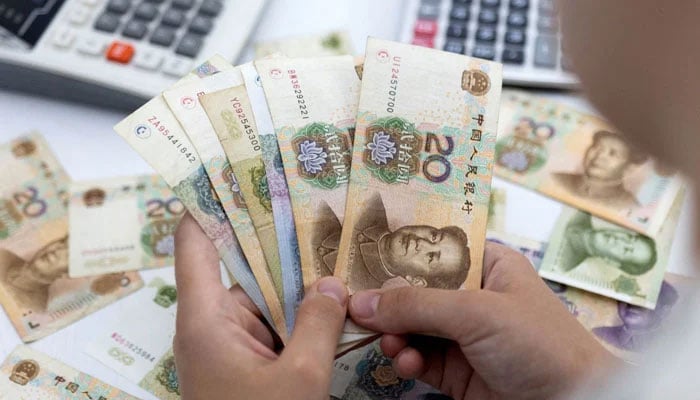
Iran blindsided Washington with a startling strategy by asking that deals be done in the Chinese yuan, not the US dollar. This was a sharp mix of military muscle and financial defiance.
By tying safe passage to Yuan payments, Tehran turned geography into a weapon against the dollar’s long reign.
After the 1973 oil shock and the end of the gold-backed dollar, the US quietly struck a deal with Saudi Arabia. America would provide military protection and advanced weapons. In return, the Saudis would price their oil in dollars and recycle the profits into US Treasury bonds. Other OPEC nations followed. What emerged was a beautifully self-reinforcing loop: the world needed oil, so the world needed dollars. Those dollars flowed back to American banks and markets, keeping interest rates low and letting the US run big deficits without immediate pain.
For more than fifty years, this arrangement gave America something rare – an “exorbitant privilege”, as one French minister once called it. Consumers enjoyed cheaper imports. Wall Street soaked up waves of petrodollars. Presidents could fund ambitious programmes and maintain a far-flung military presence with fewer harsh trade-offs. The dollar didn’t just facilitate trade; it became its indispensable backbone.
But the ground is shifting beneath it now. China, steadily rising as a true global heavyweight, has been building alternatives for years. Yuan-based oil deals with Iran and Russia have grown. Inside the expanding BRICS club, talks of new payment systems and less dollar dependence are gaining traction. Iran’s latest move accelerates everything. Suddenly, a meaningful portion of the world’s oil trade could start bypassing the greenback and the powerful sanctions leverage that comes with it.
Iran has implemented a de facto ‘toll booth’ regime in the Strait of Hormuz. According to Lloyd’s List Intelligence, Iran’s Islamic Revolutionary Guard Corps (IRGC) requires vessels to submit detailed documentation for vetting and provides escorted passage through a controlled corridor near Iranian waters. Till a few days back, Tehran was also reportedly negotiating with multiple countries to condition limited tanker transits on oil cargo being traded in yuan.
This mirrors trends in Russia-China oil trade, where China imported 21.8 million tons of Russian crude in the first two months of 2026, a 41 per cent increase year-on-year. A large and growing share of this bilateral energy commerce has shifted to settlements in yuan and rubles, helping Russia bypass Western sanctions and advancing de-dollarisation in energy markets. Overall, substantial portions of Russia-China trade now occur in national currencies.
While the tension builds in the Gulf, China and Russia seem to be watching with quiet satisfaction. The US is once again drawn deep into a Middle Eastern crisis. Every ship sent, every extra defence dollar spent, every hour spent managing the Hormuz drama pulls American focus and strength elsewhere. For Beijing and Moscow, it’s a low-cost gift. While Washington is bogged down, they push their multipolar agenda forward across Africa, Central Asia and Latin America with less interference.
The oil tankers might start sailing through the Strait of Hormuz again soon. But something deeper has already shifted beneath the surface. For Washington, the real challenge isn’t just keeping the shipping lanes open. It’s learning how to operate in a world where America’s long-held financial and economic advantages can no longer be taken for granted.
What was once unthinkable is now becoming a real possibility: the petrodollar’s long dominance could take a serious hit – carefully managed by China, Russia and Iran.
The writer is an Islamabad-based researcher with a special interest in India, Pakistan and regional affairs. He can be reached at: [email protected]