Israeli academic Orit Perlov said: “Bomb Iranian children; Iranian parents deserve to witness this. It took us two years to do this in Gaza; we haven’t really done anything in Lebanon yet”.
By transforming the memory of the Holocaust during World War II into a form of ‘memory politics’, a powerful ideological construct has taken shape in Israel, one that internalises the belief that justice for past suffering can only be achieved through unbroken cycles of hatred and violence. The simultaneous commemoration of the Holocaust alongside the continuation of the Nakba, the mass displacement and killing of Palestinians, reflects a politics of annihilation that defines Israeli national consciousness.
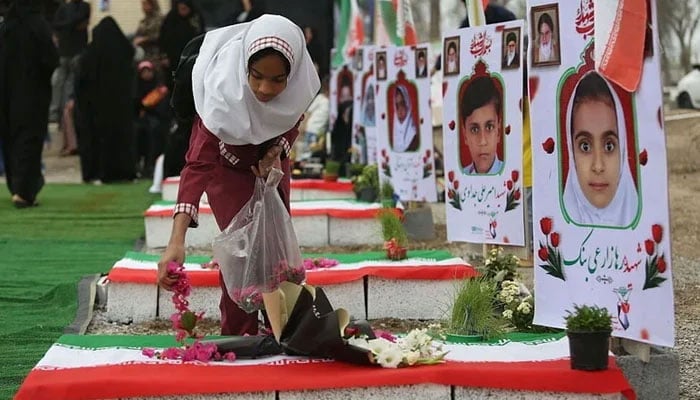
Israeli Prime Minister Benjamin Netanyahu continues to face allegations of corruption. Yet, by nurturing and sustaining this culture of memory politics, he has managed to consolidate and prolong his political authority. This narrative framework repeatedly mobilises public sentiment through emotionally charged rhetoric such as ‘Cry, Israelis, cry’, and celebrates the killing of children in Palestine. Following attacks on schools in Iran, some Israeli intellectual and cultural voices have reportedly justified such actions by asserting that Iranian parents ‘deserve’ the suffering.
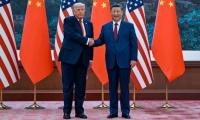
Attention has now shifted towards Lebanon. After Israel, in coordination with the US, launched strikes against Iran, Hezbollah responded with attacks originating from Lebanese territory. Israel, in turn, has been accused of using this development as a pretext to escalate its military posture, raising fears of Lebanon being transformed into another Gaza. Reports further suggest that Donald Trump advised Netanyahu to proceed with military operations while sparing Lebanese Christians, an indication of potential ethnic cleansing of Lebanese Muslims.
In conversations with Holocaust survivors, a number of them have expressed deep unease at Israel’s evolution into a state that invokes Holocaust memory while engaging in sustained violence. “This is not the Israel we need”, some have remarked. Historically, survivors of genocides often emerge with strong humanitarian and ethical commitments. In contrast, those more distant from such lived trauma may appropriate its memory, turning it into a political instrument for power, legitimacy and material gain, and also to justify actions that violate basic human values.
For decades, Israel has continued to chew the gum of Holocaust memory. Over 78 years, this has coincided with continued oppression in Palestine, a widening conflict in Lebanon and military actions against Iran that lack justification and have resulted in significant loss of life. As a result, this overused memory narrative has begun to taste increasingly bitter.
The post-World War II German generation naturally felt remorse for the Holocaust. Prominent figures like novelist Gunter Grass and philosopher Jurgen Habermas, both of whom had early associations with Nazi-era nationalism, devoted much of their later lives to atonement. This often took the form of steadfast support for Israel, coupled with silence on Israeli actions in Palestine. Many liberal intellectuals in Europe have similarly supported Israel out of a sense of Holocaust guilt. Hence, Israel came to symbolise enlightenment and progress, and criticising Israel risked being seen as abandoning progressive values.
Meanwhile, individuals who were untouched by the Holocaust have turned its memory into a cultural industry across literature, art and film. In Hollywood, a pattern emerged in which mocking Germans became a marker of liberal identity. Decades later, filmmakers now face a narrative dilemma: with the original Nazi generation gone, how does one sustain the Holocaust narrative? Their solution has been to introduce neo-Nazis as villains, continuing to chew the same gum.
Parallel to this is a deeper ideological strand within Israeli thought: a mythological or theological vision of ‘Greater Israel’, stretching from the Nile to the Euphrates. Whether articulated through religious conviction or adapted within liberal frameworks, Israeli ideology can shift as needed, justified by the fact that Jews were once victims of the Holocaust.
The liberal order in the West, particularly in the US, shaped in part by Holocaust memory politics, has weakened. The political rise of Donald Trump, elected twice as president, reflects a broader shift toward nationalist currents. His brand of Christian nationalism has formed a strategic alignment with Israeli Jewish nationalism, clearly visible in joint actions against Iran. However, this alignment has not gone uncontested; segments of the American public have voiced criticism and Nato members have refrained from joining this war so far, having learned from Iraq and Afghanistan.
Any grief or ideological narrative, when overused, eventually loses its emotional power. As a result, a new generation in Europe and America, empowered by social media, has become increasingly vocal against Israel over the genocide in Palestine. The US, as Israel’s ally, now faces growing scrutiny on the global stage. Just as the world once united to resist Adolf Hitler, the argument goes that unless Benjamin Netanyahu is similarly confronted, the world may once again face a catastrophic humanitarian disaster, spanning the region from the Nile to the Euphrates.
The writer is the editor-in-chief of E-SouthAsia. He can be reached at: [email protected]