Amid endless commentary and analysis fixated on battles over which Pakistan has little or no control, one strategic imperative towers above the rest: energy security.
Diversified and affordable sources of energy, both local and imported, represent a core national interest and an existential challenge for Pakistan. It cannot be a secondary national security concern. This must become a central pillar whenever we debate foreign policy or national defence. The path forward is clear: unleash targeted fiscal incentives for solar power now, net-metering adjustments notwithstanding. The payoff will be billions in reduced fuel imports, genuine energy independence, and a stronger hand in global affairs.
Pakistan’s energy imports – primarily petroleum products, LNG and related fuels – run at approximately $16–18 billion annually. With total liquid foreign-exchange reserves standing at $21.70 billion as of March 13, 2026 (SBP-held: $16.35 billion; commercial banks: $5.35 billion), this single line item equals roughly three-quarters of our entire FX cushion. A $10 jump in Brent crude alone adds $1.8–2.0 billion to the annual burden. With Middle East tensions pushing prices toward $100+, our monthly oil-import bill could surge to $600 million. We are one geopolitical shock away from a reserves crisis.
In response to this escalating oil crisis, the government has acted swiftly, announcing emergency austerity measures. These include a four-day workweek for government employees, two-week school closures or shifts to online learning, widespread directives for work-from-home arrangements, a 50 per cent cut in fuel allowances for official vehicles (with 60 per cent of the government fleet temporarily grounded, exempting ambulances and public buses), cabinet members forgoing salaries and allowances for two months, a 25 percent pay cut for lawmakers, a 20 percent reduction in non-salary departmental expenditures, and an outright ban on the purchase of vehicles, air-conditioners, furniture and other non-essential items until June 2026. Public appeals urge citizens to embrace further conservation in daily life.
These steps are prudent and necessary to conserve fuel and ease immediate pressure on the exchequer. Yet they highlight the deeper structural vulnerability: short-term belt-tightening can mitigate symptoms, but it cannot eliminate our chronic dependence on imported energy.
Diplomacy must also deliver tangible benefits. Pakistan should actively seek a permanent waiver from US sanctions to import oil and gas from Iran. This would convert existing unofficial daily flows of 31,000 to 38,000 barrels of petroleum products, mostly diesel, through well-established smuggling routes into fully legal, scaled-up official channels that could reach 100,000 barrels per day within a year, including new crude supply deals. The upside in the gas sector is even more transformative: Iran holds some of the world’s largest reserves and the pipeline infrastructure on the Iranian side stands ready for rapid extension into Pakistan. Such a move would diversify supply sources, reduce exposure to volatile global markets and turn high-level diplomacy into concrete economic relief.
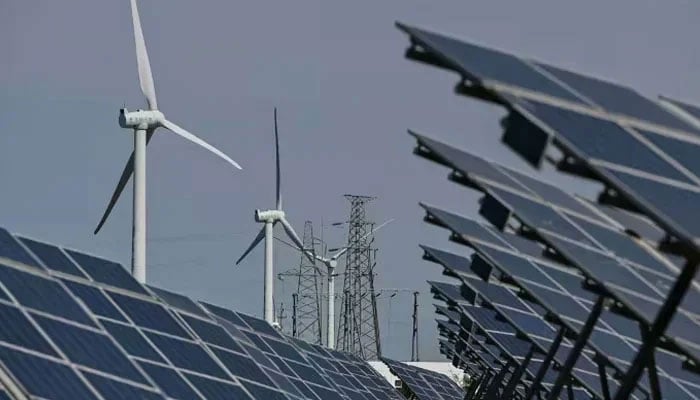
A remarkable, citizen-driven solar revolution has already delivered a cumulative shield of $12 billion since 2020 and is on track to save another $6.3 billion in FY2026 alone. By early 2026, the country has imported 45–51.5 GW of panels, with 32–34 GW installed. Solar now supplies up to 25 per cent of daytime grid electricity in major cities, cutting oil-and-gas imports by nearly 40 per cent between 2022 and 2024. Lifetime savings from current capacity could exceed $100–180 billion.
Recent policy shifts – a 10 per cent GST on panels in the FY2025–26 budget (down from an initial 18 per cent proposal) and the February 2026 transition from net metering to net billing (with buyback rates now at the National Average Energy Purchase Price of around Rs10–11/kWh against retail tariffs of Rs37–55/kWh) – have introduced uncertainty and slowed momentum. These steps, taken amid broader revenue-mobilisation efforts, address legitimate concerns over utility revenues and daytime grid oversupply. But they must not become a pretext to throttle the boom. Full duty-free imports of solar panels and accelerated depreciation allowances for limited companies are not giveaways; they are high-return strategic investments. They will multiply forex savings, stabilise the economy and unlock the next phase: batteries and electric vehicles.
Electricity tariffs remain punishing at approximately 13.5 US cents/kWh, more than double those in India or the US, driving record off-grid adoption. Without bolder action, the fuel-import bill could climb towards $18–20 billion this year. Restoring duty-free status would slash upfront system costs by 10-18 per cent (or more for complete installations), compressing already attractive 2-4 year paybacks to under two years for households, SMEs and farmers. Accelerated depreciation would let companies rapidly write off solar assets against taxable income, turbocharging corporate and industrial uptake, which accounts for 26-30 per cent of national demand. These sectors are already pivoting to captive solar to hedge against tariffs and outages.
Pre-tax exemptions fueled the 17 GW surge in imports in 2024. Reversing recent duties would reignite that momentum, generate thousands of jobs, reduce 17-20 per cent transmission losses and ease the Rs2.5-2.8 trillion annual capacity-payment burden on idle thermal plants. Net billing is a reasonable grid adjustment, but taxing solar to protect utility revenues risks accelerating deeper off-grid migration and larger macroeconomic losses. With electricity demand growing 3-4 per cent annually towards 126–128 TWh this year, suppressing adoption would only deepen our vulnerability to volatile imports. Fiscal tools worked spectacularly before; they will work again, delivering structural forex savings that dwarf any short-term revenue dip – even as the government pursues wider austerity.
Solar’s daytime strength becomes a liability at night, unless paired with storage. Battery imports reached 1.25 GWh in 2024 and are projected to hit 8.75 GWh by 2030. The New Energy Vehicle Policy 2025–2030 targets 30 per cent EV sales by 2030 (scaling to 90 per cent by 2040 and 100 per cent by 2060), potentially cutting petroleum use by 15-20 per cent and saving up to $2 billion annually by 2030. Local production, such as the BYD plant in Karachi, set to start mid-2026, offers a ready platform – yet both batteries and EVs need policy oxygen to scale.
To accelerate battery adoption, policymakers should zero-rate GST and customs duties on lithium-ion and sodium-ion systems, treating them identically to solar panels. They should extend accelerated depreciation and introduce investment tax credits of 30-40 per cent in the first year for residential, commercial, and industrial battery energy storage systems. Hybrid solar-plus-storage solutions should also be mandated for new industrial incentives and agricultural tubewells, building on the solar-tubewell boom that has already trimmed agricultural demand.
For EVs and charging infrastructure, the government should layer capital subsidies or low-interest loans on top of the existing 45 per cent discount on electricity tariffs for certified charging stations, with priority for solar-integrated setups. Every new or renovated petrol station operated by PSO and private players must install at least four to six fast chargers powered by on-site solar-plus-storage, with a national target of 3,000-6,000 stations by 2030 achieved through public-private partnerships and CPEC funding.
Sales tax and registration fees for EVs – especially the two- and three-wheelers that dominate our roads – should be waived, while operational rebates tied to verified renewable charging are introduced. National charging protocols must be standardised, real-time availability apps integrated and highway corridors prioritised with stations spaced every 105 kilometres. Local manufacturing through technology transfer and mandatory battery recycling will keep costs down and create green jobs.
These measures reinforce one another: solar-generated, battery-stored power cuts EV operating costs by 30-40 per cent versus petrol, displacing millions of tonnes of oil equivalent while decarbonising transport – the largest petroleum consumer, accounting for 80 per cent of total use.
This is not merely an energy or economic discussion. It is about national resilience. Solar-plus-batteries-plus-EVs would insulate us from geopolitical shocks, shrink the Rs2.4 trillion circular debt, build export-competitive industries, and cut emissions without waiting for a flawless grid. Renewables could reach 10-15 per cent by 2029 and 58 per cent by 2030, unlocking $100–120 billion in lifetime savings. Grid upgrades and efficiency gains must complement, not constrain, this transition.
The government already holds the levers. It must restore duty-free status, enact stronger corporate tax incentives and fast-track battery and EV enablers through targeted subsidies, mandates and public-private execution. Pakistan’s solar revolution has already proven the model: bottom-up, market-driven and spectacularly effective. Now is the time to supercharge it from the top with strategic urgency, even as austerity measures buy us breathing room and bolder diplomacy secures diversified supply lines.
Energy security cannot be an afterthought in our foreign or defence conversations. Delay – and we mortgage our future to foreign oil suppliers while reserves bleed. Act decisively – duty-free panels, accelerated depreciation, battery and EV incentives, mandated solar-powered charging and a permanent sanctions waiver for Iranian imports – and we secure diversified, affordable energy for generations. The data are unequivocal. The challenge is existential. Our strategic interests demand nothing less.
The writer is former head of Citigroup’s emerging markets investments and author of ‘The Gathering Storm’.