Ali was four, clutching a small, brightly wrapped gift as he stepped into a birthday party alive with balloons, music and laughter. Children ran past him – calling out, playing games, forming quick circles of belonging. He watched, smiled and tried to find his place. But when the games began, everything became too much.
The music was loud. Instructions came too quickly. The children moved faster than he could follow. When he tried to speak, the words did not come out the way he intended. The room grew overwhelming – too noisy, too full, too fast. Slowly, he stepped back. Still holding his gift, Ali pushed a chair in frustration, found a quiet corner and refused to join in. The party continued around him. No one intended to leave him out, but he was.
This is not an isolated story. For many children with autism, exclusion is not dramatic or deliberate. It is quiet, unintended and deeply embedded in everyday spaces – classrooms, playgrounds and family gatherings. It happens not because people are unkind, but because environments are not designed with difference in mind.
Every year, World Autism Day brings a wave of awareness – campaigns, conversations, symbolic gestures of support. Yet beyond this, a harder truth remains: stigma has not meaningfully diminished. There is still hesitation; still distance. Parents and caregivers often remain reluctant to share spaces with children who have disabilities – as though difference is something disruptive, unpredictable or even something to be avoided. Invitations are quietly withheld. Interactions are limited. Inclusion becomes selective.
Children with disabilities are welcomed in curated spaces – on stages, in campaigns, in carefully framed narratives. But in the ordinary rhythms of life, where inclusion matters most, the doors too often remain closed. This contradiction demands reflection. Do we believe in inclusion as a value or only as a moment? Because inclusion cannot be performative. It must be lived.
At its core, inclusion is widely misunderstood. Physical presence is mistaken for participation. Proximity is mistaken for belonging. But a child can stand in the middle of a room and still feel entirely alone. True inclusion requires a shift – not in the child, but in the environment. Consider a moment like Ali’s birthday party. The challenge was not simply social; it was sensory. Loud music, rapid instructions, crowded spaces and constant stimulation created a barrier to participation.
Yet the solutions are not complex. They are intentional. Lower the volume. Slow down instructions. Create a quiet space for regulation. Allow flexibility in participation. Remove the pressure to ‘join in’ before a child is ready. These are not concessions. They are access. More importantly, they reshape how children understand difference. Neurotypical children learn that participation does not have to look the same for everyone. They learn patience, adaptability and empathy – not as abstract ideas, but as lived experiences. Inclusion, then, benefits everyone.
For parents of children with autism, however, the stakes are deeply personal. Alongside pride in their child’s growth, there is a quieter, persistent question: Will my child be understood? Will they be accepted? Will they be allowed to belong? These are lived realities. And they point to a larger responsibility, one that extends beyond awareness campaigns and designated days. It asks us to examine the environments we create. Are they spaces that reward only one way of communicating, playing and behaving? Or are they spaces that allow for multiple ways of being?
Because inclusion is not about making children the same. It is about ensuring that difference is not a barrier to participation. As Barry M Prizant writes in ‘Uniquely Human’, “Autism is not an illness. It is a different way of being human”. If that is true, then the responsibility to adapt cannot rest solely on the child. It must be shared by the systems, structures and social norms that surround them.
There is also a deeper question at the heart of this conversation: why does difference still make us uncomfortable? Why do we celebrate it in principle, but resist it in proximity? No creation is without purpose. No child is incomplete. Yet our actions often suggest otherwise – not through overt exclusion, but through quiet avoidance.
This is where inclusion must become intentional. At home, it begins with how we speak to our children about difference. In schools, it is reflected in how learning environments are structured. In social spaces, it is seen in who is invited, who is accommodated and who is made to feel that they belong. These choices define whether inclusion remains an ideal or becomes a reality.
There are institutions that work to create such environments, where children are not forced into rigid expectations but are supported in expressing themselves in their own ways. But meaningful change cannot remain confined to specialised spaces. It must extend into everyday life, where most children live and grow.
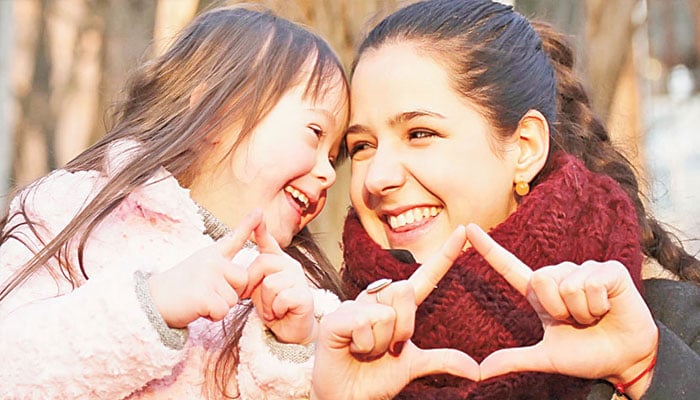
This World Autism Day, the call is simple: move beyond awareness. Notice the child standing slightly apart. Adjust the environment before correcting behaviour. Replace hesitation with understanding. Because inclusion is not about charity. It is about equity. And at the end of the day, every child deserves more than just a place in the room. They deserve to belong.
The writer has worked withchildren with autism and learning difficulties for over two decades. She is the founder and clinicaldirector of The Circle - Caring for Children, and can be reached at: [email protected]