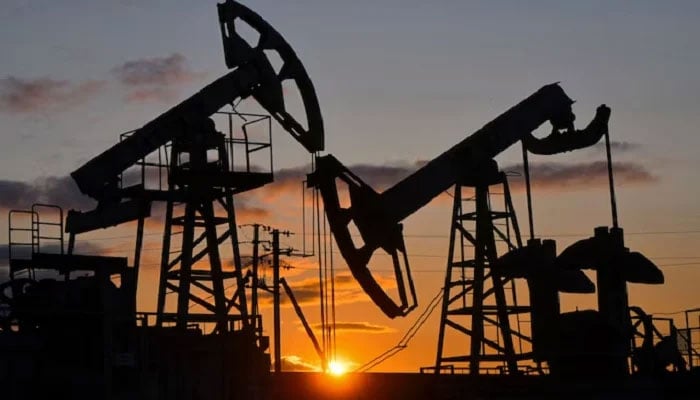
The rise of oil prices to $111 per barrel is a warning signal. What is unfolding in the Middle East today is the early stage of a broader economic disruption that is already spilling across borders, markets and societies. For Pakistan, this is not a distant conflict. It is an immediate economic concern and potentially, a strategic opportunity.
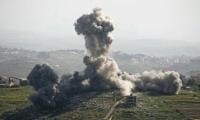
The escalation involving Iran, Israel and the US has disrupted shipping through the Strait of Hormuz. Tanker movements have slowed, routes are being reconsidered and insurance costs are rising. Markets are not simply reacting to what has already happened; they are pricing in what might come next: prolonged uncertainty.
Energy prices are the foundation of the global economy. When oil rises, everything from transport to agriculture becomes more expensive. Fertiliser costs increase, logistics costs rise and, ultimately, food prices follow. This transmission mechanism is already underway, and it is particularly dangerous for countries like Pakistan that are heavily dependent on imported energy.
Higher oil prices translate directly into a larger import bill, pressure on the rupee, and rising domestic inflation. For ordinary households, this means more expensive fuel, higher food costs and a further squeeze on already limited incomes. Policymakers, meanwhile, face a familiar dilemma: absorb the shock through subsidies, pass it on to consumers, or seek external financing. Each option carries economic and political consequences. But the current crisis goes beyond prices.
For decades, globalisation rested on the assumption that trade routes and energy flows would remain stable and politically neutral. That assumption is now breaking down. Access to critical routes is increasingly shaped by geopolitics rather than efficiency and supply chains are being rerouted accordingly.
Evidence of this fragmentation is already visible across the Gulf. Energy flows are beginning to bypass traditional chokepoints. The growing importance of ports such as Fujairah in the UAE, strategically located outside the Strait of Hormuz, reflects a deliberate attempt to reduce exposure to geopolitical risk.
Similarly, within Iran itself, trade flows are adjusting. Activity is gradually shifting away from traditional Persian Gulf ports such as Bandar Imam Khomeini towards alternative routes on the Gulf of Oman, including the port of Shahid Beheshti. This is a structural signal that global trade is reorganising around risk. Such shifts come at a cost.
Longer routes mean higher insurance premiums, delays and inefficiencies. These costs do not disappear; they feed directly into inflation and slow growth. What we are witnessing is not a temporary disruption, but the early stages of a structurally more expensive and uncertain global economy.
At the same time, the traditional security architecture of the Gulf is being tested. The long-held belief that an American military presence guarantees stability is now in question. Recent attacks on energy infrastructure suggest that such a presence may no longer deter conflict; in some cases, it may even attract it. This inversion has serious implications.
It forces Gulf states to reconsider the strategic arrangements that have underpinned their economic model for decades: exporting energy globally, recycling revenues through financial systems and relying on external security guarantees. If those guarantees no longer hold, the entire framework must be reassessed.
The implications extend to the US itself. Financing an expanding conflict on top of an already strained fiscal position raises questions about sustainability. With rising defence spending, growing deficits and recent credit downgrades, the US is entering a phase where its economic capacity to project power is increasingly constrained. This does not mean immediate decline, but it does suggest a transition towards a more contested, multipolar world.
In such a world, the risk is not just conflict but miscalculation. When major powers operate with outdated assumptions about their own dominance or their adversaries’ limitations, conflicts tend to last longer and become harder to resolve. Markets can absorb shocks, but they struggle with prolonged uncertainty. The longer uncertainty persists, the deeper its economic impact becomes.
This is precisely why the current moment demands diplomacy. The ongoing talks involving Turkiye, Egypt and Saudi Arabia are a critical step towards de-escalation. But they cannot remain symbolic. They must translate into practical efforts to stabilise the region, securing energy routes, reducing military signalling and reopening channels for negotiation.
Here, Pakistan has a role to play. With its diplomatic ties across the Muslim world, its strategic partnership with China and its engagement with Western institutions, Pakistan is uniquely positioned to act as a bridge in an increasingly polarised environment. At a time when major powers are locked in confrontation, middle powers must step forward to facilitate dialogue. This is an economic necessity.
A prolonged conflict in the Gulf will directly impact Pakistan’s economic stability. But beyond that, it threatens to accelerate a broader fragmentation of the global economy, one in which trade becomes politicised, supply chains become unstable and economic shocks become more frequent.
Oil at $111 is not the end of the story; it is the beginning. It signals that geopolitical risk is no longer peripheral to economic outcomes; it is central. It signals that the global system is entering a period of transition. And it signals that countries capable of mediation and balance will play a critical role in shaping what comes next.
Pakistan’s cautious diplomacy has served it well, but caution in a changing world must evolve into strategy. In a global order that is no longer stable but increasingly contested, the real risk is not taking sides but failing to adapt. Pakistan must ensure that its neutrality does not slip into passivity.
The writer is a senior lecturer in finance, leading International and Transnational Education at Birmingham City University’s College of Accountancy, Finance and Economics. He tweets/posts @HafizUsmanRana