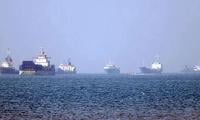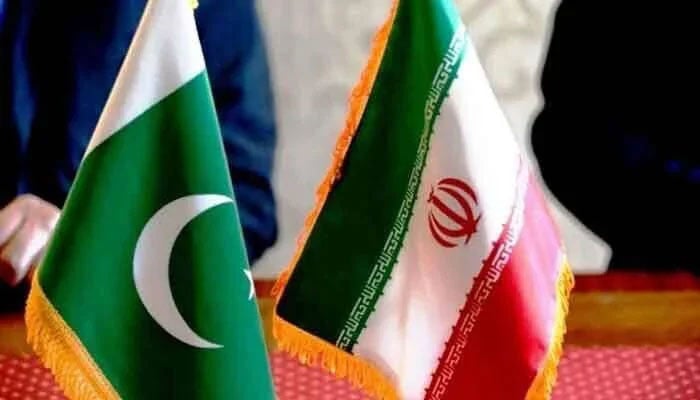
Over the past few days, a major news development was the emergence of a confidence-building measure: Iran said it will allow 20 Pakistani-flagged vessels to pass through the Strait of Hormuz at a rate of two per day.
US President Donald Trump reposted this update by Pakistan’s Foreign Minister Ishaq Dar on his own Truth Social account. Of course, this did not stop even some Pakistani journalists and sympathisers of Pakistan’s jailed former prime minister Imran Khan from asking frivolous questions about the foreign minister’s tweet.
Iran granted this concession as a confidence-building measure on Pakistan’s mediation – an early but significant signal that backchannel diplomacy is not only active but yielding tangible outcomes. In conflicts of this scale and sensitivity, such incremental steps often matter more than grand declarations, because they establish a rhythm of trust.
On Saturday, Iranian President Masoud Pezeshkian spoke with Pakistan’s Prime Minister Shehbaz Sharif for well over an hour. During the phone call, the Iranian president talked about the importance of trust, while the Pakistani premier reiterated that his government was doing its utmost to find a peaceful way forward. These are not mere diplomatic niceties but the language of states preparing the ground for something more substantive.
The stage is being set for direct talks between Iran and the US in Islamabad in the coming days. The CBM extracted by Pakistan from Iran was a first step in this and was even referenced by President Trump while speaking to reporters aboard Air Force One on March 28. That such a measure was acknowledged at the highest political level in Washington suggests that Pakistan’s role is not peripheral but central.
Iran has stated that attacks on all civilian infrastructure must stop. The bombing of one of its universities on Saturday has heightened tensions, with Tehran warning that Israeli and American-linked academic institutions in the region could become targets. Given the presence of multiple US-affiliated university campuses in cities such as Dubai and Doha, this is no idle threat. The US, for its part, initially pushed for the immediate reopening of the Strait of Hormuz. However, reports later suggested that President Trump had told close aides that Washington might be willing to sequence its priorities differently – even contemplating an exit from the region before a full reopening of the strait, leaving that to be resolved later.
Iran, meanwhile, is said to be open to allowing 50 per cent of maritime traffic through the strait, with the remaining 50 per cent to be negotiated during formal talks. There is also a possibility that a ceasefire could be announced even before direct negotiations begin. These are the kinds of calibrated positions that typically emerge during serious mediation.
But as expected, there are many variables – chief among them Israel. Israel has historically shown a tendency to disrupt diplomatic initiatives it views as unfavourable. However, a recent statement by the Israeli army chief indicating that his forces are stretched to the limit – and could even risk internal strain – is noteworthy. If there is one factor that could influence Prime Minister Benjamin Netanyahu and his war calculus, it is the operational sustainability of his military.
Adding to this is a reported phone call by US Vice President J D Vance to Netanyahu, in which the Israeli leader was reportedly given a blunt assessment of the situation. Vance is said to have pointed out that several of Israel’s expectations regarding a swift and decisive outcome against Iran had not materialised.
In a podcast on March 28, Vance also suggested that the US intended to exit the conflict sooner rather than later, though not before ensuring that Iran would be significantly constrained for the foreseeable future. Notably, American media has often portrayed Vance as a reluctant participant in the conflict, mindful of the historical pitfalls of prolonged American military entanglements.
Against this backdrop, Pakistan hosted a quadrilateral meeting of the foreign ministers of Pakistan, Turkiye, Egypt and Saudi Arabia on March 29. Despite scepticism in sections of the Western media – often based on unnamed sources – the meeting appears to have been productive, with all four countries aligned on a potential way forward. This was followed by Foreign Minister Ishaq Dar’s departure for China on March 31, where he briefed Chinese leadership on the progress of Pakistan’s peace initiative, particularly in light of the Quadrilateral discussions.
What emerges from all this is a clear pattern: Pakistan is not acting impulsively or opportunistically. It is acting because it can, and because it must.
Pakistan is doing what it believes to be in its best national interest – and that is both a practical and rational choice. It shares a long border with Iran, has deep cultural and religious linkages and is home to a significant Shia population. Instability in Iran is not a distant concern for Pakistan: it is immediate and potentially destabilising. Pakistan’s economic dependence on energy imports from the Gulf also means that any prolonged disruption in the Strait of Hormuz would have severe consequences for its economy.
At the same time, Pakistan maintains strong relationships across the board: with Iran, Saudi Arabia, the Gulf states, China, Russia and the US. Few countries possess this breadth of diplomatic access combined with a degree of trust from all sides. That trust is not accidental – it has been built over decades of careful statecraft, strategic restraint and an ability to engage without overtly taking sides.
This is precisely why Pakistan is uniquely positioned to mediate. It understands the sensitivities of Tehran, the priorities of Washington, the anxieties of the Gulf and the strategic calculations of Beijing and Moscow.
More importantly, each of these actors appears willing to engage with Pakistan as an honest broker.
There is also a broader point that often gets missed in the noise of daily commentary: mediation is not charity. Pakistan is not doing this solely out of altruism.
It is doing so because a de-escalation serves its own interests – economic, strategic and domestic. Stability in the Gulf ensures energy security. Reducing regional tensions lowers the risk of spillover effects. And successful diplomacy enhances Pakistan’s global standing.
If this initiative succeeds, the benefits will extend far beyond Pakistan. The global economy, already strained by uncertainty, would gain from the stabilisation of energy routes.
The Gulf region would avoid a wider conflagration. Even India – despite its often adversarial posture towards Pakistan – would stand to gain from reduced volatility in oil markets and a calmer regional environment.
In that sense, Pakistan’s mediation is not just about resolving a conflict but about preventing a crisis from escalating into something far more dangerous. And in a world increasingly defined by fragmentation and distrust, the ability of a country to bring adversaries to the table is indispensable.
The writer is a journalist based in Karachi. He tweets/posts @omar_quraishi and can be reached at: [email protected]