The history of wars and conflicts also reflects the costs associated with environmental damage.
In ancient times, poisoning water bodies, burning crops, and cutting down trees were considered important tactics for conquering enemy lands. However, the advent of modern technology and next-generation weapons has also changed the dynamics of war, including its environmental impacts.
According to a study in the journal ‘One Earth’, the Gaza conflict generated some 33 million tonnes of carbon dioxide equivalent. This amount is comparable to the annual emissions of a small country like Jordan. Unfortunately, the cost of environmental collateral damage from wars and conflicts is rarely calculated or compensated.
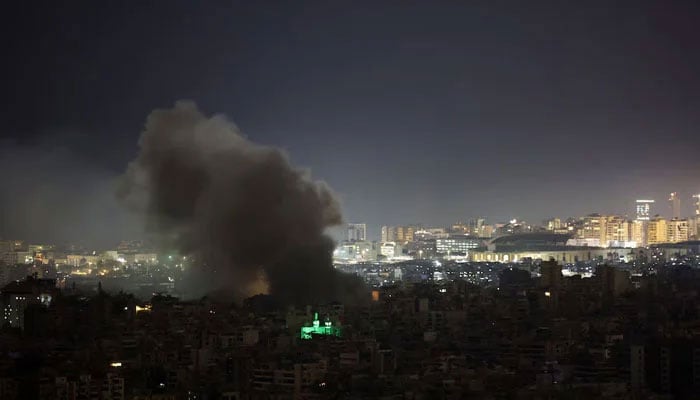
The US-Israel war on Iran, involving other regional Middle Eastern countries, includes not only civilian casualties, displacement of communities and damage to civilian infrastructure, but also multiple environmental consequences. For example, attacks on oil refineries and depots, especially those close to populated areas, pose long-term health and environmental risks. The attack on oil depots in Iran was followed by prolonged fires, oil spills and the release of heavy smoke that contaminated the air, soil, and water.
According to the United Nations Environment Programme (UNEP), “heavy smoke from burning oil, which includes hazardous compounds, is now being directly inhaled by people in Iran – including young children – raising serious concerns about long-term impacts on both human and environmental health”.
Similarly, WHO spokesperson Christian Lindmeier warned that the “black rain” and “acidic rain” falling in Tehran after the strikes pose a serious danger to Iranians. Acid rain is not only harmful to human beings but also damages crops, poisons animals and disrupts entire ecosystems.
The attacks on a water desalination plant during the war deprived citizens of access to clean and safe drinking water. According to UN Human Rights, “On Qeshm Island in Hormozgan Province, an attack on a water desalination plant reportedly disrupted water access for at least 30 villages”.
The recent attacks on nuclear facilities are also causing serious environmental and health threats. The possible release of radiation due to these attacks could lead to a major nuclear catastrophe with irreversible environmental and health costs.
The movement of forces and the use of jets in the conflict by the US and Israel have also increased the burden on natural resources. Fighter jets and warships involved in the war have raised fuel consumption, accelerating carbon emissions – a key driver of climate change. Forces stationed at bases in different countries, or deployed to fight this war, require food and other resources that also depend on energy. This further adds pressure on natural resources and increases carbon footprints.
According to Benjamin Neimark at Queen Mary University of London, “US and Israeli aircraft are using a considerable amount of fuel. Deploying stealth bombers and fighter jets around the clock adds significant planet-warming greenhouse gas emissions”.
Attacks on cargo ships carrying fuel are also spilling toxic chemicals into seawater, posing serious threats to marine life. In addition, attacks on infrastructure that reduce cities to rubble create severe environmental crises. Debris blocks roads and sewage systems, releasing toxic gases into the air.
Conflicts and wars also lead to the testing and expansion of more advanced weapons, both vertically and horizontally, in pursuit of military superiority. The ongoing conflict in the Middle East has exposed the military capabilities and strategies of both sides. This is likely to trigger a race for more advanced weaponry to overcome strategic weaknesses. Such testing and weaponisation also degrade soil and contaminate water and air. Resources and budgets that could be used to protect the environment and combat climate change are instead being diverted to wars and conflicts.
The overall environmental impact of the current Middle East crisis is vast and continues to grow as the conflict prolongs. According to Patrick Bigger, research director at the Climate and Community Institute, “Every missile strike is another down payment on a hotter, more unstable planet, and none of it makes anyone safer”.
Environmental costs during military conflicts are rarely accounted for as collateral damage, despite their long-term socio-economic consequences. The Middle East crisis has sparked debate over civilian casualties and economic disruption, particularly due to the closure of the Strait of Hormuz. However, environmental degradation also deserves attention as a critical casualty of the conflict. Attacks on civilian populations and infrastructure violate international law and the principles of just war and require accountability and compensation. Similarly, environmental costs must also be recognised and addressed.
Ultimately, the conflict must be resolved through dialogue and diplomacy to prevent further humanitarian and environmental crises.
The writer is a graduate of the University of Oxford in Public Policy. She tweets/posts @zilehumma_1 and can be reached at: [email protected]